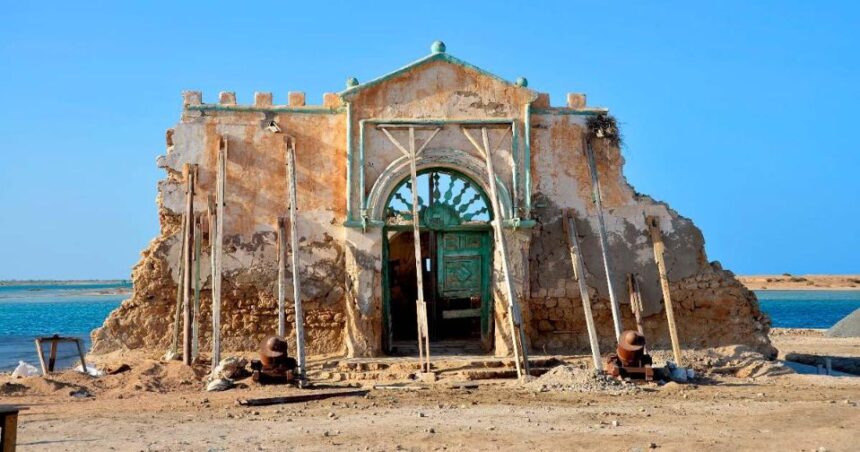
Türkiye’s proposed liquefied petroleum gas terminal at Suakin is not an LNG breakthrough. But it does expose the widening competition for access to Sudan’s Red Sea coast, and the leverage that control of the shoreline gives the Sudan Armed Forces (SAF).
Port Deals as Wartime Leverage
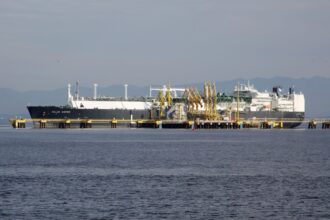
Sudan’s Sea Ports Corporation signed a memorandum with Turkish energy company Argaz on July 15. The terminal would store 28,000 cubic metres of LPG, serve three vessels simultaneously and operate under a build-operate-transfer arrangement. Officials claim it could save Sudan $200 million annually in foreign-currency costs.
Those figures remain projections. No cost, financing package, concession length or schedule has been published. Sudanese former energy minister Adel Ibrahim told Radio Dabanga on July 22 that the authorities had disclosed neither competitive bidding nor the feasibility, site-selection and financing work required. More seriously, he said the SAF chief Abdel Fattah al-Burhan previously refused to end the army’s monopoly over gas projects, causing an earlier berth proposal to stop at the Energy Ministry. The current deal remains only a memorandum.
It nevertheless forms part of a striking sequence. In roughly three weeks, the SAF-controlled port authority signed maritime agreements with Oman’s Asyad Group, China Harbour Engineering Company and Argaz. Each places another foreign partner in a public agreement with Port Sudan. None commits a disclosed amount of capital.
The pattern predates the war. Qatar announced a $4 billion Suakin port project in 2018. Sudan later cancelled a $6 billion agreement with Abu Dhabi Ports after accusing the UAE of arming the RSF – an allegation Abu Dhabi denies. No verified revival has been announced. Russia has pursued a naval facility near Port Sudan. These initiatives are not one gas race; they range from commercial ports and fuel infrastructure to military access.
Sudan Is Not Yet an LNG Market
The distinction between LPG and LNG matters. LPG – principally propane and butane – is used for cooking, heating and industry. LNG is methane cooled into liquid form and requires costly regasification facilities, specialised vessels and distribution infrastructure. Sudan has neither an LNG terminal nor a national gas grid supporting a large import market. Suakin is therefore a fuel-storage project, not a Sudanese LNG hub.
Egypt is the region’s genuine LNG market. Cairo has three floating regasification units at Ain Sokhna and a fourth at Damietta, providing approximately 2.7 billion cubic feet per day of capacity. It also signed a January 2026 memorandum with QatarEnergy covering deliveries to both ports. Eni, Shell, Chevron and ExxonMobil are active in Egyptian gas. QatarEnergy’s current force majeure shows that even established supply chains remain vulnerable.
The wider economic logic lies in regional transit. COMESA – the 21-member Common Market for Eastern and Southern Africa – represents 640 million people and a combined GDP of $ 1 trillion. Its 2019 Port Sudan Corridor plan envisaged a gateway to Asian markets serving Sudan and Ethiopia first, followed by Uganda and eventually landlocked Chad, the Central African Republic and South Sudan.
A corridor authority would remove trade barriers and harmonise customs guarantees, carrier licences, road charges and vehicle standards, financed through state contributions, user levies and development partners.
War has largely frozen that opportunity. A June 2026 UN Logistics Cluster assessment said CAR was not under consideration as a corridor, while movement from Port Sudan toward western and southern Sudan remained constrained by insecurity, damaged infrastructure, bureaucracy and high costs.
Can Suakin Make Money?
Potentially, but not yet. Sudan could gain port and storage fees, operator-built infrastructure and lower foreign-currency outflows. Yet the official $200 million figure describes projected annual savings, not guaranteed state revenue. Without published tariffs, throughput assumptions, financing or a binding contract, the project’s return cannot be verified.
Its scale should be kept in perspective. A 2026 UNDP–Institute for Security Studies assessment estimated that Sudan lost $6.4 billion in GDP in 2023 alone because of the war. If conflict continues until 2030, Sudan’s GDP in 2043 is projected to be $34.5 billion below the no-conflict scenario. Even the full $200 million estimate would equal only about 3% of the output lost in 2023.
The terminal could eventually earn and conserve foreign currency. Its larger promise, however, depends on peace – and on ending opaque military control over economic projects. Ibrahim’s account indicates that Burhan’s refusal to end the army’s gas monopoly already blocked an earlier berth proposal. The SAF-led authorities present themselves as Sudan’s national government, yet their own decisions have curtailed transparent partnerships and economic development. For now, the memorandum offers political leverage and possible future revenue – not money Sudan can count.