
Ukraine

Russian Strikes Leave Ukraine Farmers Stranded
Russian strikes on Ukraine's Black Sea ports have cut the country's grain exports to a trickle. Ukraine has shipped only about 500,000 tons since the start of August, roughly a fifth of its normal volume, Agriculture Minister Taras Vysotskyi said this week, as reported by Bloomberg. Odesa's port complex usually handles about 90% of the country's grain exports. This year's harvest was shaping up well before the strikes hit. With ports closed, farmers are selling into a domestic market where prices have dropped roughly 30% below export levels, and some producers are selling below what it cost them to grow, per Bloomberg. Many rely on harvest sales to cover rent, wages and loan payments ahead of the next planting cycle, leaving little room to hold out for better prices. Ravil Dzhamally, who returned to his farm in Kherson region after Russian forces withdrew, described the shift from optimism to hardship:…
North Korea Tests New Missile Capability
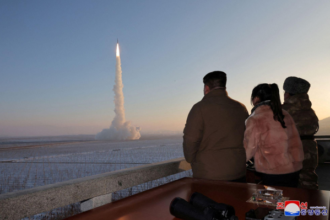
North Korea launched what South Korean and Japanese authorities assessed as ballistic missiles from Wonsan on August 6 and 12 without publicly disclosing either launch, a rare departure from its normal practice, according to a joint AEI-Institute for the Study of War update. South Korean and Japanese authorities said the August 12 missile flew roughly 690-700 kilometers and reached an unusually high apogee of about 90 kilometers, compared with the 50-60 kilometer apogee typical of the North's short-range ballistic missiles. The trajectory falls within an altitude range that analysts assess could complicate existing missile-defense planning, sitting above the typical engagement envelope of South Korea's L-SAM system while below the higher-altitude range associated with THAAD interception. The tests coincided with the US-South Korea Ulchi Freedom Shield exercise and followed Japan's first Tomahawk missile test on July 29, both of which Pyongyang has criticized. Washington and Seoul are also offering different estimates…

What Anchorage’s Collapse Revealed About Power
One year after Donald Trump and Vladimir Putin met in Anchorage, the Russian concept of the so called "spirit of Anchorage" has effectively disappeared. The phrase was never a formal agreement or documented diplomatic framework, but it became a political narrative promoted by Moscow to suggest that the summit produced an implicit understanding between Washington and Moscow over the future of Ukraine. A year ago the summit ended without a ceasefire or peace settlement – Trump and Putin left Alaska with, in Trump's own words, "no deal until there's a deal," although both leaders described the talks as productive. For Moscow, the meeting itself represented a strategic opportunity: the return of direct U.S.-Russian diplomacy and the possibility that Ukraine and Europe could be pressured from outside the negotiating room. The value was never a signed agreement but the political utility of the idea itself, one Russian officials could define however…
Two Wars Are Competing for the Same Missiles
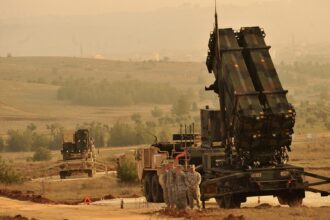
Russia's latest attack on Kyiv exposed a problem that extends far beyond Ukraine. Moscow launched another large barrage of missiles and drones overnight Wednesday into Thursday, killing at least 13 people in the Ukrainian capital. Ukraine intercepted most of the cruise missiles and drones but struggled again against ballistic missiles, the weapons for which its U.S.-made Patriot systems provide its most important defense. The problem is no longer simply whether Ukraine has enough launchers. It is whether the United States and its allies can produce enough interceptors for several missile wars at once. That question has become much harder since the United States and Israel went to war with Iran in February. Iranian ballistic missile attacks against U.S. forces and American partners across the Middle East have consumed large numbers of the same high-end air-defense weapons Ukraine needs against Russia. A Reuters analysis in March warned that the roughly 600…

Europe’s Defence Industry Faces Sabotage Threat
European defence executives and military-industrial sites linked to Ukraine are facing a widening security threat, as suspected sabotage, surveillance and assassination plots increasingly target the people and infrastructure behind Kyiv's weapons supply. The pattern spans at least four countries and cases of sharply varying strength: an Estonian court has already convicted someone over one arson attack, while another case – a detained Swedish couple who turned out to be Russian anti-war emigrants – shows how easily suspicion can outrun evidence. NATO has publicly linked at least one case, the 2024 plot against Rheinmetall's chief executive, to a broader campaign it says is aimed at undermining European support for Ukraine. Estonia's Confirmed And Suspected Cases The most immediate case is Estonia, where authorities are investigating an arson attack on a building on Betooni Street in Tallinn used by Milrem Robotics, overnight from August 14 into August 15. Estonian Prime Minister Kristen…
Kyiv Hit by Missiles, Ukraine Strikes Russian Refinery
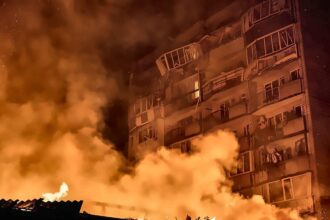
Russian forces launched a coordinated, multi-vector strike across Ukraine overnight, concentrating the largest share of the barrage on Kyiv in what defense officials described as an attempt to overwhelm the capital's layered air-defense coverage around dense civilian and infrastructure clusters. According to the Kyiv Post, ballistic and Kalibr cruise missiles combined with jet-powered drones killed at least five people and injured 23, damaging a children's hospital, a school and a five-story residential building across more than a dozen sites in the capital. Separately, a Russian drone strike on police headquarters in Zhytomyr earlier in the night killed two people and injured more than 40, the Kyiv Independent reported. Ukraine's Air Force said the salvo combined Oniks, Zircon, Iskander-M and S-400 ballistic weapons with Kh-101/Iskander-K cruise missiles, Kalibr missiles, two S8000 "Banderol" loitering munitions and roughly 168 Shahed-type drones and decoys, with Ukrainian forces reporting 186 targets downed or suppressed. The…
