

Russian Strikes Leave Ukraine Farmers Stranded
Russian strikes on Ukraine's Black Sea ports have cut the country's grain exports to a trickle. Ukraine has shipped only about 500,000 tons since the start of August, roughly a fifth of its normal volume, Agriculture Minister Taras Vysotskyi said this week, as reported by Bloomberg. Odesa's port complex usually handles about 90% of the country's grain exports. This year's harvest was shaping up well before the strikes hit. With ports closed, farmers are selling into a domestic market where prices have dropped roughly 30% below export levels, and some producers are selling below what it cost them to grow, per Bloomberg. Many rely on harvest sales to cover rent, wages and loan payments ahead of the next planting cycle, leaving little room to hold out for better prices. Ravil Dzhamally, who returned to his farm in Kherson region after Russian forces withdrew, described the shift from optimism to hardship:…
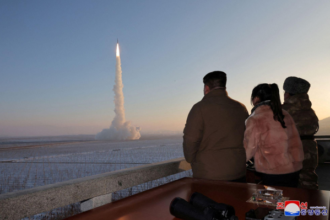
North Korea Tests New Missile Capability
North Korea launched what South Korean and Japanese authorities assessed as ballistic missiles from Wonsan on August 6 and 12 without publicly disclosing either launch, a rare departure from its normal practice, according to a joint AEI-Institute for the Study of War update. South Korean and Japanese authorities said the August 12 missile flew roughly 690-700 kilometers and reached an unusually high apogee of about 90 kilometers, compared with the 50-60 kilometer apogee typical of the North's short-range ballistic missiles. The trajectory falls within an altitude range that analysts assess could complicate existing missile-defense planning, sitting above the typical engagement envelope of South Korea's L-SAM system while below the higher-altitude range associated with THAAD interception. The tests coincided with the US-South Korea Ulchi Freedom Shield exercise and followed Japan's first Tomahawk missile test on July 29, both of which Pyongyang has criticized. Washington and Seoul are also offering different estimates…
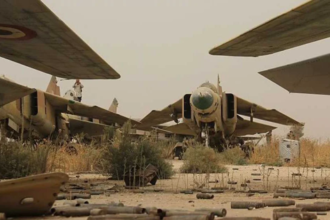
Israel-Turkey Tensions Rise Over Syria Military Presence
Israel and Turkey are entering a new confrontation over Syria after Israeli airstrikes hit the Abu al-Duhur military airfield in Idlib overnight on August 17-18, hours after a Turkish military delegation had inspected the base to assess runway repairs, according to ACLED. The Israeli Air Force struck the runway and infrastructure eight times without reported casualties. Syria's foreign ministry called the strikes a violation of its sovereignty, while ACLED's Middle East research manager, Muaz Al Abdullah, said the operation likely aimed "to prevent Turkey from utilizing the airbase to anchor its influence." Prime Minister Benjamin Netanyahu said afterward that Israel had already warned Turkey against military activity in Syria: "The message was conveyed, but apparently they didn't hear it, so we made sure they understood it more clearly," he said, according to The Times of Israel. His office separately said Syria had been on the verge of breaching an agreed…
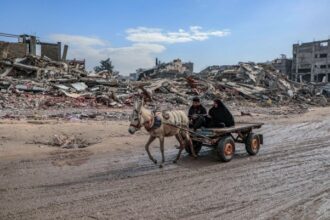
Israeli Strikes Cast Doubt on Gaza Ceasefire
Israeli strikes killed at least 10 people in Gaza on Wednesday, and Israeli forces crossed the ceasefire's "Yellow Line" to detain a Hamas police official, deepening doubt over the truce two days after U.S. envoy Jared Kushner met separately with Hamas and Israeli Prime Minister Benjamin Netanyahu, according to PBS News. The Yellow Line, which divides Gaza under the ceasefire, "was never precisely defined," PBS reported, and Israeli forces now control roughly 60% of the territory, beyond the line's original scope. The IDF said Wednesday's strikes targeted Hamas Nukhba commanders and an allied Popular Resistance Committees operative who were "advancing terror plots" against Israeli forces, including one person who took part in the October 7 attacks, according to the Jerusalem Post. Gaza's Hamas-run Health Ministry said the strikes, including one on a police post, killed nine to ten people. The Board of Peace, the U.S.-chaired body overseeing the ceasefire, has…
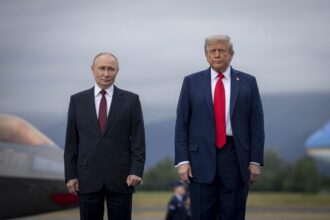
What Anchorage’s Collapse Revealed About Power
One year after Donald Trump and Vladimir Putin met in Anchorage, the Russian concept of the so called "spirit of Anchorage" has effectively disappeared. The phrase was never a formal agreement or documented diplomatic framework, but it became a political narrative promoted by Moscow to suggest that the summit produced an implicit understanding between Washington and Moscow over the future of Ukraine. A year ago the summit ended without a ceasefire or peace settlement – Trump and Putin left Alaska with, in Trump's own words, "no deal until there's a deal," although both leaders described the talks as productive. For Moscow, the meeting itself represented a strategic opportunity: the return of direct U.S.-Russian diplomacy and the possibility that Ukraine and Europe could be pressured from outside the negotiating room. The value was never a signed agreement but the political utility of the idea itself, one Russian officials could define however…
Two Wars Are Competing for the Same Missiles
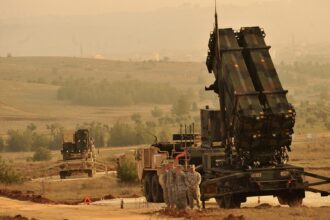
Russia's latest attack on Kyiv exposed a problem that extends far beyond Ukraine. Moscow launched another large barrage of missiles and drones overnight Wednesday into Thursday, killing at least 13 people in the Ukrainian capital. Ukraine intercepted most of the cruise missiles and drones but struggled again against ballistic missiles, the weapons for which its U.S.-made Patriot systems provide its most important defense. The problem is no longer simply whether Ukraine has enough launchers. It is whether the United States and its allies can produce enough interceptors for several missile wars at once. That question has become much harder since the United States and Israel went to war with Iran in February. Iranian ballistic missile attacks against U.S. forces and American partners across the Middle East have consumed large numbers of the same high-end air-defense weapons Ukraine needs against Russia. A Reuters analysis in March warned that the roughly 600…
