
Sudan
Turkey And Russia Deepen Military Ties With SAF
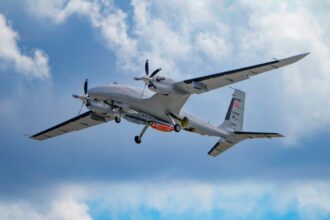
Sudan's Armed Forces (SAF) have deepened military relationships with Turkey and Russia over the past year, receiving Turkish combat drones already active in the war while negotiating additional Russian fighter jets and air-defense systems as part of a proposed naval-base arrangement that remains in draft form. Turkey's drones are a confirmed, deployed capability; the new Russian jets are not yet delivered, tied instead to an unresolved 25-year Port Sudan lease first floated to Sudan's former government nearly two decades ago. Both arrangements sit alongside longer-standing support from Egypt, Iran, Saudi Arabia and Qatar, giving SAF a broader coalition of state backers than the RSF's UAE-centered network, according to Georgetown University's Security Studies Review. Turkish Drones Reshape Air War Turkish-made Bayraktar Akinci drones, built by Istanbul-based Baykar, have become SAF's most visible counter-drone weapon. Defence-Blog reported, citing video from the Turkish outlet Clash Report, that SAF has destroyed at least six…
RSF Claims Kurmuk as Sudan Fighting Widens
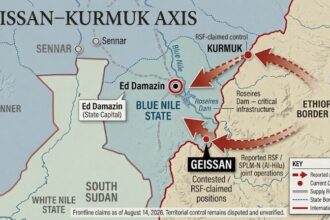
The Rapid Support Forces (RSF) claimed control of Kurmuk in Sudan’s Blue Nile state on August 13, days after disputed fighting around nearby Geissan. The claim, reported by Sudans Post, has not been independently confirmed. Sudans Post cited local sources describing drone strikes ahead of an RSF ground assault from the Ethiopian border area. The Kurmuk claim follows a more clearly documented escalation around Geissan. Reuters reported the RSF said it captured Geissan on August 11, a claim local authorities disputed while saying the army was fighting back. Kurmuk itself changed hands earlier this year, with Sudan Tribune reporting SAF recaptured the town on July 8 after RSF and SPLM-N (Al-Hilu) forces had seized it in March. Sudanese officials have alleged RSF and SPLM-N (Al-Hilu) operations use Ethiopian territory as a staging ground, an allegation Ethiopia denies. The renewed fighting in Blue Nile has already displaced civilians on a large…
Sudan War Threatens Ancient Pyramids of Meroe
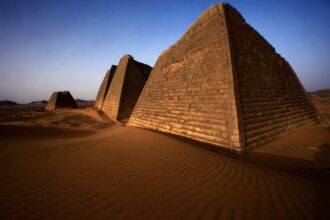
Sudan's civil war is threatening the ancient pyramids of Meroe, a UNESCO World Heritage Site about 200 kilometres north of Khartoum, after more than three years of fighting halted preservation work and foreign archaeological missions. The site near Bejrawiya holds more than 200 pyramids built as royal tombs for rulers of the Kingdom of Kush, whose Meroitic heartland flourished from the 8th century BC to the 4th century AD. Guards and occasional visiting families remain at the site, but the war has removed the state restoration projects and international missions that once kept it stable. AP reporting found sand accumulating around the pyramids and inside funerary temples, spreading vegetation and stones beginning to fall. Archaeologist Mahmoud Suleiman warned the site "could face a disaster" and that collapses are possible if conservation work does not resume. Antiquities inspector Mohamed Mubarak said salt released from accumulated sand is damaging fragile stone, inscriptions…
SAF Receives Pakistani Weapons
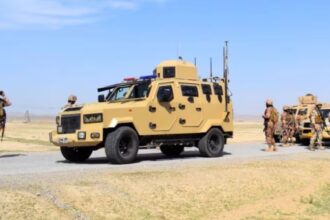
Reported deliveries of Pakistani-made military equipment to the Sudanese Armed Forces (SAF) have drawn attention to the foreign supply networks sustaining Sudan's civil war, now in its third year. Pakistani-made Mohafiz-V armored vehicles, built by Pakistan's HIT Armour on a Toyota Land Cruiser chassis, have been sighted on Khartoum's streets in recent days. The vehicles offer B6-level protection against small-arms fire, according to independent Sudanese reporting, though neither Pakistani nor Sudanese officials have confirmed the shipment publicly. Indian intelligence sources cited by CNN-News18, an Indian broadcaster, have flagged the sighting as part of a broader expansion of Pakistan's military footprint toward the Red Sea and Indian Ocean, warning it could deepen Sino-Pakistani coordination in the region. That assessment reflects the strategic reading of Pakistan's principal regional rival and has not been independently corroborated. Financing for the broader Pakistan-Sudan arms relationship has fluctuated sharply this year. Reuters and Al-Monitor reported in…
Sudan’s Planting Season Raises Truce Stakes
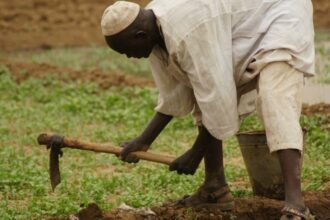
Sudan's planting season is advancing under war, expensive fuel and shortages of fertiliser and seed that neither warring party has resolved. The Food and Agriculture Organization (FAO) warned in April that farmers risked missing the planting window without urgent support, and put last season's cereal harvest at 5.2 million tonnes, 22% below 2024 and 19% under the five-year average. Promises Meet the Planting Deadline In May, the SAF-aligned government set a target of roughly 25.35 million feddans for sorghum, millet, groundnuts, soybeans and other crops, then built a banking portfolio exceeding 3 trillion Sudanese pounds (SDG), with the central bank covering 20% and commercial banks expected to supply the rest. The African Development Bank estimated Sudan's 2025 foreign-exchange reserves at $1.17 billion, equivalent to 1.1 months of imports, while non-performing loans reached 16.5% of total lending. Those figures underline the government's limited capacity to convert domestic credit into imported fuel,…
Senate Bill Targets Sudan War’s Foreign Backers
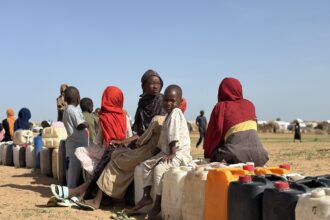
A bipartisan effort to sanction foreign actors fueling Sudan's civil war has gained a possible route through Congress after Senate Foreign Relations Committee Chairman Jim Risch (R-ID) filed the measure as an amendment to the Senate's annual defense policy bill.The PEACE in Sudan Act, introduced by Republican senators Risch (R-ID) and John Cornyn (R-TX) and Democratic senators Chris Coons (D-DE) and Jeanne Shaheen (D-NH), was approved by the Senate Foreign Relations Committee on June 17. Risch subsequently filed its provisions as Amendment 6336 to the fiscal 2027 defense authorization bill – a vehicle lawmakers frequently use to advance measures that might otherwise stall.The bill would authorize, not require, sanctions on foreign suppliers to the war between the Sudanese Armed Forces and Rapid Support Forces, leaving the administration discretion over whether to act against specific partners. It would mandate reporting on external military, financial and intelligence support to both sides. Monitors…
