
Analysis
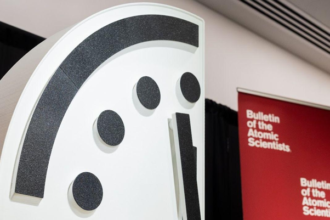
The World Has Lost the Nuclear Rulebook
Every January, a small group of scientists in Chicago move the hands of a clock that does not tell time. It measures something closer to mood: how near humanity stands, in the collective judgment of physicists, historians and Nobel laureates, to a catastrophe of its own making. On January 27, 2026, they moved it to 85 seconds before midnight, the closest the Doomsday Clock has come to that hour in its 79-year history. The clock is not measuring the probability of nuclear war alone. It is measuring the disappearance of the political, legal and institutional barriers that once made that war less likely. Behind the 85 seconds sits the quiet expiration of the last treaty that let Washington and Moscow verify each other's arsenals, a Kremlin that now discusses nuclear weapons on state television with the casualness once reserved for troop movements, and a widening circle of capitals quietly reconsidering…
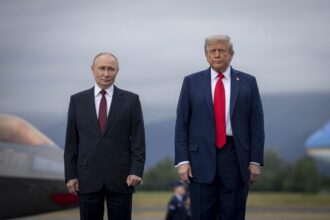
What Anchorage’s Collapse Revealed About Power
One year after Donald Trump and Vladimir Putin met in Anchorage, the Russian concept of the so called "spirit of Anchorage" has effectively disappeared. The phrase was never a formal agreement or documented diplomatic framework, but it became a political narrative promoted by Moscow to suggest that the summit produced an implicit understanding between Washington and Moscow over the future of Ukraine. A year ago the summit ended without a ceasefire or peace settlement – Trump and Putin left Alaska with, in Trump's own words, "no deal until there's a deal," although both leaders described the talks as productive. For Moscow, the meeting itself represented a strategic opportunity: the return of direct U.S.-Russian diplomacy and the possibility that Ukraine and Europe could be pressured from outside the negotiating room. The value was never a signed agreement but the political utility of the idea itself, one Russian officials could define however…
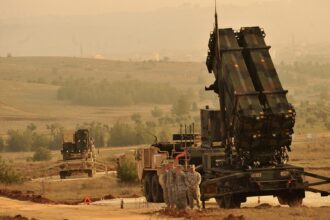
Two Wars Are Competing for the Same Missiles
Russia's latest attack on Kyiv exposed a problem that extends far beyond Ukraine. Moscow launched another large barrage of missiles and drones overnight Wednesday into Thursday, killing at least 13 people in the Ukrainian capital. Ukraine intercepted most of the cruise missiles and drones but struggled again against ballistic missiles, the weapons for which its U.S.-made Patriot systems provide its most important defense. The problem is no longer simply whether Ukraine has enough launchers. It is whether the United States and its allies can produce enough interceptors for several missile wars at once. That question has become much harder since the United States and Israel went to war with Iran in February. Iranian ballistic missile attacks against U.S. forces and American partners across the Middle East have consumed large numbers of the same high-end air-defense weapons Ukraine needs against Russia. A Reuters analysis in March warned that the roughly 600…

Europe’s Defence Industry Faces Sabotage Threat
European defence executives and military-industrial sites linked to Ukraine are facing a widening security threat, as suspected sabotage, surveillance and assassination plots increasingly target the people and infrastructure behind Kyiv's weapons supply. The pattern spans at least four countries and cases of sharply varying strength: an Estonian court has already convicted someone over one arson attack, while another case – a detained Swedish couple who turned out to be Russian anti-war emigrants – shows how easily suspicion can outrun evidence. NATO has publicly linked at least one case, the 2024 plot against Rheinmetall's chief executive, to a broader campaign it says is aimed at undermining European support for Ukraine. Estonia's Confirmed And Suspected Cases The most immediate case is Estonia, where authorities are investigating an arson attack on a building on Betooni Street in Tallinn used by Milrem Robotics, overnight from August 14 into August 15. Estonian Prime Minister Kristen…

Turkey And Russia Deepen Military Ties With SAF
Sudan's Armed Forces (SAF) have deepened military relationships with Turkey and Russia over the past year, receiving Turkish combat drones already active in the war while negotiating additional Russian fighter jets and air-defense systems as part of a proposed naval-base arrangement that remains in draft form. Turkey's drones are a confirmed, deployed capability; the new Russian jets are not yet delivered, tied instead to an unresolved 25-year Port Sudan lease first floated to Sudan's former government nearly two decades ago. Both arrangements sit alongside longer-standing support from Egypt, Iran, Saudi Arabia and Qatar, giving SAF a broader coalition of state backers than the RSF's UAE-centered network, according to Georgetown University's Security Studies Review. Turkish Drones Reshape Air War Turkish-made Bayraktar Akinci drones, built by Istanbul-based Baykar, have become SAF's most visible counter-drone weapon. Defence-Blog reported, citing video from the Turkish outlet Clash Report, that SAF has destroyed at least six…
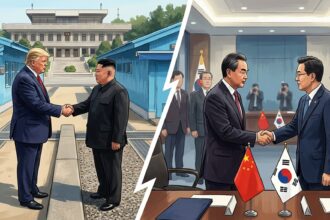
Trump Wants Kim. China Wants Seoul.
For much of the past two years, the world's strategic attention has been dominated by Ukraine, the Middle East and growing instability around the Taiwan Strait. Yet this week, another geopolitical flashpoint is quietly moving back into focus. President Donald Trump is pressing aides to arrange a new summit with North Korean leader Kim Jong Un as early as this fall, the Wall Street Journal reported, while Chinese Foreign Minister Wang Yi is visiting South Korea for the first time since 2021. Taken separately, each development is significant. Viewed together, they suggest that Washington and Beijing have simultaneously begun repositioning themselves around the Korean Peninsula. The timing is unlikely to be accidental. Trump is expected to travel to Asia in November for the Asia-Pacific Economic Cooperation summit, scheduled for November 18 and 19 in Shenzhen, where he is also expected to cross paths with Chinese leader Xi Jinping. According to…
