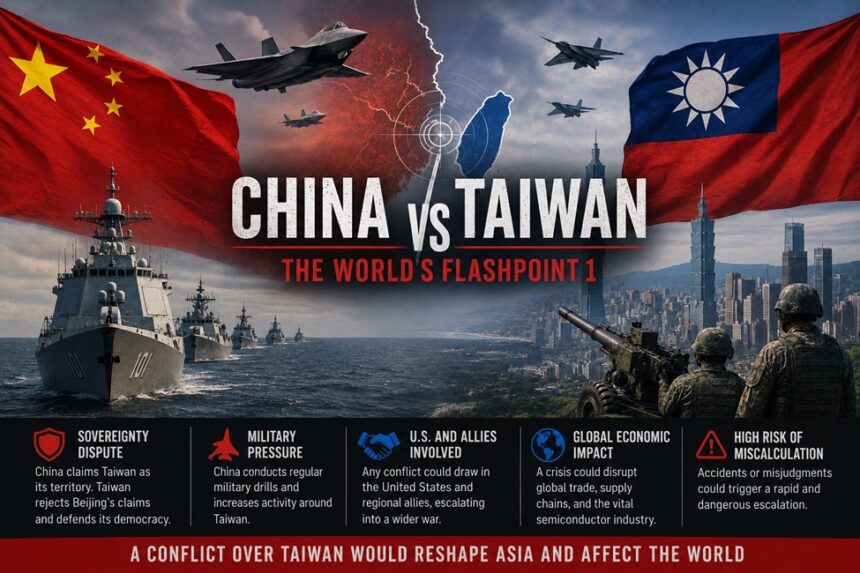

Tensions between China and Taiwan continue to represent one of the most serious security risks in Asia, with any military confrontation carrying the potential to draw in the United States and regional allies.
Beijing views Taiwan as part of its territory and has not ruled out the use of force to bring the island under its control. Taiwan, which operates with its own government, military and democratic institutions, rejects Chinese sovereignty claims and says its future should be decided by its people.
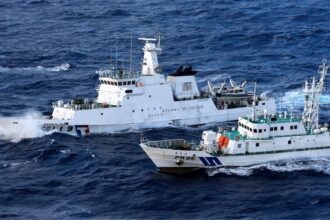
The Taiwan Strait has become one of the world’s most closely watched strategic waterways. Chinese military aircraft and naval vessels regularly operate near Taiwan, while Taipei continues to strengthen its defensive readiness through military drills and cooperation with international partners.
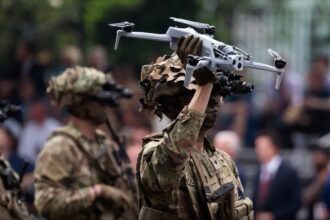
Taiwan recently began five days of combat readiness exercises aimed at improving rapid response capabilities amid growing concerns over Chinese military pressure. The drills followed reports of increased Chinese aircraft and naval activity near the island.
For China, the issue of Taiwan is central to national sovereignty and political identity. Chinese officials argue that reunification is a historic objective and accuse outside powers of interfering in China’s internal affairs.
For Taiwan, the concern is survival as a self governed democracy. Taiwanese leaders say growing military pressure from Beijing is intended to intimidate the island and limit its international space.
The United States remains a central factor in the crisis. Washington does not formally recognize Taiwan as an independent state, but it remains Taiwan’s main arms supplier and maintains a policy of supporting the island’s ability to defend itself.
Regional governments including Japan, South Korea, the Philippines and Australia are also watching developments closely. Any conflict over Taiwan would likely affect sea routes, global trade, technology supply chains and the wider security balance in the Indo Pacific.
The economic stakes are especially high. Taiwan plays a critical role in the global semiconductor industry, producing advanced chips used in smartphones, vehicles, military systems and artificial intelligence technologies.
Military analysts warn that the risk does not come only from a deliberate invasion. Accidents, miscalculation or a sudden crisis at sea or in the air could escalate rapidly if communication channels fail.
Despite repeated warnings, all sides continue to signal deterrence rather than immediate war. China continues to expand military pressure around Taiwan, Taiwan continues to prepare for defense, and the United States continues to strengthen its regional partnerships.
For people living in Taiwan, the tension is part of daily political life. While many continue with normal routines, the possibility of conflict remains a constant background concern.
As Asia’s security environment becomes more uncertain, the China Taiwan flashpoint remains one of the most dangerous issues in global affairs. A conflict in the Taiwan Strait would not remain a local crisis. It could reshape the balance of power in Asia and trigger consequences across the world economy.