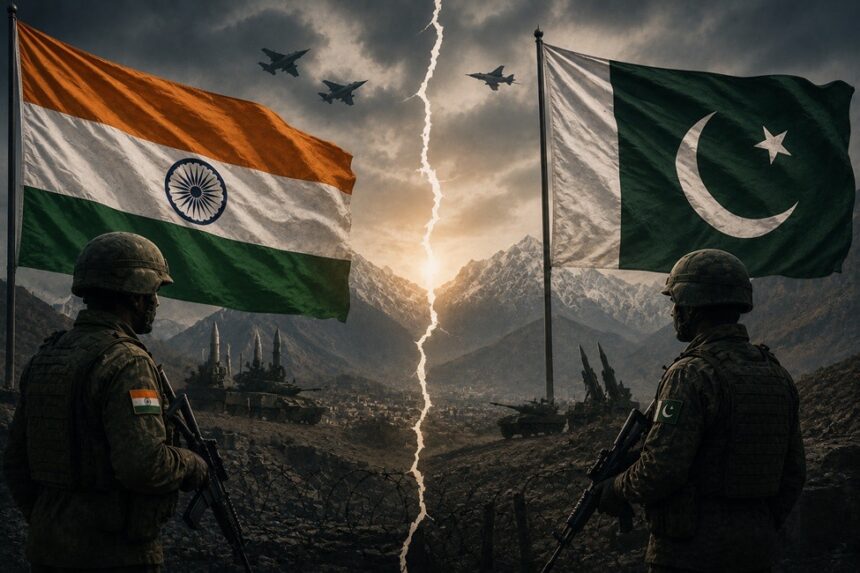

The relationship between India and Pakistan remains one of the world’s most closely watched geopolitical rivalries, shaped by decades of conflict, unresolved territorial disputes and the reality that both nations possess nuclear weapons.
Since gaining independence in 1947, the two South Asian neighbors have fought multiple wars and experienced repeated military crises, with the disputed region of Kashmir remaining at the center of tensions. Despite periods of diplomatic engagement and confidence building measures, relations between New Delhi and Islamabad continue to face significant challenges.
Kashmir remains one of the most heavily militarized regions in the world. Both countries administer parts of the territory while claiming it in full. Periodic incidents along the Line of Control, the de facto border dividing the region, continue to generate security concerns and diplomatic disputes.
India maintains that Kashmir is an integral part of the country and argues that security measures are necessary to combat militancy and maintain stability. Indian officials have repeatedly emphasized that cross border terrorism remains one of their primary concerns in the region.
Pakistan, meanwhile, argues that the future of Kashmir should be determined in accordance with the wishes of its people and international commitments. Pakistani leaders continue to call for dialogue and a peaceful resolution of the dispute through diplomatic means.
The rivalry extends beyond Kashmir. Both countries have invested heavily in military modernization, including conventional forces, missile systems and strategic deterrence capabilities. Security analysts note that even limited confrontations carry heightened risks because of the nuclear capabilities possessed by both sides.
In recent years, the rivalry produced its most serious military confrontation in decades. In April 2025, a militant attack in Pahalgam, in Indian-administered Kashmir, killed twenty-six civilians. India blamed Pakistan-based militant groups and, in May 2025, launched missile strikes it called Operation Sindoor, prompting retaliation from Pakistan.
The four days of fighting that followed included missile exchanges, drone strikes and reported aircraft losses on both sides before a ceasefire took hold on 10 May. Diplomatic channels, military communication mechanisms and international engagement have repeatedly helped prevent crises from escalating further, but the 2025 conflict showed how quickly tensions between the two countries can erupt into direct military action.
The economic cost of continued tensions remains significant. Greater regional cooperation between India and Pakistan could potentially unlock trade opportunities and economic growth across South Asia, but political disagreements continue to limit progress.
Regional stability is also closely linked to developments in neighboring Afghanistan, China and the broader Indo Pacific region. International powers including the United States, China, the United Kingdom and Gulf nations frequently encourage dialogue between the two countries to reduce the risk of escalation.
For ordinary citizens on both sides of the border, the relationship is often viewed through a complex mix of history, national identity and security concerns. Cultural, linguistic and historical ties continue to exist despite political divisions.
Experts warn that future crises could emerge from terrorist attacks, border incidents, military miscalculations or political developments related to Kashmir. Rapid developments in modern military technology and information warfare have added new dimensions to an already sensitive relationship.
At the same time, there have been periodic signs of cooperation. Humanitarian exchanges, ceasefire understandings and diplomatic contacts have demonstrated that communication remains possible even during periods of tension.
As South Asia continues to grow in economic and strategic importance, the future of India Pakistan relations will remain a key factor influencing regional security. While large scale conflict is not viewed as inevitable, the unresolved issues between the two countries ensure that the rivalry remains one of the world’s most significant geopolitical flashpoints.
For the international community, maintaining stability between two nuclear armed neighbors remains a critical priority. Whether future leaders can transform competition into dialogue may ultimately shape the security landscape of South Asia for decades to come.