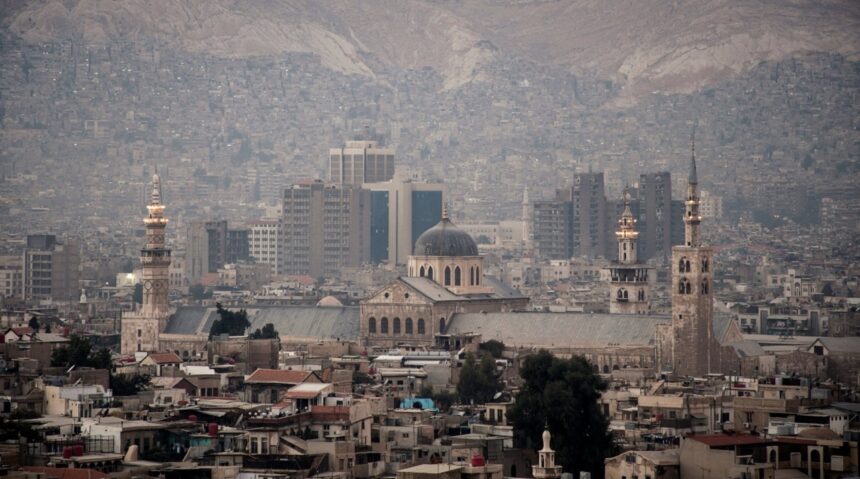
Two improvised explosive devices detonated in central Damascus on Tuesday as French President Emmanuel Macron met Syrian President Ahmad al-Sharaa, wounding at least 18 people, including four police officers, according to Syria’s Interior Ministry. Macron was unharmed, and no group immediately claimed responsibility.
The explosions occurred near the Four Seasons Hotel, where Macron had been staying, and close to the Ministry of Tourism. Macron had already departed for the presidential palace when the devices exploded, and the French presidency said his official programme continued as scheduled. Damascus-based security analyst Ismat Al-Absi told Al Jazeera it remained unclear whether the attack was intended to target Macron’s convoy, adding that the apparent objective was to create insecurity and send a political message rather than inflict mass casualties.
Tuesday’s explosions came five days after a bombing at a café on al-Nasser Street killed at least nine people and wounded 22, the deadliest attack in Damascus since a church bombing killed 25 people in June 2025. The café stood roughly 40 metres from the Palace of Justice, where several former Assad-era officials, including former security chief Atef Najib and former Grand Mufti Ahmad Badr al-Din Hassoun, have been standing trial.
Syrian authorities have not identified suspects or a motive in either attack. Political analyst Kamal Abdo told Al Jazeera that resentment surrounding the trials persists among remnants of the former government, some of whom, he said, possess experience carrying out such attacks. Syrian security officials have separately said they previously arrested suspected sleeper-cell members allegedly seeking to destabilize the new government. Neither assessment has been confirmed by Syrian authorities investigating Tuesday’s explosions.
Macron’s visit marks the first by a Western European head of state since Bashar al-Assad was overthrown in December 2024 and reflects growing efforts by European governments to re-engage with Syria’s transitional authorities. He arrived with a business delegation that included CMA CGM Chief Executive Rodolphe Saadé and TotalEnergies Chief Executive Patrick Pouyanné. CMA CGM secured a 30-year, €230 million concession in May 2025 to operate the Port of Latakia, while TotalEnergies, ConocoPhillips and QatarEnergy signed a memorandum of understanding in May 2026 to explore oil and gas resources in Syrian territorial waters.
The French president is also expected to press al-Sharaa on protecting Syria’s minority communities following sectarian violence affecting Alawite and Druze populations last year. In January, al-Sharaa issued a decree recognizing Kurdish as a national language and restoring citizenship to thousands of Kurds stripped of it under a controversial 1962 census. The Kurdish-led Autonomous Administration of North and East Syria welcomed the measure as an important first step but said lasting constitutional guarantees would be needed to secure Kurdish political and cultural rights.
The explosions did not derail Macron’s visit, but they underscored the central challenge facing Syria’s transitional government: convincing foreign governments and investors that political change can be matched by lasting improvements in security. Two attacks in central Damascus within five days—neither solved nor claimed—suggest that restoring confidence in the country’s stability remains one of the government’s most immediate tests.