Sweden is creating an independent civilian foreign intelligence service. Japan is establishing a central intelligence bureau and proposing its first standalone postwar foreign-intelligence agency. Germany is debating powers that could take its foreign intelligence agency beyond gathering information and into sabotage, cyber disruption and, only in a constitutionally declared state of defense, kinetic measures.
These are not isolated bureaucratic reforms. They amount to an intelligence rearmament: governments are treating strategic information, clandestine collection and operational disruption as sovereign capabilities alongside armed forces, weapons production and civil defense.
The Political Intelligence Gap
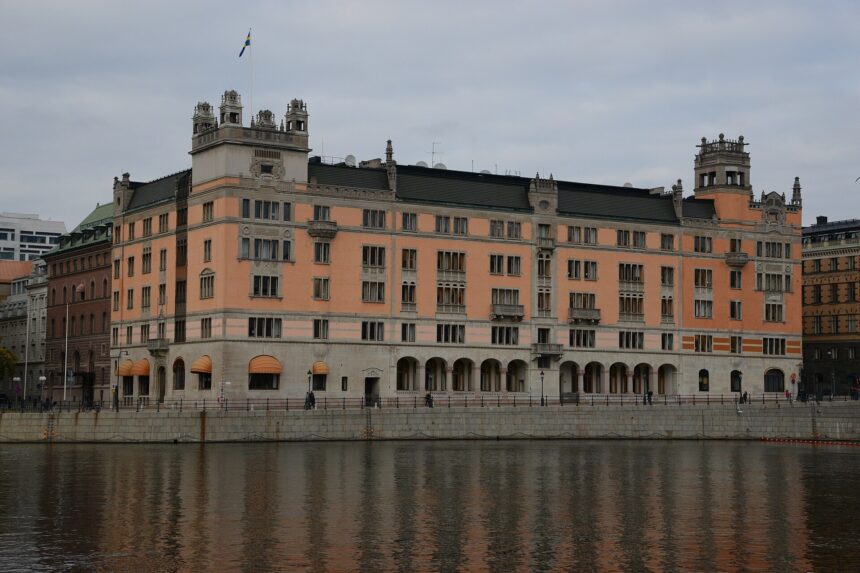
Sweden’s reform exposes the central problem. The country already possessed substantial foreign-intelligence capacity through the military’s Must organization, the signals-intelligence agency FRA and the clandestine collection office KSI. What it lacked was a separate civilian service focused on the government’s political and strategic requirements.
The government has submitted legislation enabling Sveriges utrikes underrättelsetjänst, or UND, to begin operating on January 1, 2027 (details in the government’s legislative announcement). The model emerged from a government-appointed review led by former prime minister Carl Bildt, whose commission proposed transferring KSI’s special collection capability to the new civilian agency while retaining a separate military intelligence service.
Bildt connected the reform directly to Sweden’s failure before Russia’s full-scale invasion of Ukraine. The existing system was “very good at tracking the military developments on the ground,” Bildt told The Economist, but weaker at interpreting Russian politics. The official commission report is more precise: it found Must’s military assessments sound but its judgment of Russia’s political motivation a “system error,” and noted the assessment changed only shortly before the invasion. Sweden placed excessive weight on the military and political costs Moscow would incur, while giving insufficient weight to the political objectives that could make Putin willing to accept those costs.
France presented a parallel warning failure: it saw the same military indicators but judged that invasion would impose prohibitive costs and that Moscow retained other options short of invasion. Its intelligence chief, Gen. Éric Vidaud, was removed weeks after the invasion amid criticism of the service’s warning performance , though broader concerns about his leadership also contributed.
Germany’s Widening Mandate
Germany represents the most operational element of the trend – though its reform has not yet become law. A ministry draft that entered government consultation in July would allow the BND to conduct expanded measures against hostile powers. Potential targets could include the information space, supply networks, arms production and state economic structures; kinetic means would be permitted only in a constitutionally declared state of defense, or Verteidigungsfall.
The proposal would create a qualitatively new category of intervention powers for German intelligence. It will also test how lawmakers preserve Germany’s postwar separation of intelligence and coercive police authority as the boundary between observation and disruption becomes less distinct.
Germany’s personnel choices reinforce the shift. Martin Jäger, who became BND president in September 2025, previously served as Germany’s ambassador in Afghanistan, Iraq and, most recently, wartime Ukraine. The German government cited his experience in crisis states when announcing the appointment.
Autonomy in an Uncertain Alliance
Japan is addressing a related weakness: fragmented information and limited independent collection abroad. Tokyo already gathers foreign intelligence through diplomatic, defense and other channels, but on July 31 it will launch a roughly 700-person National Intelligence Bureau, created by restructuring the existing Cabinet Intelligence and Research Office, consolidating intelligence across government and supporting a new council chaired by the prime minister. A proposed standalone postwar foreign-intelligence agency intended to develop a clandestine HUMINT capability abroad remains under discussion, with the governing coalition seeking its establishment by the end of fiscal 2027. The ruling Liberal Democratic Party has also proposed criminal penalties for covert foreign interference, a foreign-agent registration system and expanded collection powers.
The London based The Royal United Services (RUSI) has assessed that the reform reflects a broader move toward strategic self-reliance, diversifying Tokyo’s intelligence partnerships and reducing dependence on the U.S.-Japan alliance for major security judgments – a response to China, North Korea and Russia together, alongside foreign interference and growing uncertainty about the reliability of American backing.
Bildt argued that a Five Eyes-style signals-intelligence arrangement depends on “very deep trust” and cannot easily be reproduced through a new multilateral structure. The Economist assessed that informal analytical pooling among European partners and expanded use of open-source intelligence are more plausible near-term developments for Sweden’s new service.
Turkey illustrates a different facet of the trend. Hakan Fidan became foreign minister in 2023 after running the National Intelligence Organization for 13 years, an appointment that shows intelligence and diplomacy fusing at the level of a single official’s career – a fusion that can move fast but also concentrates secret information and political authority in ways that raise the risk of unaccountable power.
Checks and balances can slow intelligence operations. But speed without effective control can enable political surveillance, unlawful covert action and assessments tailored to satisfy policymakers. The democratic answer is faster authorization under established law combined with independent review, not the elimination of scrutiny.
These states are not adopting one intelligence model. Sweden is building analytical pluralism and strengthening foreign political intelligence; Japan is centralizing intelligence direction while proposing expanded counterintelligence and clandestine-collection capabilities; Germany is weighing powers to disrupt threats once they have been identified. Their common denominator is not preparation against a single adversary but the pursuit of sovereign decision advantage in an environment of interstate competition, hybrid operations and less certain reliance on allies.