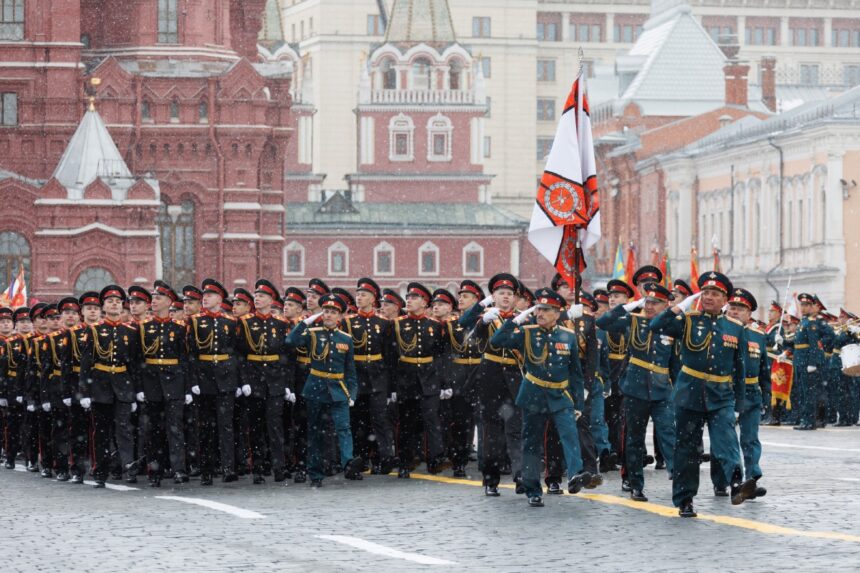
Russia has again expanded the authorized size of its armed forces, reinforcing a military structure built for prolonged war rather than postwar demobilization.
The decree, signed by President Vladimir Putin on July 27, raises the ceiling to 2,426,130 personnel, including 1,535,000 servicemembers — the third such increase in 2026, according to the Institute for the Study of War. The decree links the added posts to the creation of new military construction units; it does not specify their intended function or location.
ISW assessed separately, in February, that the Kremlin has favored limited, rolling reservist call-ups — a distinct legal mechanism from these authorized-strength decrees — specifically to avoid the domestic backlash of the 2022 partial mobilization, which drove hundreds of thousands of Russians abroad.
No public Russian document reviewed by The War Desk sets a 2030 personnel target. France’s armed forces chief, Gen. Fabien Mandon, told parliament in April that intelligence estimates place Russia at 1.9 million troops by 2030, up from 1.3 million.
Military expenditure remains structurally high: SIPRI records a planned reduction in Russia’s 2026 military expenditure to 14.9 trillion rubles, 6.3% of GDP — a material decline from 2025’s 7.5%, though the level remains the highest share since the Soviet collapse.
A ceiling alone proves no attack timetable. But repeated force expansion, new military construction capacity and sustained war spending are incompatible with genuine de-escalation.