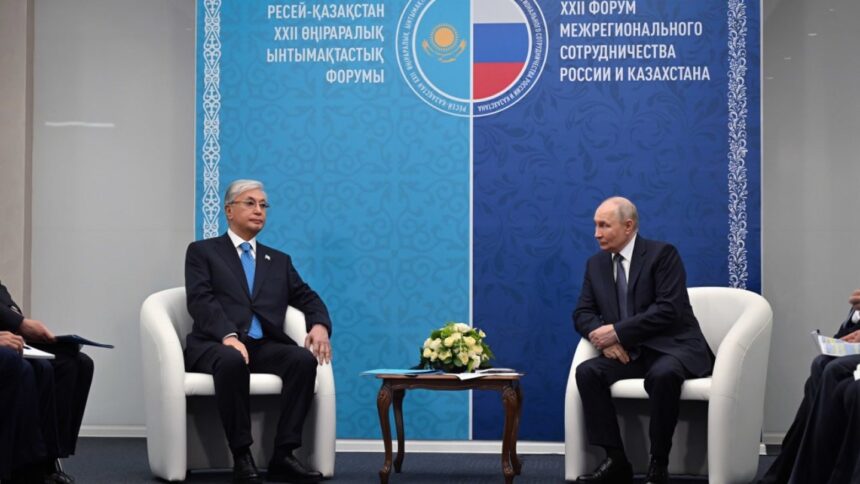
Kazakhstan’s President Kassym-Jomart Tokayev, leader of a country formally allied with Russia through the Collective Security Treaty Organization, publicly urged Vladimir Putin on July 25 to freeze the war in Ukraine.
The significance lay not simply in another ceasefire proposal, but in its delivery from inside Moscow’s own security bloc – and directly beside Putin during a televised meeting in Omsk.
Tokayev said the war’s “nature” remained difficult to understand. Unlike the historically rooted dispute between Armenia and Azerbaijan, he said, Russia’s conflict with Ukraine was “very difficult” to explain. He proposed returning to an “Istanbul Formula 2.0” followed by guarantees from major powers.
The appeal was not the first from a non-Western leader – India, Turkey, China have advocated negotiations or ceasefires. But it was Tokayev’s bluntest public intervention, and a rare challenge from a current Russian treaty ally.
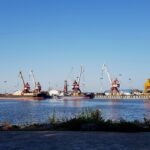
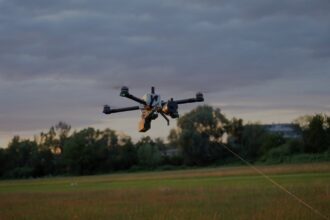
Economic pressure provides context. The Caspian Pipeline Consortium carries roughly 80% of Kazakhstan’s oil exports to a Black Sea terminal near Novorossiysk. July drone strikes hit tankers serving the terminal, restricting loading and forcing Kazakhstan to cut production.
The Wall Street Journal reported that Chevron approached the Trump administration to protect its Kazakh operations. Washington subsequently warned Ukraine against attacking non-Russian vessels. Kyiv denied targeting Kazakh interests.
No evidence proves that the oil disruption caused Tokayev’s intervention. But the timing suggests Russia’s continuing war now threatens the income and strategic stability of one of its own allies.
Kremlin spokesman Dmitry Peskov rejected a freeze and blamed Kyiv. That reverses responsibility: Russia invaded Ukraine and can halt its offensive without demanding the victim accept annexation.