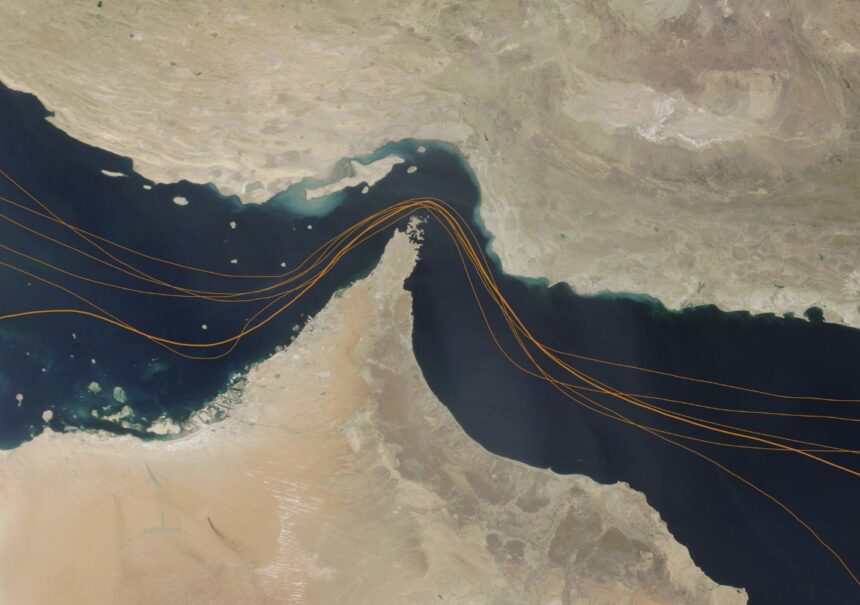
Commercial traffic through the Strait of Hormuz has fallen roughly 70% since fighting resumed, and the ships still crossing overwhelmingly favor the route Iran designates over an alternative corridor backed by the United States.
Crossings dropped from about 45 a day during the June 7–July 7 truce to around 13, according to Kpler, which said remaining traffic had shifted almost entirely toward Iran’s northern route.
Windward data reported by Argus showed that on July 15, 13 of 18 identifiable vessels entering the Gulf used the Iran-designated route, compared with one on the southern corridor along Oman. Outbound, eight used the Iranian route and one the alternative. Some vessels have crossed the southern route with U.S. assistance or with transponders off, meaning it is not unused – but it accounts for only a small fraction of visible traffic.
The dispute goes beyond navigation. Under the June 17 U.S.-Iran memorandum, Tehran agreed to arrange safe commercial passage through Hormuz for 60 days while Washington committed to removing its naval blockade. Since fighting resumed, however, Iran has asserted authority over how vessels cross the strait.
Reuters reported on July 27 that Iran said it had turned back six ships accused of violating its designated routes, while Tehran and Washington continue to dispute who has authority over navigation through the chokepoint.
AIS data also provide an incomplete picture. Maritime intelligence firm Windward has documented substantial dark shipping around Hormuz, alongside GPS interference near major Gulf anchorages, meaning visible crossing counts can understate actual vessel movements.
But the imbalance between the routes still matters. Military protection alone has not persuaded most visible commercial traffic to use the U.S.-backed alternative.
Iran does not need to close Hormuz completely to influence how it functions. If security risk pushes traffic down while the ships that continue crossing overwhelmingly follow Tehran’s preferred route, Iran can exert practical control over navigation without maintaining a total blockade.
The contest over Hormuz is increasingly not only about whether the waterway remains open, but whose rules ships follow when they risk crossing it.