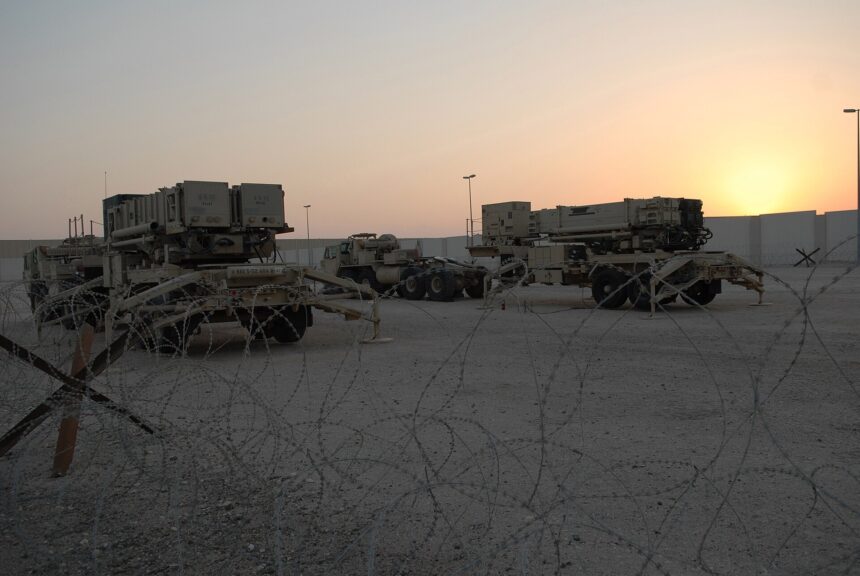
U.S. officials fear Russia and China may factor depleted American missile-interceptor stocks into decisions on Ukraine, Europe and Taiwan, after the Iran war consumed a share of critical air-defense munitions, The New York Times reported Sunday. That is an assessment of strategic risk, not evidence either leader has decided on new action.
Pentagon inventories are classified, but CSIS estimated that four systems – PrSM, SM-3, THAAD and Patriot – may have expended more than half their prewar inventories in the Iran war’s first 39 days. A July 27 CSIS update put remaining stocks at fewer than 1,000 Patriot and roughly 250 THAAD interceptors, with “no good alternatives” for either against ballistic missiles.
CSIS said the shortage creates “near- to medium-term risk” for defending U.S. forces in a future Western Pacific conflict with China. Manufacturing lead times have stretched from roughly 24 to 36-plus months as “munitions orders have outstripped production capacity in recent years,” CSIS said. The Pentagon has since announced seven-year agreements to expand PAC-3 MSE and THAAD production. Returning the seven examined inventories to estimated prewar levels could take one to four years; reaching levels adequate for a China conflict would take longer.
Officials cited interceptor availability as one factor, among others, in Trump’s decision to defer a larger escalation after 13 nights of renewed strikes. CSIS has termed the broader picture a “window of vulnerability”: depleted stocks do not prove Beijing or Moscow have decided to act, but they narrow the margin in which U.S. power projection is unconstrained by logistics.