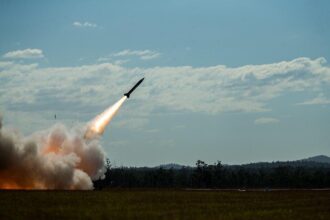
Yemen’s Houthis said Tuesday they fired ballistic missiles at the Saudi-flagged tanker NCC Ghazal in the Red Sea, alleging it had ignored blockade warnings, and claimed the missiles forced it to reverse course, according to Houthi military spokesman Yahya Saree. The tanker had last shown on AIS tracking near Yanbu, the terminus of Saudi Arabia’s east-west oil pipeline, on July 23. No independent confirmation of impact, damage or casualties was available.
The claim emerged as Reuters reported, citing six sources including a senior Iranian official, that China has held direct talks with the Houthis to secure safe passage for its own tankers through Bab el-Mandeb. Sources said safe passage was arranged with the Houthis vessel by vessel rather than through a blanket exemption; the request does not extend to lifting the wider Houthi blockade of Saudi-linked shipping.
That distinction is visible at sea. On July 23, two COSCO-managed tankers, Xin Long Yang and Cosnew Lake, sailed through Bab el-Mandeb carrying Saudi crude loaded at Yanbu, even as Saudi-flagged vessels came under attack. Lloyd’s List reported that Chinese vessels “appear to retain partial safe passage,” while separately confirming the two COSCO tankers received Houthi clearance.
China publicly says shipping lanes should stay open and safe for all. In practice, its bilateral approach preserves Beijing’s access to Gulf crude while Saudi-linked shipping remains exposed — a passage regime shaped by nationality and negotiation rather than universal navigation rights.