The modern maritime order is designed to separate a ship’s right of passage from the nationality of its owner, the origin of its cargo and the political allegiance of its customer. Across several of the world’s most important sea lanes, that separation is beginning to break down.
Iran is seeking payments connected to passage through the Strait of Hormuz. Yemen’s Houthis are weighing fees on shipping through Bab el-Mandeb. Russia is considering putting soldiers and heavy weapons aboard grain carriers and is already escorting its own sanctioned tankers with warships. In the South China Sea, coast-guard vessels increasingly use physical force to determine who may fish, resupply an outpost or maintain a government presence. These are different conflicts with different legal foundations. Together, they point toward a system in which passage depends increasingly on political clearance, military protection or an armed actor’s restraint.
Access Replaces Navigation Rights
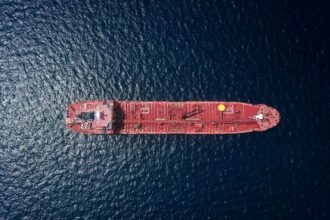
An Omani proposal backed by Gulf states would let Iran collect voluntary contributions connected to managing Hormuz, modeled on a cooperative mechanism used in the Straits of Malacca and Singapore to fund navigation and environmental services. The distinction matters: ports and canals routinely charge vessels, and coastal states can bill for specific services. But the International Maritime Organization says transit through Hormuz must stay non-discriminatory, unobstructed and free of tolls, and the UN Convention on the Law of the Sea bars suspending transit passage through an international strait. The proposal follows months in which Tehran used checkpoints, inspections and force to control access; some vessels reportedly paid Iranian authorities over $150,000 for security or navigation arrangements, while ships tied to China and Russia received preferential treatment.
At Bab el-Mandeb, Houthi officials are discussing fees on most ships transiting the strait, with Chinese vessels exempt, Reuters reported July 30, though no timeline has been set. That is separate from a parallel track: China has negotiated directly with the Houthis for ship-by-ship clearance of its own tankers, while ships loading at Saudi ports have been warned they may be attacked. When the same armed actor creates the danger, offers exemptions, and discusses formal fees, the line between a navigation service and a coercive payment gets hard to hold.
Merchant Ships Join The War
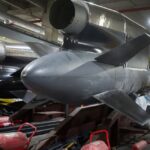
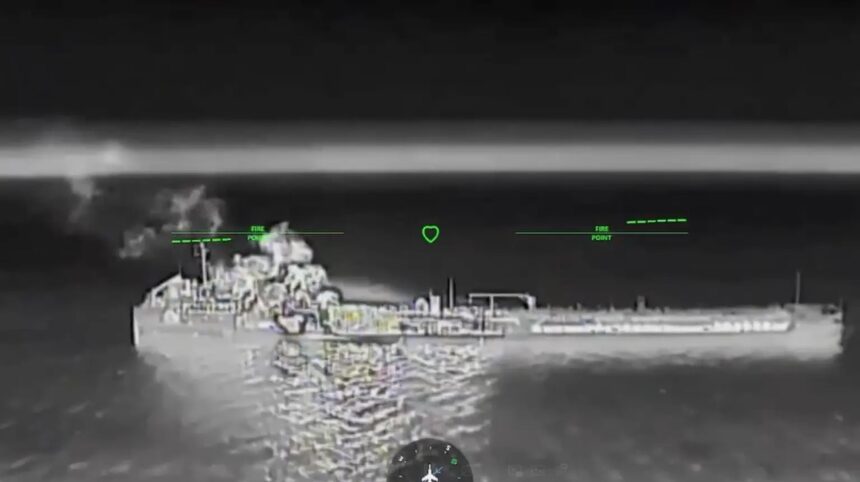
Russia’s response to Ukrainian drone operations shows a second strand of the same shift. According to proposals reviewed by Bloomberg, Moscow is considering placing military teams, heavy machine guns, armour, anti-drone nets and possibly mobile missile launchers aboard grain carriers from the Sea of Azov, with patrol boats escorting them in convoys. The proposal follows a Ukrainian campaign against tankers and vessels supporting Russian logistics and fuel deliveries to occupied Crimea. Ukraine reported 28 vessels struck or damaged in one night – 21 tankers, four tugs, two cargo ships and a dredger, according to AP; Russia acknowledged only four ships hit, and the full Ukrainian tally remains unverified. What is established is that Russia temporarily suspended passage through the Don–Azov shipping channel, a route that normally carries up to a quarter of its wheat exports.
The legal consequences of arming these vessels are real but narrower than they might appear. The San Remo Manual – a non-binding but influential restatement of the law governing armed conflict at sea – says enemy merchant vessels may become military objectives if they act as naval auxiliaries, assist intelligence gathering, sail under enemy-warship escort or carry weapons capable of damaging a warship; it expressly excludes light individual weapons used for crew defence. Russia’s proposed arrangements would complicate targeting assessments for any adversary, but military guards or defensive weapons would not automatically make every grain carrier a lawful target. The assessment stays fact-specific, turning on what is actually mounted, who operates it and how the convoy is escorted. Ukraine’s naval-drone campaign, which has let a country without a large conventional navy deny Russia freedom of action across parts of the Black Sea, is the capability driving this response, and similar technology is spreading to other states, armed groups and potentially criminal networks.
Insurance Becomes The Weapon
The Baltic Sea shows the same pressure applied to sanctions enforcement rather than open war. Western states have detained at least 14 vessels linked to Russia’s roughly 1,300-ship “shadow fleet” between December 2025 and March 2026 alone, according to United24 Media, out of some 600 the EU has sanctioned; Estonia has since said it will refrain from further detentions because Russia now keeps a permanent patrol of two or three armed vessels in the Gulf of Finland, Reuters reported, making any boarding a potential direct encounter with Russian forces. The same waters have seen two Chinese-linked ships investigated for severing undersea cables and a gas pipeline by dragging their anchors, the Newnew Polar Bear in 2023 and the Yi Peng 3 in 2024, though a Swedish probe into the Yi Peng 3 found no conclusive evidence the damage was intentional, and the Hong Kong case against the Polar Bear’s captain remains contested in court. In the South China Sea, meanwhile, Chinese and Philippine vessels clashed repeatedly in July near Second Thomas and Scarborough shoals, with the Philippine Coast Guard reporting water-cannon attacks and dangerously close approaches against vessels supporting Filipino fishermen. China’s pressure around Taiwan remains a separate and larger military risk, though these ship-on-ship clashes involved the Philippines, not Taiwanese vessels.
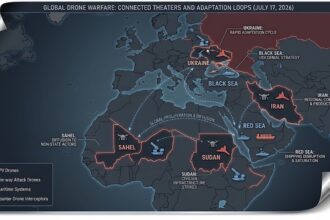
These theatres are not operationally equivalent: Hormuz and Bab el-Mandeb are commercial chokepoints under direct armed pressure, the Black Sea is an active war zone, the Baltic concerns sanctions enforcement encountering Russian military protection and unresolved cable-sabotage cases, and South China Sea coercion currently falls primarily on public and fishing vessels. What connects them is a cheaper route to control than closing a strait or fielding a battle fleet: making a route dangerous enough, or its legal status ambiguous enough, that the Joint War Committee in London and other underwriters weigh expanding high-risk designations and raising war-risk premiums. Avoiding Hormuz and Bab el-Mandeb can already add roughly a month to a tanker voyage and about $2.5 million in fuel and canal costs, according to Reuters – costs that eventually reach consumers and states dependent on imported food and energy.
The maritime order is not collapsing everywhere. But at its most vulnerable points, legal freedom of navigation is being replaced by a harsher practical test: whether a vessel has the political clearance, defensive protection and insurance required to exercise it. An actor that can make a route commercially uninsurable can exercise temporary, de facto control over access without possessing lawful sovereignty there.