Drones are no longer supporting weapons used alongside artillery, aircraft and missiles. Across several of the world’s most active conflicts, they now shape how forces find targets, hold territory at risk, protect infrastructure and impose costs on opponents.
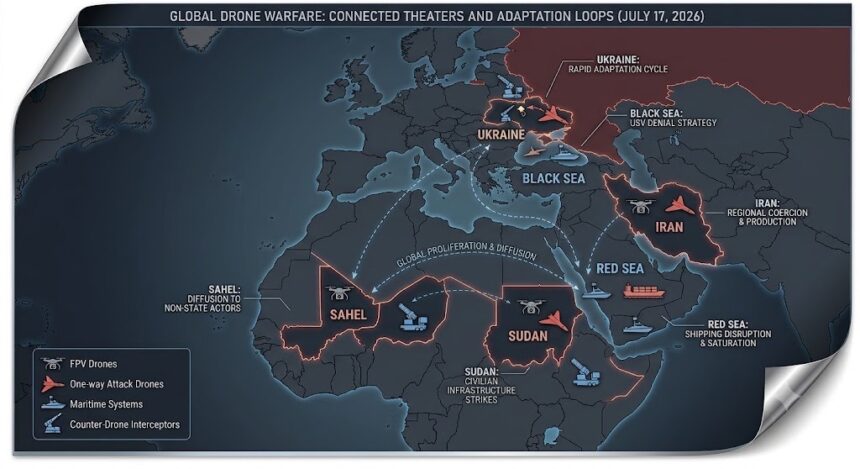
Ukraine remains the most important testing ground. Its armed forces and defense-technology sector can modify designs, software and tactics within days. Russia has answered with expanded domestic production, new countermeasures and adapted low-cost systems. The same logic now extends well beyond Eastern Europe. Iran has turned one-way attack drones into instruments of regional coercion. The Houthis have used unmanned systems against shipping and naval forces in the Red Sea. In Sudan and the Sahel, state forces, militias and insurgent groups are acquiring capabilities once limited to advanced militaries.
These threads are not centrally directed. Technologies are transferred, copied, commercially sourced or developed independently under similar pressures. But together they are producing a connected global drone battlefield in which lessons from one conflict quickly reach another.
Ukraine: The Fastest Adaptation Cycle
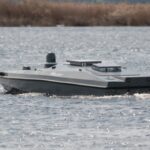
Small FPV drones now conduct reconnaissance, strike vehicles, pursue individual soldiers, carry mines and correct artillery fire. Larger systems hit logistics hubs, airfields, refineries and infrastructure well behind Russian lines. Uncrewed surface vessels have let Ukraine contest the Black Sea despite entering the war with no fleet able to match Russia’s.
A CSIS assessment of the maritime campaign found that sea drones, cruise missiles and other asymmetric tools let Ukraine deny Russia uncontested control of the Black Sea and inflict significant fleet losses – evidence that comparatively cheap unmanned systems can constrain a much stronger conventional navy.
The advantage has been organizational as much as technical: civilian engineers, volunteer networks, military units and private manufacturers testing designs in combat and pushing fixes back into production within days. But that speed rests on a fragile base. A [2025 RUSI report](https://static.rusi.org/rp-drone-supply-chains-china-nov-2025_0.pdf) put Ukrainian demand for FPV and interceptor drones in the millions, while warning that production still depends on Chinese-origin motors, sensors and flight controllers — a chokepoint that leaves the pace of the front line partly hostage to a supply chain neither side controls.
Russia’s Counter-Revolution
Russia entered the war with stronger conventional forces but a less flexible small-drone ecosystem, and has since closed much of that gap. Its forces have introduced fiber-optic-controlled FPVs that stay linked to operators by cable instead of radio, bypassing the jamming that defeats standard FPVs. [NATO’s Allied Command Transformation](https://www.act.nato.int/article/innovation-challenge-fibre-optic-drones/) documented the first fielded examples in late 2024 and called them an operational threat requiring new detection methods.
The technology is not a clean solution. Cable length, terrain and the physical burden of the spool limit fiber-optic drones and tie pilots to fairly static positions even as the tether defeats radio jamming — a lethal but tightly constrained tool that Ukraine has since begun fielding versions of itself.
Russia has also industrialized Iranian one-way attack-drone designs, combining them with missiles, decoys and electronic tactics in layered strike packages meant to force Ukrainian defenders to reveal radar positions and burn through scarce interceptors — not simply to overwhelm numerically.
Iran and the Economics of Saturation
Iran has built a different model, investing in one-way attack drones that are cheaper to produce than cruise missiles and can be launched in large numbers. A [March 2026 CSIS analysis](https://www.csis.org/analysis/unpacking-irans-drone-campaign-gulf-early-lessons-future-drone-warfare) found Shahed-series drones became Iran’s main tool for sustaining pressure on Gulf states during the opening phase of its retaliation campaign, used in saturation waves that forced defenders to expend costlier interceptors even when the drones caused limited direct damage.
The military relationship with Russia runs in both directions. Iran has supplied Shahed-derived designs that Russia now produces domestically; in exchange, leaked Russian defense-export documents reviewed by [Iran International](https://www.iranintl.com/en/202510069695) and other outlets — whose authenticity has not been officially confirmed — describe what they say is a roughly €6 billion agreement for 48 Russian Su-35 fighter jets for Iran, with deliveries beginning this year. Analysts including the [Stimson Center](https://www.stimson.org/2023/iran-may-trade-drones-for-russian-fighter-jets-helicopters-and-trainers/) have described the arrangement as a barter of Iranian drone technology for aircraft Iran could not otherwise obtain quickly. The precise terms of any technical exchange beyond that broad framing remain unverified.
Iran has also helped diffuse the technology through regional partners: CSIS’s [Missile Threat project](https://missilethreat.csis.org/missile/shahed-131-and-136/) records the Houthis using Shahed-derived systems against commercial vessels in the Red Sea under local designations, adapting the designs rather than simply receiving finished weapons.
Maritime Warfare Without Traditional Fleets
The Black Sea and Red Sea show two different ways unmanned systems challenge naval power. Ukraine has used surface drones offensively against Russian warships, ports and coastal infrastructure; the Houthis have relied more on aerial drones and missiles against merchant shipping. Both undermine the assumption that control of a waterway automatically belongs to whoever has the larger fleet.
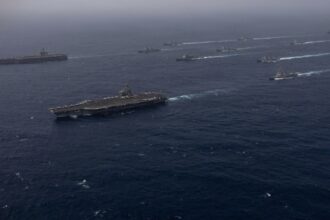
Even successful defense is costly. A [CSIS review of future seapower](https://www.csis.org/analysis/chapter-11-future-seapower) found the US Navy expended roughly 200 naval air-defense missiles against Houthi attacks over about 15 months in 2024–2025 — interceptors priced in the millions of dollars apiece used against drones and missiles worth a small fraction of that, consuming close to a year and a half of production at prior procurement rates for some missile types.
Drones cannot replace fleets or hold sea lanes indefinitely; intelligence, targeting and sustained access still require conventional platforms. But they can deny access and impose costs disproportionate to their own price — turning sea control into a contest between traditional ships and distributed sensors, missiles and unmanned vehicles.
Africa’s Expanding Drone Battlefield
The [Africa Center for Strategic Studies](https://africacenter.org/spotlight/2025-security-trends-graphics-sudan-sahel-nigeria-somalia-drones-china/) reported at least 31 African countries had acquired military drones, with 93 percent of recorded strikes concentrated in Sudan, Ethiopia, Burkina Faso, Mali, Libya and Somalia, and armed non-state groups in at least nine countries also using them.
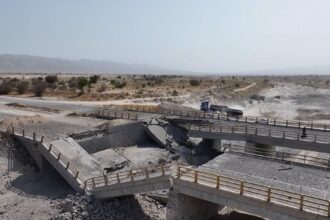
Sudan is the most destructive case. [Human Rights Watch reported](https://www.hrw.org/news/2026/07/10/european-parliament-resolution-on-sudan-should-spark-action) that 15 drone strikes killed at least 45 civilians in and around El Obeid over three weeks in June, with residents describing repeated strikes on water, fuel and electricity infrastructure. One resident told HRW the strikes were hitting “infrastructure like water, fuel and the electricity station we need for our survival.”
In the Sahel, [ACLED has documented](https://acleddata.com/update/africa-overview-april-2025) modified commercial drones used by state forces, the Wagner Group and armed groups including Jama’at Nusrat al-Islam wal-Muslimin for reconnaissance, targeted strikes and improvised-explosive delivery. ACLED has [recorded more than a dozen JNIM drone attacks](https://acleddata.com/update/africa-overview-may-2025) using IEDs since the group’s first attempt in Mali in 2023, with the tactic spreading into Burkina Faso and toward coastal West Africa. The pattern suggests armed groups do not need a domestic defense industry to enter drone warfare — commercial systems, imported parts and basic engineering knowledge are enough for reconnaissance and limited strike capability.
The Counter-Drone Race
Defense is shifting from a search for one solution toward layered systems: electronic warfare against radio-controlled drones, guns and missiles for physical intercepts, directed-energy weapons still limited by weather and power requirements, and increasingly, interceptor drones used to hunt attack drones at a fraction of a missile’s cost.
NATO has made this a modernization priority. In July 2026 the alliance [announced planned investment of more than $40 billion](https://www.nato.int/en/news-and-events/articles/news/2026/07/07/nato-allies-invest-40-billion-dollars-in-counter-drone-capabilities-and-drone-training) in counter-drone capabilities over five years and said members intend to train five times as many drone operators by the end of 2027 — a forward-looking commitment that does not by itself resolve current shortfalls in European air-defense stocks. A [May 2026 layered counter-drone exercise in Romania](https://shape.nato.int/news-archive/2026/nato-allies-test-layered-counterdrone-defences-in-romania-in-support-of-eastern-sentry) incorporated Ukrainian experts and current battlefield tactics from the war with Russia — a sign that Ukraine is exporting operational lessons back into NATO doctrine rather than only receiving them.
The Economics of Mass
Traditional procurement favors small numbers of expensive platforms meant to last decades. Drone warfare favors large quantities of systems that may be destroyed on a first mission or obsolete within months, demanding shorter contracting cycles, modular designs and direct feedback between operators and engineers. The central question is no longer which weapon is more capable, but whether an entire system — detection, production, launch, replacement, adaptation — can outpace an opponent’s.
What Comes Next
Autonomy will expand where communications are unreliable, with drones increasingly navigating and continuing missions after losing contact with operators; claims of fully autonomous battlefield decision-making should still be treated cautiously. The line between drone and counter-drone will keep narrowing, and maritime and underwater systems will likely spread beyond the Black Sea as states look for cheaper ways to monitor harbors and coastlines.
The larger shift may be political. Precision-strike and surveillance capabilities once limited to advanced militaries are now reaching actors that could never have built a conventional air force. That diffusion can strengthen weaker states’ defenses, but it also hands militias, insurgents and authoritarian governments new tools for coercion and attacks on civilians. Ukraine remains the most important laboratory for this technology, but the lessons no longer stay there — they move through defense industries, supply chains, regional partnerships and armed networks from the Black Sea to the Gulf and across Africa, and civilians are likely to bear much of the cost when these weapons spread faster than the rules and accountability mechanisms meant to govern them.