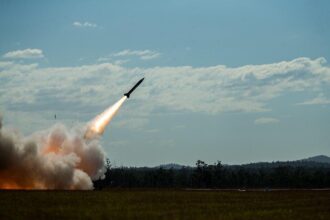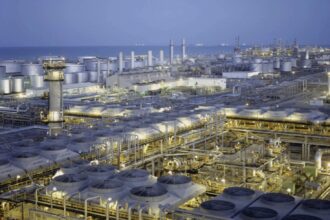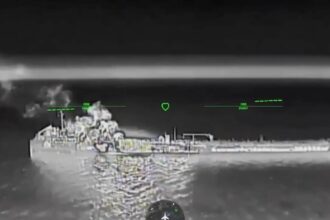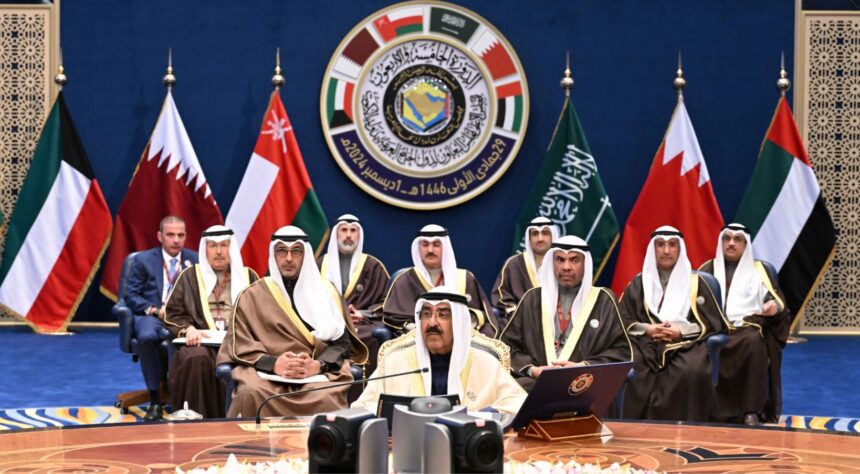
The US-Iran war is achieving what decades of summits and declarations could not: it has handed the Gulf monarchies a single, immediate security problem. Iranian missiles and drones have repeatedly struck Gulf territory. Reported strikes on Kuwaiti electricity-generation and water-desalination facilities took generating units out of service. Yemen’s Iran-aligned Houthis have declared a blockade of Saudi Arabia and warned shipping companies against calling at its ports; reports have placed several vessels on altered courses. The monarchies did not choose this war, yet they absorb much of the retaliation while exercising little control over either Washington’s campaign or Tehran’s response.
That shared exposure may now become the foundation of a new regional order: less ideological, more transactional, and increasingly set on reducing dependence on any single outside protector.
The Dual-Chokepoint Trap
Tehran’s pressure is increasingly operating across two waterways at once. As hostilities threaten traffic through the Strait of Hormuz, the Houthi blockade threat endangers the second exit – the Bab el-Mandeb – through which Riyadh routes oil to escape the first. Iran has reportedly signalled that the Houthis would shut the Red Sea gateway if Washington strikes its power network.
The effect of that dual-chokepoint pressure is what makes it matter. Saudi Arabia built its east–west pipeline to Yanbu precisely to bypass Hormuz; a credible threat to Bab el-Mandeb erodes that hedge, exposing the kingdom’s alternative export route as well and placing the Middle East’s two principal oil-export corridors at risk at once. One apparent objective may be to make disruption costly enough that Riyadh presses Washington toward a ceasefire.
Israel remains central to Arab public anger, especially over Gaza. But for Gulf governments, Iran’s ability to strike infrastructure and threaten both export routes has become the more immediate danger to state and economic security.
For Saudi Arabia, Kuwait, Bahrain, the United Arab Emirates, Qatar and Oman, the shared problem is therefore larger than Iran: it is the absence of strategic control. Iran and its partners can strike them; Israel can wage campaigns that spill across their borders; Washington can widen a war whose costs they carry. American protection, they have learned, has not kept Gulf territory off the target list.
Gulf Autonomy, Not an Islamic NATO
The response is a search for alternatives, not a bloc. Pakistan and Kuwait are discussing an expanded defence arrangement tied to energy credits and a bonded fuel-storage project – an exchange described as “barrels for boots.” Islamabad already holds a mutual-defence pact with Riyadh, and Turkey, Pakistan and Saudi Arabia are drafting a separate security agreement.
The logic has clear limits. Pakistani officials have ruled out combat deployments at this stage: Islamabad is seeking energy support while avoiding direct military involvement against neighbouring Iran. The negotiations therefore expose the limits of collective defence – fragmented transactional hedging, not the “Islamic NATO” the labels imply.
The same tension runs through Gulf diplomacy toward Tehran. In public, GCC states hedge and keep channels open; several have also pressed Washington for stronger air defence and for any settlement to degrade Iran’s missile, drone and maritime-coercion capabilities rather than restore another temporary truce. Saudi Arabia’s nuclear ambitions belong to the same ledger: acquiring the technological option, even short of a weapon, buys bargaining power and deepens proliferation risk. Riyadh increasingly behaves less as a client seeking protection than as a state accumulating alternatives.
Corridors as Posture, Not Yet Infrastructure
The war is also redrawing the Gulf’s map of connectivity – on paper. Saudi Arabia and Turkey have agreed to pursue a railway linking the two through Jordan and Syria within three to four years, which Turkish officials say could eventually carry goods, oil, gas and passengers.
That timeline should be read as ambition, not schedule. Syria’s transit corridor is fragmented, unfinanced and security-compromised, with roughly 400 kilometres of track still missing between Syria and Jordan and customs systems that would take years to build. The project is best understood not as an imminent logistics asset but as an institutional posture – a signal of long-term pivot options away from vulnerable maritime chokepoints and competing visions such as the India-Middle East-Europe Corridor (IMEC).
The nearer analogy is not a restored caliphate but a looser echo of the European method: begin with practical interests – pipelines, ports, grids, fuel reserves, air defence, rail – and let those interests pull politics behind them. Europe started with coal and steel because shared control of strategic industry made war harder and cooperation more profitable. Economic ties do not guarantee peace, as Europe’s own history shows, and an integrated Gulf would not resolve Gaza, end the rivalry with Iran, or normalise relations with Israel; Arab opinion and Palestinian rights remain binding constraints.
The pattern is nonetheless clear. By striking Gulf infrastructure and threatening Saudi shipping through an aligned movement, Tehran is manufacturing the common security interest it long worked to prevent; by failing to shield its partners from retaliation, Washington is giving them reason to build capabilities of their own. The coming order will not rest on shared ideology, but on its inverse – a shared preference for commerce and transactional power in a region where permanent war has become too expensive to sustain.