Russian strikes on Ukraine’s Black Sea ports have cut the country’s grain exports to a trickle. Ukraine has shipped only about 500,000 tons since the start of August, roughly a fifth of its normal volume, Agriculture Minister Taras Vysotskyi said this week, as reported by Bloomberg. Odesa’s port complex usually handles about 90% of the country’s grain exports.
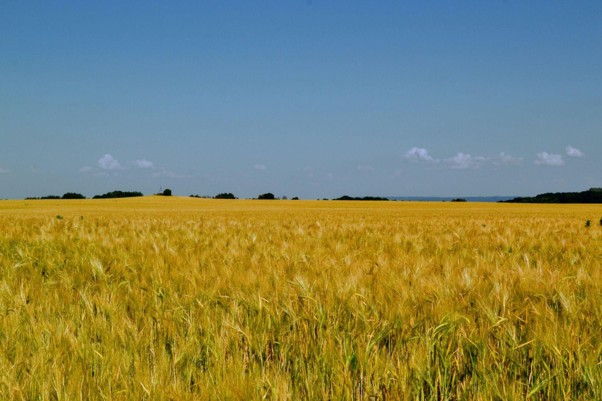
This year’s harvest was shaping up well before the strikes hit. With ports closed, farmers are selling into a domestic market where prices have dropped roughly 30% below export levels, and some producers are selling below what it cost them to grow, per Bloomberg. Many rely on harvest sales to cover rent, wages and loan payments ahead of the next planting cycle, leaving little room to hold out for better prices.
Ravil Dzhamally, who returned to his farm in Kherson region after Russian forces withdrew, described the shift from optimism to hardship: “When we started harvesting, the feeling was very positive.” He is now selling grain at a loss to cover basic costs. Oleksandr Havryliuk, farming near the front line in Kharkiv region, called the situation “dismal,” saying he can’t even afford to move his harvest to storage.
Alternative Routes
Ukraine’s alternatives to Black Sea shipping face hard capacity limits, not just delays. Rail lines to Europe and Danube river ports can move only a fraction of what sea routes carried, and rising war-risk insurance costs have made some voyages commercially unworkable even on routes that remain technically open, according to European Business Magazine. Low water levels have further squeezed Danube capacity this year.
Economic Impact
Oxford Economics estimates the blockade could cost Ukraine 1.8% of GDP this year. Ukraine’s central bank puts losses at up to $2.5 billion. Other estimates are lower; the Centre for Economic Strategy has put the hit at 0.6 to 0.9% of GDP.
Some human rights groups have accused Russia of using the strikes to undermine Ukraine’s standing as a global grain exporter as part of a broader economic campaign, according to The Conversation. Moscow has not directly addressed the accusation.
Government Response and Outlook
President Volodymyr Zelensky has approved subsidized loans for farmers and requested a €220 million EU grant for storage capacity. The Agriculture Ministry warns storage space could run out by early November, a deadline driven by the export bottleneck itself, since current strikes are hitting ports and vessels rather than storage facilities.
With no sign of the strikes easing and alternative routes structurally unable to absorb the shortfall, the coming weeks will determine whether Ukraine’s farm sector faces a temporary squeeze or the start of a wider wave of bankruptcies heading into next year’s planting season.