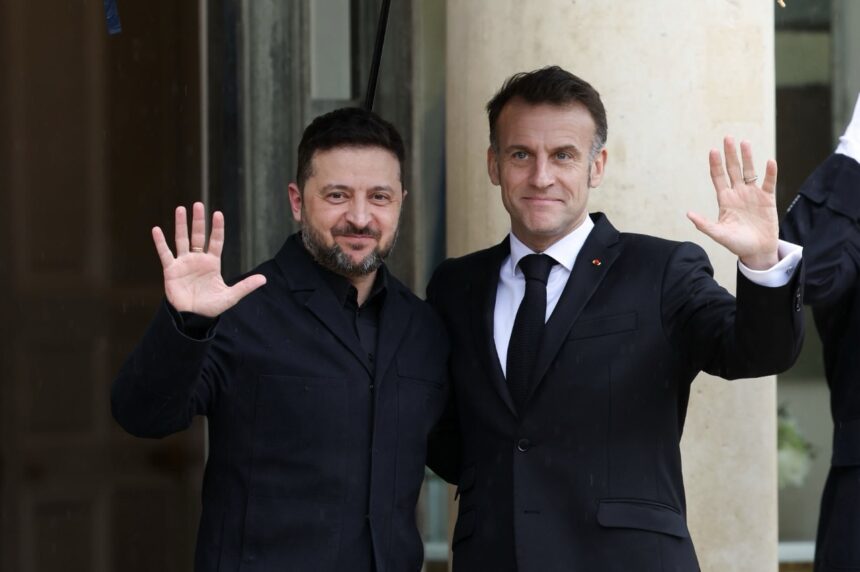
France will license Ukraine to produce SCALP long-range cruise missiles, AASM Hammer precision-guided bombs and Aster-30 interceptor missiles, President Emmanuel Macron announced after meeting Ukrainian President Volodymyr Zelenskyy in Paris on July 13. The agreement marks the first time France has authorized production of its own weapons systems on Ukrainian soil rather than supplying finished weapons, implementing a bilateral defense roadmap the two leaders agreed in principle in November 2025.
Read together, the announcements reveal a broader strategic shift. The 16 Rafale fighter jets Ukraine has ordered – expected to enter service in 2028–2029 – are designed to employ the same SCALP missiles and AASM bombs that Kyiv will now be licensed to manufacture domestically. Paris is no longer simply transferring weapons; it is enabling Ukraine to build critical parts of the weapons ecosystem itself, linking domestic missile production with the aircraft intended to carry them.
That marks a structural change in European military support. Licensing production of advanced systems such as SCALP and Aster-30 moves Ukraine incrementally away from dependence on Western arms deliveries – often shaped by production bottlenecks, political negotiations and election cycles – and toward a more self-sustaining defense industry. Zelenskyy also confirmed orders for next-generation SAMP/T air-defense systems and additional radar to strengthen Ukraine’s integrated air-defense network.
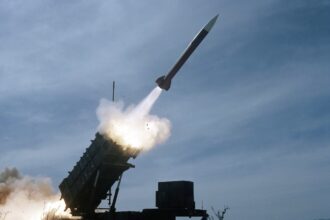
The French announcement follows a similar move from Washington. On July 8, U.S. President Donald Trump said the United States would license Ukraine to produce Patriot interceptor missiles. Neither initiative offers a rapid solution. Defense analysts say establishing licensed production of advanced Western missile systems requires new manufacturing facilities, trained personnel, certified supply chains and technology transfer agreements, meaning meaningful output is likely to take years rather than months. Reuters reported that even with political approval, scaling production of sophisticated air-defense missiles remains constrained by manufacturing complexity and limited industrial capacity.
The Paris summit of the Coalition of the Willing also launched the Integrated Anti-Ballistic Missile Coalition, bringing together Ukraine, France, the United Kingdom, Germany, Italy, the Netherlands, Norway, Spain, Sweden and Denmark. The initiative will support development of Ukraine’s FREYJA interceptor program, which President Zelenskyy said he hopes will become operational within the next 12 months. Rather than replacing Patriot or SAMP/T, the coalition is intended to add another layer to Europe’s emerging integrated missile-defense architecture while accelerating Ukraine’s own interceptor development in response to expanding missile cooperation between Russia, Iran and North Korea.