Europe’s Security Agenda Widens
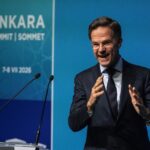
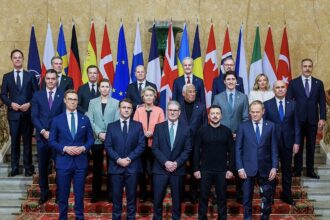
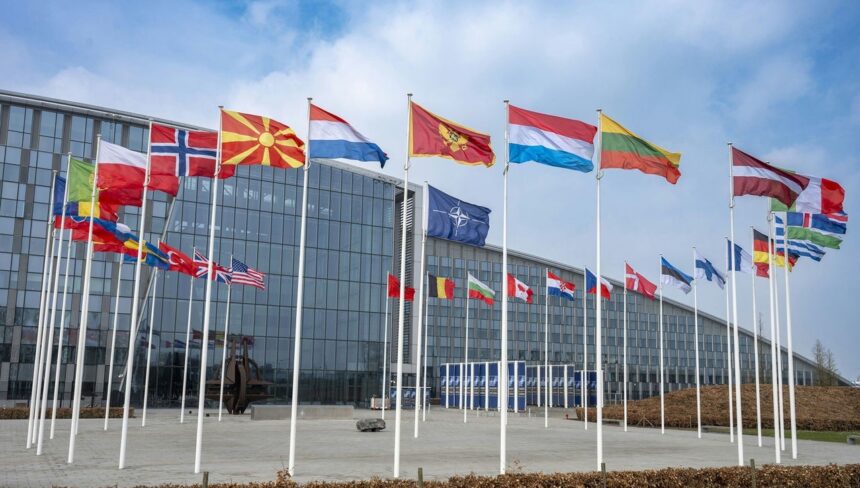
The NATO summit opening in Ankara this week is formally focused on defence spending, industrial production and continued support for Ukraine. Yet the week’s wider diplomacy – from French President Emmanuel Macron’s visit to Damascus to planned meetings between U.S. President Donald Trump, Ukrainian President Volodymyr Zelenskyy and Syrian President Ahmad al-Sharaa – illustrates a broader reality: Europe’s security agenda is no longer confined to a single conflict or region.
Ukraine remains NATO’s central strategic challenge: a European state resisting Russia’s full-scale invasion and the principal test of the Alliance’s credibility in collective defence and deterrence. Syria presents a different kind of challenge. Following the collapse of Bashar al-Assad’s government in December 2024, the country’s transitional authorities are attempting to restore state institutions, attract foreign investment and contain persistent internal violence while seeking gradual diplomatic normalization with Europe.
NATO has not folded these crises into a single formal theatre, and its core mission remains unchanged. But European policymakers increasingly confront them through shared strategic constraints: political attention, defence-industrial capacity, counterterrorism cooperation, migration management, energy security and the credibility of long-term Western commitments. The connections are less institutional than practical, reflecting how multiple crises increasingly compete for the same governments’ finite resources and diplomatic focus.
Damascus Tests Syria’s Diplomatic Opening
That overlap became visible during Macron’s visit to Damascus. Two improvised explosive devices detonated near the Four Seasons Hotel and the Ministry of Tourism shortly after the French president’s motorcade had departed, wounding at least 18 people. No organisation has claimed responsibility. The attack followed a bombing five days earlier near the Palace of Justice that killed at least nine people. Analysts have suggested the earlier attack may reflect tensions surrounding ongoing trials of former Assad-era officials, while Syrian security services have previously announced arrests of suspected sleeper-cell members linked to remnants of the former regime. Neither assessment has been confirmed as an explanation for Tuesday’s explosions, and investigators have not identified those responsible.
France Moves Into Syria’s Reconstruction
For European governments, Syria is no longer solely a humanitarian or counterterrorism file. It increasingly intersects with migration policy, Mediterranean security, reconstruction finance, sanctions policy and energy diplomacy. Macron’s delegation reflected that broader agenda, including executives from shipping giant CMA CGM and energy major TotalEnergies. CMA CGM’s long-term concession to operate the Port of Latakia has positioned the company as one of the largest foreign commercial investors in post-Assad Syria, while TotalEnergies, ConocoPhillips and QatarEnergy signed a memorandum of understanding in May to explore oil and gas resources in Syrian territorial waters. These agreements demonstrate Europe’s growing economic interest in Syria’s stabilization, although broader debates continue over how quickly political engagement should proceed while questions of accountability and transitional justice remain unresolved.
Ukraine, however, continues to absorb the greatest share of Europe’s security resources. The war consumes artillery ammunition, missile interceptors, intelligence assets, financial assistance and political capital on a scale unmatched elsewhere on the continent. NATO leaders have framed this week’s summit around translating political commitments into practical outcomes through higher defence spending, expanded industrial production and sustained military support for Kyiv.
Whether Europe’s expanding security agenda ultimately creates direct competition for deployable military assets is more difficult to demonstrate than is sometimes suggested. The answer depends on the specific capabilities involved, national force structures and industrial production timelines rather than simple arithmetic. Some commitments reinforce one another, while others inevitably compete for limited budgets and political attention. Treating every crisis as drawing from a single pool of resources risks oversimplifying a far more complex picture.
Russia is not implicated in the Damascus bombings, and there is no evidence connecting Moscow to the attacks. Nevertheless, Russia’s longstanding military and political presence in Syria means that any shift in Damascus’ external relationships forms part of the broader strategic balance in the eastern Mediterranean. That dynamic predates this week’s violence and should not be conflated with the investigation into the explosions themselves.
The Simultaneous-Crisis Test
The Ankara summit therefore tests more than Alliance unity over Ukraine. It reflects a wider challenge confronting Western governments: managing parallel security crises without allowing one to eclipse another. Stabilizing Syria, supporting Ukraine, strengthening defence industries and responding to persistent instability around Europe’s periphery increasingly demand simultaneous attention rather than sequential policymaking.
The question facing European leaders is not which crisis matters most. Ukraine remains the central military challenge to European security. The harder question is whether governments can sustain credible long-term commitments across several strategically connected crises without allowing political attention, industrial capacity or diplomatic focus to become the limiting factor. That – not a formal merger of theatres – is what links Kyiv and Damascus this week.