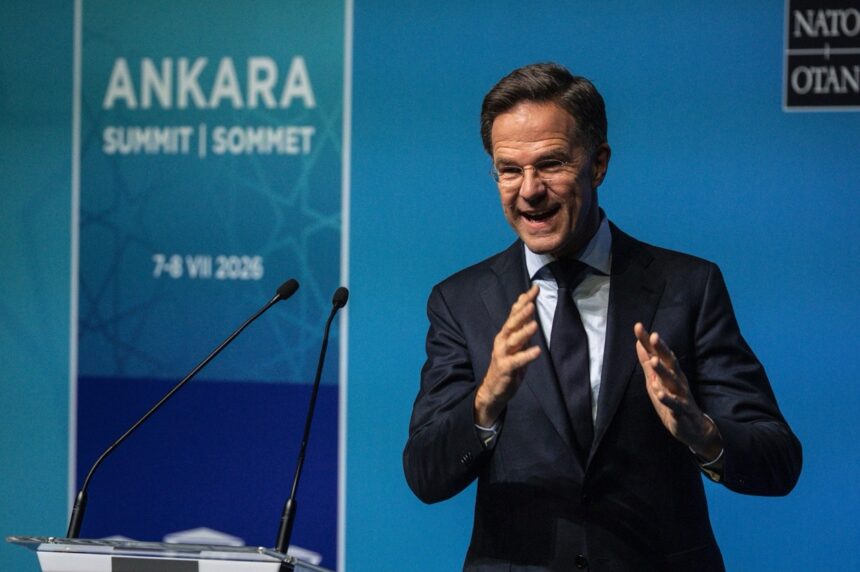
NATO opened its Ankara summit on July 7 with a defence-industry showcase meant to show European allies and Canada are ramping up production, as U.S. President Donald Trump arrived after renewed criticism of the alliance, Reuters reported. Secretary General Mark Rutte called for a defence-industry “revolution,” warning allies they “don’t have the luxury of time”: “The hum of machinery must become a roar.”
Lockheed Martin and Rheinmetall signed a deal to build ATACMS missiles at Rheinmetall’s Unterlüß site in Germany — the first ATACMS production line outside the United States, Reuters reported. The shift comes as Lockheed winds down ATACMS output at its Camden, Arkansas plant while prioritising the newer Precision Strike Missile domestically, even as European and Ukrainian demand for long-range precision weapons remains high.
The showcase follows months of strain between Trump and European allies over defence spending, Iran, Greenland and U.S. force posture. Trump has called the relationship “one-sided” and “not reciprocal,” RFE/RL reported.
Rutte said European allies and Canada are now investing around 4 percent of GDP in defence and security, up from 2 percent, with $258 billion in extra investment over two years, RFE/RL reported. But SIPRI has warned that NATO’s broader 1.5 percent “defence- and security-related” category risks blurring the line between military spending and other resilience costs, complicating assessments of real capability.
Draft summit text reviewed by Reuters commits allies to an “ironclad commitment” to collective defence under Article 5 and €70 billion for Ukraine in 2026. It does not include the “irreversible path” to NATO membership language used in recent summit declarations, but the text remained unfinished as of July 7.
Trump is due to meet Ukrainian President Volodymyr Zelenskyy on July 8. The first day delivered concrete industrial and financial commitments; whether Ukraine’s political path to membership holds at prior summits’ level remains unresolved.