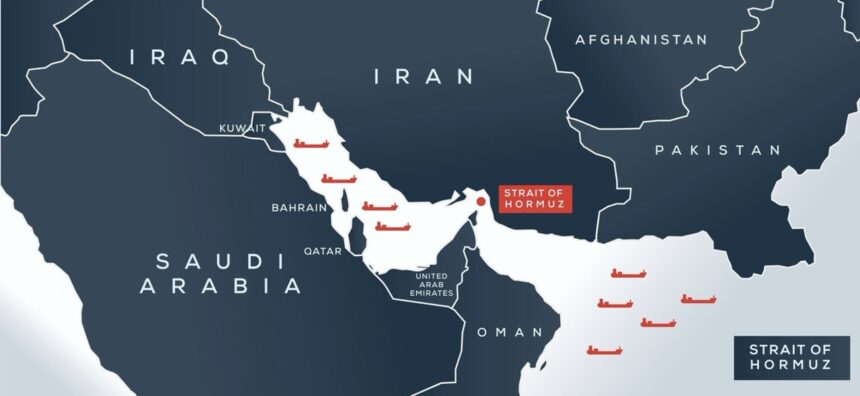
Iran has not issued a formal decree closing the Strait of Hormuz, but the distinction between “open” and “closed” is becoming increasingly misleading. Tracking data compiled by the Center for Strategic and International Studies (CSIS) indicate that commercial traffic through the strait has yet to recover to pre-conflict levels, while some vessels are operating “dark” with their Automatic Identification System (AIS) transponders switched off to reduce their visibility. At the same time, roughly 6,000 seafarers remain stranded in the Gulf, according to the International Maritime Organization, aboard ships still unable to transit safely. Together, those indicators suggest the strait is functioning less like a normal commercial shipping lane and more like a high-risk military transit corridor, regardless of whether Tehran has formally declared a closure.
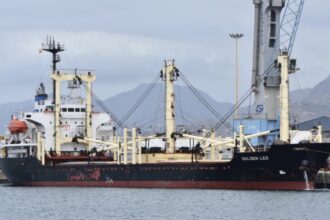
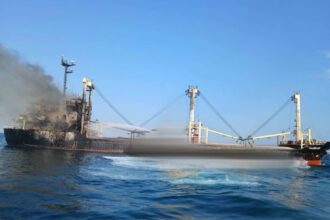
The immediate trigger is the collapse of a peace framework signed barely three weeks ago. On June 17, the United States and Iran signed the Islamabad Memorandum of Understanding, committing Iran to restore commercial navigation through Hormuz while establishing a 60-day window for further negotiations. That arrangement unraveled on July 7 and 8, when three commercial vessels were struck in or near the strait and the United States responded with retaliatory strikes against Iranian military facilities. Iran’s Health Ministry said the attacks killed 14 people and wounded 78 across five provinces, while U.S. Central Command reported striking roughly 90 Iranian military targets, including air defense systems, coastal surveillance assets and naval capabilities, following an earlier wave of strikes against about 80 targets the previous night. President Donald Trump subsequently declared the ceasefire “over,” and Iran has since renewed threats to close the strait outright, further increasing uncertainty for commercial operators.
The scale of what is at stake extends well beyond oil prices. Roughly a quarter of globally traded seaborne crude oil and petroleum products passes through the Strait of Hormuz, alongside about one-fifth of global liquefied natural gas trade, much of it exported from Qatar and the United Arab Emirates. Together, crude oil, refined petroleum products and LNG make Hormuz unlike any other maritime chokepoint. Unlike the Red Sea, where ships threatened by Houthi attacks can divert around the Cape of Good Hope at the cost of longer voyages, the Persian Gulf has only one maritime outlet. Saudi Arabia and the UAE maintain limited pipeline routes that bypass the strait, but Iran, Iraq, Kuwait and Qatar lack comparable alternatives for most of their exports.
That geography now intersects with a separate crisis unfolding thousands of kilometers away. Ukrainian drone strikes have forced Russia to suspend diesel exports and introduce domestic fuel rationing, constraining one of the world’s largest suppliers of refined petroleum products. Renewed instability around Hormuz now threatens another critical artery for global energy flows. Together, the two crises are placing simultaneous pressure on global energy markets from opposite ends of Eurasia, with diesel, crude oil and LNG supply chains all absorbing the effects of conflicts that are increasingly reinforcing one another.
For now, the Strait of Hormuz remains navigable, and oil continues to leave the Persian Gulf. Yet insurers, shipowners and commodity traders are already behaving as though the operating environment has fundamentally changed. Higher war-risk insurance premiums, rerouted voyages, longer waiting times and idle shipping capacity all reduce the effective throughput of the world’s most important energy corridor without a single mine being laid across the channel. For global energy markets, that distinction may prove decisive. A shipping lane does not need to be formally closed to become strategically constrained. If military tensions continue to shape commercial decisions, the Strait of Hormuz could remain legally open while operating well below its normal capacity—a disruption whose consequences would extend far beyond the Gulf.