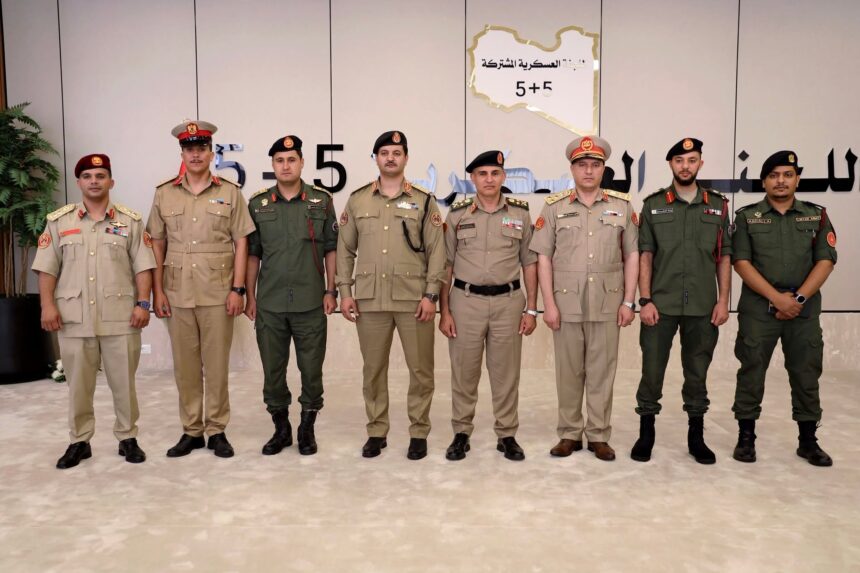
Libya’s rival military chiefs have met on Libyan soil for the first time, holding direct talks in Sirte on July 12 on reunifying armed forces divided between the country’s eastern and western power centres.
Eastern chief of staff Khaled Haftar and his western counterpart Salah al-Din al-Namroush were joined by members of the UN-backed 5+5 Joint Military Commission, the 3+3 security committee and UNSMIL deputy political chief Stephanie Koury, according to statements from both commands.
The talks produced one concrete outcome: an agreement to hold a joint field exercise in southern Libya, where the forces would patrol smuggling and migration routes along the borders with Chad and Niger, The National reported.
The meeting comes amid a US-driven effort led by Massad Boulos, President Donald Trump’s adviser for Arab and African affairs. The “Boulos initiative” links efforts to attract American oil investment with institutional unity, according to The National, built around a power-sharing formula that would keep Prime Minister Abdulhamid Dbeibah in office while elevating a member of the Haftar family to a senior national executive post — reports differ on whether Khalifa Haftar or his son Saddam would fill it. Secretary of State Marco Rubio met Saddam Haftar in late June, and the rival administrations signed Libya’s first unified budget in more than a decade in April, with February 17 floated as a presidential election date.
Resistance is hardening in the west. Powerful Misurata armed groups have rejected the plan, and the Misrata Military Council said the initiative seeks to legitimize Haftar and open a transitional phase that bypasses elections. Protesters in the city called it a deal dividing power between the Haftar and Dbeibah families.
The Sirte meeting thus shows elite convergence outpacing local consent: a unified command exists so far only on paper, and its viability rests with armed actors who were not in the room.