Saudi Arabia spent years trying to extract itself from the war in Yemen. That strategy is now under mounting pressure.
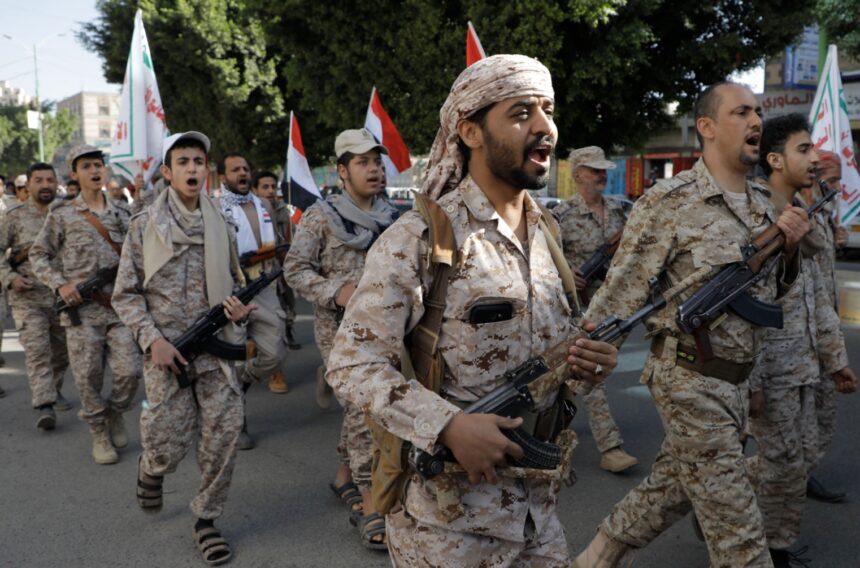
Since mid-July, Yemen’s Iran-aligned Houthis have resumed attacks on Saudi territory and shipping, declared a naval blockade against the kingdom and targeted oil infrastructure along the Red Sea coast. Forces aligned with Saudi Arabia have struck Houthi positions inside Yemen, while both sides have reportedly mobilized along front lines largely frozen since the 2022 truce. Reuters described Yemen last week as edging toward renewed war.
The U.N.-brokered truce halted most major Saudi-Houthi fighting in 2022. Although it formally expired that October, large-scale cross-border warfare did not resume, and subsequent Saudi engagement with the Houthis focused on preventing another open conflict. The wider Iran war is now eroding that relative calm.
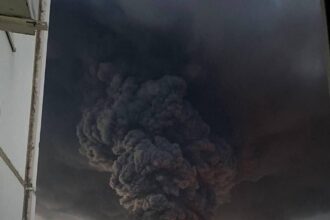
The confrontation intensified on July 20, when the Houthis declared a maritime blockade against Saudi Arabia. Days later, the group claimed attacks on Saudi Aramco facilities at Jizan and Yanbu. Video verified by Reuters showed a large column of smoke rising from the direction of the Jizan refinery, while two trading sources reported possible damage to fuel and oil storage facilities there.
At Yanbu, a Patriot battery operated by Greece’s Hellenic Force in Saudi Arabia intercepted two ballistic missiles launched from Yemen toward oil infrastructure on July 25, according to Greek military sources. The same battery later intercepted a drone. The Greek unit, deployed at Yanbu since 2021, operates as part of an international air-defense initiative supporting the kingdom.
Saudi-backed Yemeni forces struck Houthi missile and drone sites in Marib and al-Jawf, while the Saudi-led coalition also carried out strikes around Hodeidah. The exchanges marked a significant break from the restraint that had largely held between Riyadh and the Houthis since 2022.
Two Chokepoints Under Pressure
Yanbu is not an incidental target. It is Saudi Arabia’s principal Red Sea oil port and the western terminus of the East-West pipeline, which allows crude produced in the kingdom’s east to reach the Red Sea without passing through the Strait of Hormuz.
That route has become more important as the Iran war disrupts Gulf shipping. Houthi pressure against Yanbu and Red Sea traffic therefore threatens the alternative Saudi Arabia relies on when Hormuz becomes unsafe.
The pressure extends south to Bab el-Mandeb. Reuters reported on July 29 that the Houthis were considering charging fees to commercial vessels transiting the southern Red Sea, citing regional sources who said Iranian advisers were helping develop the proposal and Chinese ships could be exempted.
The Houthis did not respond to Reuters’ request for comment, and there is no evidence that such a fee system is operating. But the proposal illustrates the group’s ambition to turn military leverage over Bab el-Mandeb into greater influence over commercial shipping through one of the world’s critical maritime corridors.
Riyadh’s Shrinking Room for Restraint
Saudi Arabia has strong reasons to avoid returning to the pre-2022 war. Its intervention beginning in 2015 produced years of costly fighting, severe civilian harm and international criticism without defeating the Houthis.
Crown Prince Mohammed bin Salman also has powerful economic incentives to preserve stability as the kingdom pursues Vision 2030, prepares for Expo 2030 and develops infrastructure for the 2034 World Cup.
But the cost of restraint is rising. Reuters reported growing Saudi frustration as Houthi attacks threaten infrastructure and shipping, while Yemeni government and Houthi forces have built up along a front stretching from the Red Sea toward the Saudi border. U.N., Omani and Pakistani mediation continues, but diplomats have expressed growing pessimism about a negotiated settlement.
For now, Saudi Arabia has not returned to the sustained air campaign that defined the earlier Yemen war. But the foundations of the post-2022 lull are weakening: Houthi attacks have resumed, Saudi-backed forces are striking inside Yemen, front-line mobilization is increasing, and pressure is spreading across the Red Sea energy corridor.
The risk is not that Riyadh has already decided to re-enter the war. It is that repeated attacks are steadily narrowing the political and military space in which restraint remains viable.