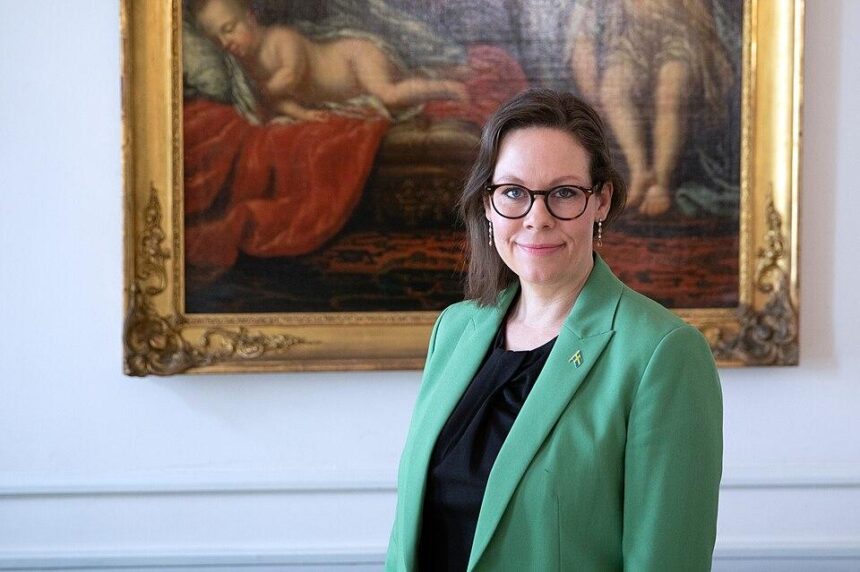
Sweden’s government has formally submitted the legislation needed to stand up its new foreign intelligence service by January 1, 2027, a step framed as a structural response to a security environment reshaped by NATO membership rather than a routine bureaucratic reshuffle. Foreign Minister Maria Malmer Stenergard, writing in a Foreign Ministry dispatch, said the sharpened security-policy situation, the broad and complex threat picture, rapid technological development, and Sweden’s NATO membership all require a strengthened intelligence system, calling the new agency central to developing capabilities as the threat picture evolves. The move effectively retires Sweden’s two-centuries-old posture of neutral, self-contained home-defense intelligence tracking in favor of a dedicated foreign-facing service built to feed NATO’s broader threat-forecasting apparatus.
The reform traces directly to a structural diagnosis of why Sweden’s military intelligence apparatus missed Russia’s 2022 invasion. A Riksdagen summary of the government’s commissioned inquiry, chaired by former Prime Minister Carl Bildt and published as SOU 2025:78, lays out the finding that Sweden’s services delivered a solid picture of military developments in the region but were considerably weaker on broader security-policy assessments. In effect, the diagnosis draws a hard line between capabilities and intentions: MUST was built to count tanks and troop columns, not to model how an autocratic leadership in Moscow actually makes decisions, leaving Stockholm blind to political intent even as it tracked hardware accurately.
Parliament is now moving the plan through its final legislative stages ahead of the January launch. The bill’s progress, tracked by Nordic Defence Sector, includes renaming the Defence Intelligence Court to the Intelligence Court and giving the oversight body Siun a new name tied to foreign intelligence activities, alongside amendments allowing new agency personnel to be dismissed immediately on national security grounds.
The new service is designed to sit inside a wider intelligence matrix rather than stand alone. Stenergard, speaking to SVT, laid out how UND will absorb select foreign-intelligence functions from the military-run MUST while working closely with the Armed Forces, the domestic security service Säpo, and the signals-intelligence agency FRA, so that responsibilities are more clearly divided. The full threat picture against Sweden can be covered more effectively.
That reorganization has a price tag attached. The budget shift underwriting UND, reported by Global Banking & Finance via the Reuters wire, comes to roughly SEK 2.8 billion, with resources moving primarily out of the armed forces’ existing budget to fund the civilian service.