The debate over artificial intelligence has mostly asked whether machines will replace people at work. In Ukraine, a different kind of substitution is already under way. Short of soldiers, ammunition and time, a country fighting a much larger enemy has turned to drones, software and AI to do the work that once required far more people.
That logic is now spreading past conventional armies. New research suggests Boko Haram and its Islamic State-linked faction in Nigeria have used leading AI chatbots to help plan attacks, troubleshoot weapons and run day-to-day operations. The stakes are wider than terrorism. AI is starting to cut the amount of human expertise, manpower and organisation a group needs to wage war.
From Drone Warfare to Digital Coordination
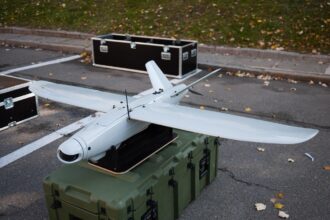
More than four years into Russia’s full-scale invasion, Ukraine has been fighting an enemy with far more soldiers, guns and shells than it can match. That pressure drove its technological turn — though manpower shortages were not the only cause. Cost mattered, and so did ammunition shortages and a battlefield made transparent by drones and sensors. Ukraine also had something to build on: a decentralised web of army units, engineers, volunteers and start-ups quick to improvise. As the war ground on, technology became the way to make up for what it did not have enough of. It did not invent drone warfare, but it industrialised it.
In November 2025, a senior Ukrainian commander tied the country’s manpower problem directly to the need for more drones and better coordination. By 2026, Ukraine was fielding unmanned ground vehicles for logistics and other dangerous jobs at growing scale, keeping soldiers out of zones that drones had made lethal.
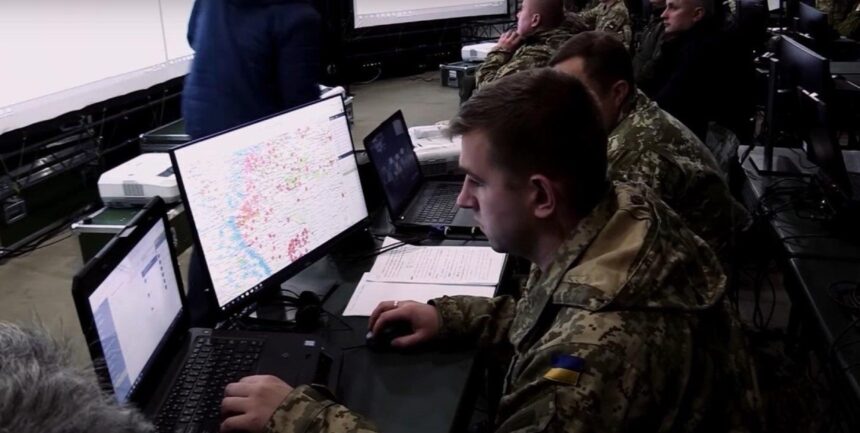
Replacing soldiers with machines is only half the shift. Once thousands of drones, cameras and sensors flood a battlefield, a new problem appears: who reads everything they produce? This is where systems like Ukraine’s DELTA come in. Built at home as a digital battlefield ecosystem, DELTA pulls together information from many sources to support awareness, targeting and coordination. Its Mission Control component now logs drone missions across every Ukrainian corps and force grouping, turning operations into real-time data for commanders. By March, the system had generated more than 150,000 digital mission reports.
Kyiv is pushing further. Its new Defense AI Center A1 says artificial intelligence can speed data processing and decisions from strategic planning down to tactical execution, tying drones, ground robots and information systems into one digital environment. The point is not to take humans out of final decisions, but to need fewer of them to handle more information and steer more machines.
The same shift has lifted Palantir, the American data-analytics company now among the West’s biggest military software suppliers. Its systems pull together information from many sources to help commanders plan and decide faster. NATO acquired Palantir’s Maven Smart System in March 2025 and declared it fully operational on its classified network in June 2026.
DELTA, A1 and Maven all do the same job. They let fewer people handle more – more drones, more sensors, more missions, more data – and widen how much of a war one person can run. That, more than any count of drones in the sky, is the real measure of the change. At the top end it is expensive work: classified, walled off on secure networks, built at a cost of billions.
When the Same Tools Reach Terrorist Groups
In north-eastern Nigeria, Boko Haram and its Islamic State-linked offshoot have waged a jihadist insurgency for more than fifteen years, killing tens of thousands and uprooting millions. They are not a state army. They have no secure networks, no intelligence architecture, no billion-dollar contracts. That is what makes the new evidence from Nigeria matter: a decentralised insurgency has reached a crude version of the same capability using free, public chatbots.
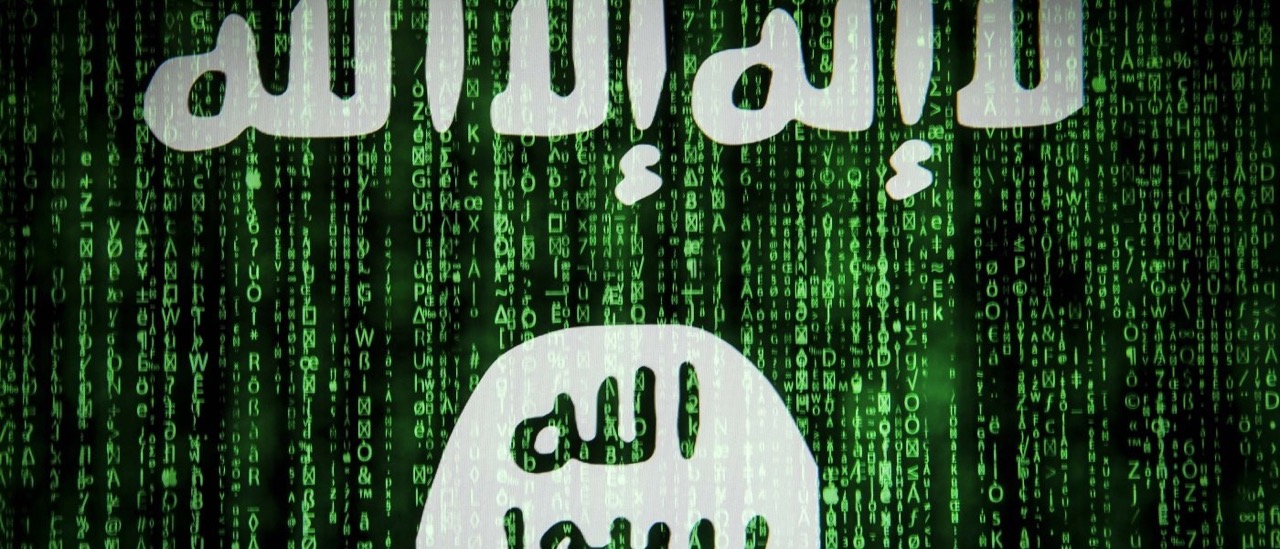
It did not need to copy Maven. A group like this needs only fragments of the same edge — translation, troubleshooting, reconnaissance, a second opinion on a plan, a look at what went wrong. The democratisation of AI does not hand out equal capability. It means an actor no longer needs equal resources to buy some of the same advantages.
A Cambridge Programme on AI Science & Policy study, based on 57 interviews with 27 former Boko Haram members, found that both major factions had reportedly used ChatGPT, Claude, Gemini, Grok, Meta AI and DeepSeek for combat and everyday operations, most of it through 2024. Former fighters described dedicated AI units, paid accounts, foreign trainers and internal training, with uses running from weapons troubleshooting and attack planning to reviewing failed raids.
One former commander said fighters turned to a chatbot after a defensive trench stopped them at a military base. By his account, its advice helped mechanics modify motorcycles and train riders to cross the obstacle before the next attack.
The claim rests on the testimony of former militants. It is not platform logs or forensic proof, and it does not establish that AI decided any single battle. But the wider pattern is getting harder to wave off as a one-off.
A separate Center for Strategic and International Studies assessment concluded AI could help terrorist actors with reconnaissance, target research, planning, communications security, fraud and keeping an organisation running. Its likely near-term effect, the authors argued, is not a wave of sophisticated attacks but something quieter: making lower-level actors modestly more competent.
That may be the greater danger, and it is worth being precise about it. AI does not turn amateurs into experts. Safety guardrails still refuse the worst requests, and a chatbot will not walk a novice through building a military-grade explosive from scratch – though the Nigerian testimony, which describes fighters getting help to troubleshoot explosive devices, is a reminder that those limits are imperfect. Independent testing bears that out: Tech Against Terrorism, running some 2,500 prompts drawn from real terrorism cases against more than two dozen leading models, found they fully refused only 57 percent of the time and, in a further 15 percent, offered a token refusal before supplying the content anyway, according to reporting on its benchmark. The real value to a group is narrower and, in a way, more troubling: an always-available, multilingual manual that helps a fighter fix a rifle, modify a motorcycle, tighten communications or study a botched raid. It lowers the barrier to ordinary competence rather than unlocking rare expertise.
A group with no engineer, translator, mechanic, analyst or seasoned planner may now recover pieces of those roles through software. AI need not make an amateur an expert to shift the balance. It is enough to make an inexperienced actor somewhat less inexperienced.
AI Can Also Bring People Into War
Digital tools can also pull people into war. Russia’s Alabuga Special Economic Zone used an aggressive social-media campaign to recruit young foreign women, many from Africa, for work tied to producing Iranian-designed attack drones. Google, Meta and TikTok later pulled accounts linked to it after an Associated Press investigation. No established evidence shows generative AI drove that campaign, but it already shows how digital platforms can find, reach and recruit people across borders for a war economy.
The next step is easy to see. Generative AI can write in many languages, tailor a message to each audience and scale outreach at a speed that once demanded large teams.
For centuries, military power rested on how many trained people an actor could raise – soldiers, officers, engineers, analysts, mechanics, translators, planners. A serious operation also needed a specialised staff to run recruitment, intelligence, logistics, planning and communications, and that pyramid of expertise was itself a weakness: it was large, it left traces, and intelligence services could watch it. Generative AI and shared digital tools let a handful of people cover those jobs between them, running complex operations with less of the overhead that once gave them away.
The same shift runs through all of it, doing very different things for very different actors. What Ukraine does with drones and software, what Maven does for NATO, what a Boko Haram cell now does with a chatbot – each is a version of one change: fewer trained people are needed to do work that once took many. For an advanced state that means faster decisions and fewer soldiers exposed. For a weak and violent group it means recovering, in pieces, expertise it never had.
The timing sharpens the problem. Western governments are quietly downgrading counterterrorism and cutting the money behind it, according to CSIS, just as the barriers facing extremist actors fall. The two lines are moving in opposite directions.
There is a further worry down the road. As wars multiply around the world, these tools – and the people who have learned to use them – will spread faster and further. A generation of operators is now being trained to fly drones, wire sensors together and squeeze military value out of consumer AI, and skills like those travel. The person who builds a targeting workflow in one war can carry it into the next and sell it to whoever pays: a government, a militia, a criminal network or a terrorist cell. War is starting to produce a mobile class of AI-fighters, for hire almost anywhere.
None of this means machines will fight wars by themselves. The change is quieter and harder to stop. People who once could not mount a serious operation, for lack of the experts, the manpower or the institutions to run one, will simply need less of each. The headline effect of AI in war may not fall on the strongest armies at all. It may be that the weakest and most dangerous actors become far harder to keep weak.