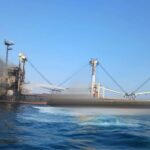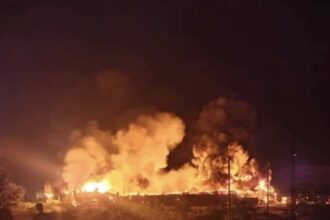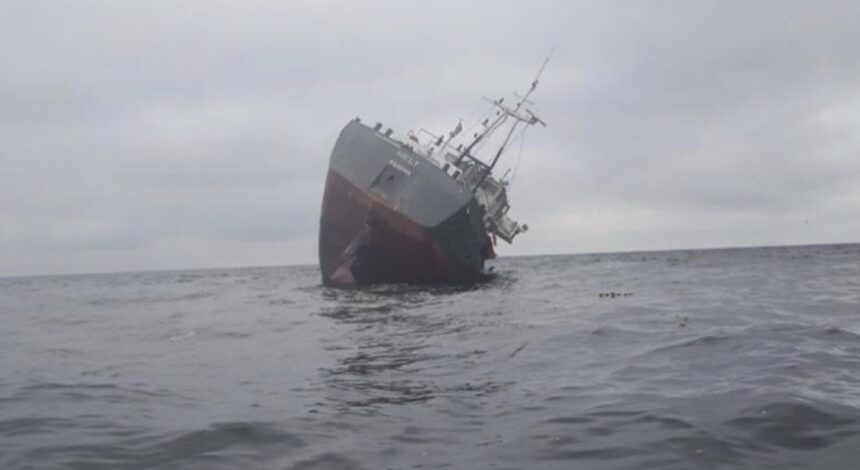
Every incident involving a commercial vessel in the Strait of Hormuz now sends shockwaves far beyond the Gulf. But those shockwaves are no longer merely a byproduct of military confrontation – they are increasingly part of the objective. The June truce between Washington and Tehran collapsed this month, and the fighting since has spread well beyond the strait itself. U.S. Central Command has confirmed strikes on military targets at Qeshm Island, Bandar Abbas and Sirik, while Iran has retaliated with missile and drone attacks against U.S. forces in the region. Commercial shipping is no longer simply exposed to the conflict. It has become one of its principal strategic arenas.
The strategic value of commerce
The Strait of Hormuz illustrates the shift better than almost any other waterway. Roughly one-fifth of the world’s oil consumption normally transits the narrow channel linking the Persian Gulf with the Arabian Sea. Even limited attacks – or the threat of them – can move insurance premiums, delay cargoes and force rerouting long before a single tanker is struck.
The objective is not necessarily to sink ships. It is to convince shipping companies, insurers and commodity traders that operating in contested waters has become too risky to continue under normal commercial conditions. Once confidence erodes, the economic effects spread rapidly through global energy and freight markets.
Four seas, one emerging pattern
Hormuz is the latest manifestation of a broader transformation rather than an isolated crisis.
Russia’s blockade of Ukrainian ports in the Black Sea demonstrated how commercial shipping itself could become a strategic weapon. Restricting grain exports threatened food security across Africa and the Middle East while increasing pressure on governments far removed from the battlefield. Ukraine responded differently. Using domestically developed naval drones and long-range precision strikes, Kyiv forced much of Russia’s Black Sea Fleet to withdraw from occupied Crimea despite lacking a conventional blue-water navy.
The maritime contest has since expanded beyond naval operations into the logistics that sustain Russia’s war economy. Ukraine’s Unmanned Systems Forces say they struck 172 vessels linked to Russia’s shadow fleet during a 13-day campaign launched on July 6. Ukrainian drone commander Robert Brovdi has said Moscow responded by redeploying personnel from its elite Rubicon drone unit to provide dedicated protection for shadow-fleet tankers. If sustained, such redeployments illustrate the growing opportunity cost of protecting maritime logistics during wartime.
The Red Sea demonstrates how temporary disruption can evolve into structural change. Since late 2023, Houthi attacks on merchant vessels have forced many commercial operators to reroute around the Cape of Good Hope, adding weeks to voyages between Europe and Asia while increasing fuel consumption, freight costs and insurance premiums. Although periods of relative calm have reduced the immediate threat, many carriers have remained reluctant to return because the commercial risk persists even when the military situation temporarily stabilizes.
A more profound transformation has emerged beneath those disruptions: a bifurcated maritime economy. One tier consists of conventionally insured, highly regulated commercial fleets that increasingly avoid contested waters. The other relies on sovereign backing, opaque ownership structures, frequently changing registries and alternative insurance arrangements to continue transporting sanctioned cargoes. Russian and Iranian oil exports increasingly depend on this parallel system, allowing many vessels to continue operating despite sanctions, blockades and elevated military risks. What began as an adaptation to sanctions is evolving into a durable alternative trading architecture.
The Baltic Sea represents a lower-intensity variation of the same trend. Suspected sabotage targeting undersea communications cables and energy infrastructure has prompted NATO members to expand naval patrols and surveillance. Rather than attacking merchant vessels directly, hybrid operations exploit the vulnerability of the civilian infrastructure that enables maritime commerce.
The economics of uncertainty – and liability as a weapon
Traditional naval warfare sought command of the sea through decisive military superiority. Today’s maritime conflicts increasingly seek to influence markets instead.
War-risk insurance has become one of the most effective amplifiers of military pressure. Premiums for vessels entering contested waters rose dramatically following attacks in the Red Sea and have remained elevated because insurers increasingly price the possibility of renewed violence rather than only recent incidents. In effect, insurers have become unintended participants in deterrence. Their pricing decisions increasingly determine whether shipping companies judge a route commercially viable, often amplifying the economic effects of military operations far beyond the physical damage they cause.
The same logic underpins sanctions enforcement. For regulators, one of the most effective ways to pressure shadow fleets is not by intercepting cargoes at sea but by denying vessels access to internationally recognized protection-and-indemnity insurance. Without legitimate insurance, many ports, financial institutions and commercial partners become inaccessible regardless of whether a ship can physically complete its voyage.
The result is the emergence of two competing systems operating across many of the world’s most important trade corridors. One depends on transparency, international regulation and recognized financial services. The other relies on state support, opaque ownership networks and legal grey zones. Maritime competition is increasingly being fought through liability regimes and insurance markets as much as through naval deployments.
A new era of maritime security
Governments are responding with expanded naval patrols, convoy planning, investments in port resilience and reviews of strategic fuel reserves. Yet these measures reflect a deeper realization: protecting global commerce has become inseparable from national security.
Ukraine demonstrated that a state without a traditional blue-water navy could nevertheless reshape the deployment of a larger fleet using relatively inexpensive autonomous systems. Iran and the Houthis have shown that even the credible threat of attacks – magnified through insurance markets and commercial risk assessments – can impose strategic costs without destroying large numbers of vessels.
Merchant ships once carried the resources that allowed wars to continue. Increasingly, they have become targets through which wars are waged. From the Black Sea to the Red Sea and the Strait of Hormuz, disrupting commerce has become a strategic objective in its own right. The emerging divide between transparent commercial shipping and opaque, state-backed logistics networks suggests that the next era of maritime competition will be shaped not only by navies, but also by insurers, regulators, port authorities and shipping companies. The future contest for control at sea may be decided as much in financial markets and legal registries as on the water itself.