NATO’s Ankara summit produced a series of missile-production deals designed to ease pressure on U.S. factories and push Europe toward a more durable defence-industrial base.
The most immediate track concerns air defence. Reuters reported that the United States is moving closer to European co-production of Raytheon’s AIM-120 AMRAAM missile and plans to establish a European maintenance facility for Lockheed Martin’s PAC-3 interceptor, used in Patriot air-defence systems. Both missiles are in high demand because of Ukraine’s need to defend against Russian air attacks.
The AMRAAM initiative involves Belgium, Canada, Finland, Germany, the Netherlands, Norway and Britain, according to Reuters. The Wall Street Journal reported that Raytheon and NATO partners are seeking to qualify European suppliers for key AMRAAM components, expanding the missile’s production footprint in Europe.
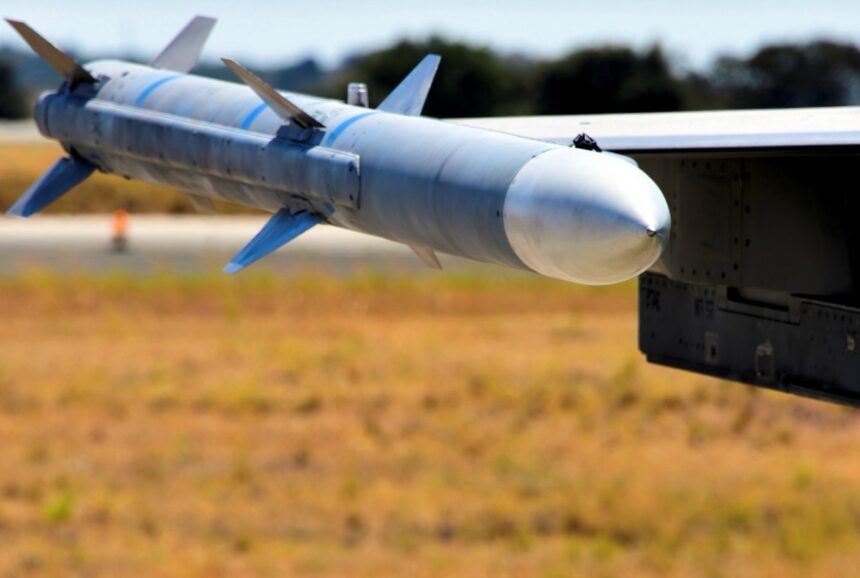
Idle State: A live AIM-120 interceptor locked into the wingtip launcher rail of a multirole fighter jet. Source: mtcurado / Getty Images
The PAC-3 plan is more limited for now. Reuters reported that Germany, the Netherlands, Poland and Sweden are involved in the European maintenance project with Lockheed Martin, while production outside the United States remains under consideration rather than agreed. The purpose is to reduce repair delays, increase missile availability and relieve pressure on American production lines.
Assembly Line: PAC-3 interceptor sub-assemblies inside a specialized defense production facility. Source: Jonathan Ernst / REUTERS
The long-range strike track is moving at the same time. NATO said Denmark, France, Italy, Norway, Türkiye and the United Kingdom launched a Ground-Based Precision Strike Capabilities project in Ankara to explore new deep-strike missiles and launch systems. Separately, Reuters reported that Lockheed Martin and Rheinmetall signed a memorandum of understanding to produce ATACMS missiles in Germany, the first time the U.S.-designed system would be manufactured outside the United States.
The deals come as NATO tries to turn higher defence spending into actual production capacity. At the Hague summit in 2025, allies pledged to raise defence and security-related spending to 5% of GDP by 2035, including at least 3.5% for core defence requirements. Ankara is where that pledge begins to meet the practical problem of factories, supply chains and missile output.
The urgency is visible in Ukraine. Reuters reported that Ukrainian air defences failed to intercept any of 23 ballistic missiles fired during Russia’s latest major attack on Kyiv and the surrounding region. The attack showed why interceptor production is no longer a technical procurement issue, but a strategic test for the alliance.
The missile deals announced in Ankara do not close NATO’s firepower gap by themselves. But they show a shift from spending promises toward production geography: more maintenance in Europe, more component work in Europe, and more long-range strike manufacturing outside the United States. The question now is whether NATO can move fast enough for a war being shaped by production tempo as much as by battlefield manoeuvre.