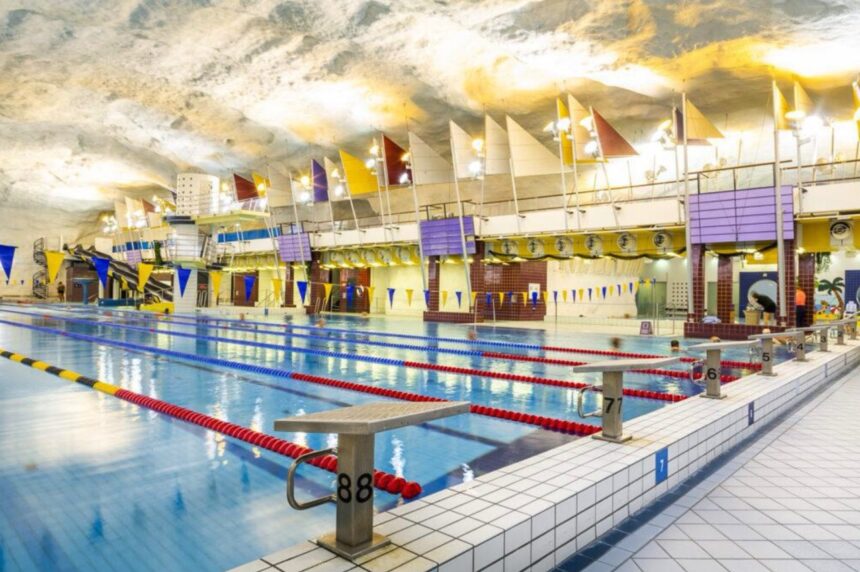
On November 30, 1939, the Soviet Union invaded Finland. Its bombers hit Helsinki that same day. What then became known as the Winter War lasted barely three months. Finland did not surrender, but paid heavily for survival: it ceded roughly a tenth of its territory and spent the Cold War in enforced neutrality – independent, yet a de facto buffer state barred from choosing its own alliances.
The pattern should sound familiar. A larger neighbour seizing land and demanding neutrality is precisely what Russia has attempted against Ukraine since 2014. Finland drew its conclusion in 1940 and never let it go: it wrote shelter-building into law after the Second World War and kept carving bunkers into bedrock even after the Soviet collapse in 1991, opening its largest complexes in the very decades when the rest of Europe declared civil defence obsolete.
The war in Ukraine did not build a single one of those shelters – it built the audience for them. Some 800 foreign delegations have now come to Helsinki to study a system the continent once dismissed. What follows is the anatomy of that doctrine: how a country of 5.6 million made room underground for 4.8 million of its people, why Moscow’s rearmament on their shared 1,340-kilometre border has given the network new meaning, and what Ukraine’s forced descent underground shows about the difference between preparing for the worst and enduring it.
A City Built for the Worst
Beneath Helsinki’s Merihaka district, people exercise and take children to play in halls carved into bedrock 25 metres underground. Built in 2003, the 71,000-cubic-metre complex – roughly the volume of a seven-storey office building – can be converted within 72 hours into a civil-defence shelter for 6,000 people, with stored bunk beds, water tanks and independent ventilation behind blast doors built to withstand the shockwave of a nearby explosion.
Across Helsinki, around 5,500 shelters provide approximately 900,000 places – more than the capital’s permanent population. Nationwide, Finland maintains some 50,500 shelters with space for about 4.8 million of its 5.6 million people, according to the interior ministry.
The system is the Winter War’s longest legacy. Its rules were embedded in post-war civil-defence law and ordinary building codes, which require protected space in new construction above a specified size. In peacetime the shelters earn their keep as swimming pools, gyms, car parks and playgrounds. At Itäkeskus in eastern Helsinki, the world’s largest swimming hall built inside a shelter – opened in 1993, two years after the Soviet collapse – can be drained and converted for 3,800 people within 72 hours.
That dual-use principle is the Finnish innovation. “We always have this multi-use – peacetime use and wartime use – of our shelters,” senior interior ministry rescue officer Jarkko Häyrinen told AFP during a tour. A bunker used every day is maintained, inspected and understood by the people who may one day need it – unlike the sealed shelters that quietly decayed across the rest of Europe. Dual use also offsets construction costs, which Reuters estimated at roughly 1.5% to 4% of a new building.
The result is not a collection of bunkers but a doctrine. Finland calls it comprehensive security: defence is not the military’s job alone, but a system in which civilian survival, urban planning, energy supply and armed deterrence reinforce one another. The logic is plain. Russia’s campaign against Ukraine has leaned heavily on making cities unlivable – striking power plants, heating and water to exhaust civilians, a pattern UN human rights monitors documented throughout the winter of 2025–2026. A country whose people can be sheltered and whose services keep running is far harder to coerce that way. The shelters do not replace air defence; they are what lets a society absorb whatever air defence cannot stop.
The War That Changed Finland
Russia’s full-scale invasion of February 2022 changed Finland’s position with extraordinary speed. For seven decades Finland had kept the military non-alignment the Cold War imposed on it. The invasion ended that calculation within a year: Helsinki applied to NATO and joined the Alliance on April 4, 2023, instantly adding its border with Russia – the longest of any member — to NATO’s eastern frontier.
Moscow restored the Leningrad Military District, a Soviet-era command facing Finland and the Baltic region – a decision President Vladimir Putin explicitly linked to Finnish accession. Its personnel took part in drills rehearsing the use of tactical nuclear weapons, and satellite imagery has shown new construction at garrisons near the Finnish border. Finnish military intelligence expects further reinforcement once Russian forces come free from Ukraine.
The pressure has not waited. Finland closed its entire eastern border after accusing Moscow of deliberately channelling migrants toward its crossings — a tactic built to strain the receiving state, not to serve the migrants. Aviation authorities across the Baltic have logged persistent interference with the satellite-navigation signals on which aircraft, ships and emergency services depend; Finnish and Estonian officials attribute the jamming to Russia. Helsinki’s renewed attention to its shelters answers a documented buildup and an active campaign of pressure – not Cold War nostalgia.
Finland Planned Underground When Ukraine Was Forced There
The contrast defines both systems. Finland’s shelters are woven into a functioning economy – pools and playgrounds that pay their peacetime way. Ukraine’s underground construction is triage: burying schools and clinics in concrete to keep the state’s services alive. Finland built before the missiles came. Ukraine builds because they already have. Other European governments are now reassessing their own shelter capacity.
In Helsinki, going underground remains a contingency. In Kharkiv and Zaporizhzhia, it is already public policy. Finland prepared for the worst. Ukraine is showing Europe what the worst now looks like.