Washington is pursuing two parallel Ukraine tracks. On July 22, U.S. envoys Steve Witkoff and Jared Kushner spoke directly with President Volodymyr Zelenskyy, bypassing formal diplomatic channels that have produced little progress since the Iran war shifted Washington’s attention away from Ukraine. A day later, Secretary of State Marco Rubio met Russian Foreign Minister Sergey Lavrov on the sidelines of the 33rd ASEAN Regional Forum, seeking to clarify Moscow’s current position as the United States explores whether diplomatic momentum can be restored.
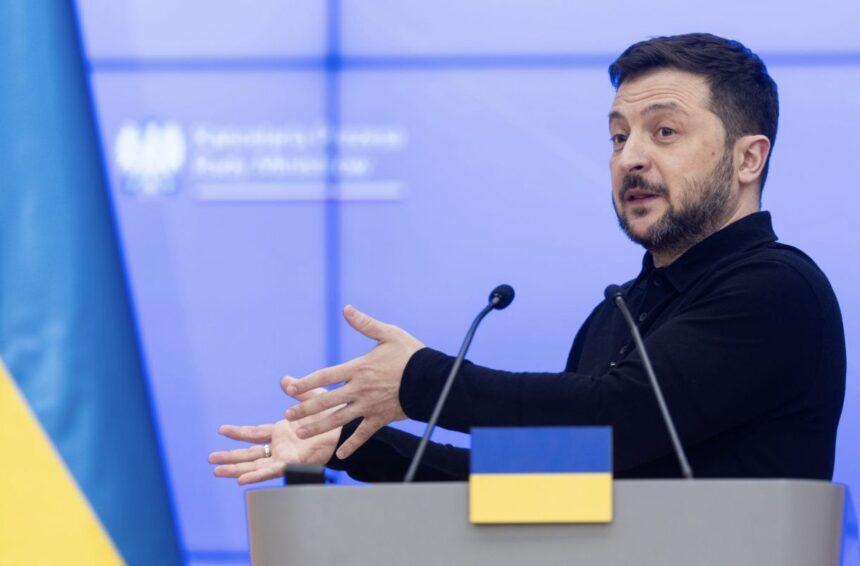
Zelenskyy said the conversation with Witkoff and Kushner focused on “reinvigorating diplomacy” and moving toward what he described as “peace with dignity,” adding that Ukrainian and American teams would remain in contact on follow-up steps, according to Reuters. The White House confirmed the call. It marked the clearest indication in weeks that the envoy-led channel remains active, although neither side described a new peace proposal or negotiating framework.
In Manila, the U.S. State Department said Rubio and Lavrov discussed “the U.S.-Russia relationship and the need to end the Russia-Ukraine war,” without providing further detail, according to the Associated Press. Before the meeting, Rubio said the war had “impeded” broader U.S.-Russia relations, framing the encounter as an opportunity to gauge Moscow’s current position rather than launch negotiations. No breakthrough was announced.
Russia’s public position also appeared unchanged. Lavrov reiterated that Moscow remains open to a “political and diplomatic resolution,” while Russia continues military operations and maintains demands that Ukraine cede territory, including parts of Donetsk region still under Ukrainian control. President Vladimir Putin has also repeatedly said he would only meet Zelenskyy to finalize an already negotiated agreement. Western analysts have generally interpreted this combination of conciliatory diplomatic language and unchanged battlefield objectives as an effort to project openness to negotiations without altering Russia’s strategic goals.
The renewed diplomatic contacts are unfolding alongside continued efforts to strengthen Ukraine’s military position. On the same day as the Witkoff-Kushner call, Zelenskyy met in Kyiv with U.S. Ambassador to NATO Matthew Whitaker and Lt. Gen. Curtis Buzzard, commander of NATO’s Security Assistance and Training for Ukraine (NSATU) mission, to advance two complementary air-defense initiatives, according to Kyiv Independent.
The first is immediate. Zelenskyy said the talks focused on increasing Patriot interceptor supplies through the Prioritized Ukraine Requirements List (PURL), the NATO mechanism used to coordinate allied support for Ukraine’s most urgent military needs. The discussion followed another large-scale Russian missile assault in which Ukrainian officials said Moscow launched enough ballistic missiles to push July’s total above Russia’s estimated monthly production capacity, according to Kyiv Independent reporting.
The second is long-term. Zelenskyy said Ukraine and the United States are continuing technical work on licensed domestic production of PAC-3 Patriot interceptors after President Donald Trump endorsed the initiative during the NATO summit in Ankara on July 8. According to Reuters, the political agreement has already been reached, while technical teams are working through implementation. Unlike emergency interceptor deliveries, domestic production would strengthen Ukraine’s air-defense capacity regardless of future shifts in U.S. policy or diplomatic negotiations.
Kyiv Post reported that the Whitaker meeting also produced a signed agreement advancing the parallel U.S.-Ukraine Drone Deal. However, Kyiv Independent and Interfax-Ukraine described the initiative as still under discussion rather than finalized. Neither the Ukrainian Presidential Office nor the U.S. Embassy has publicly clarified the discrepancy.
Taken together, this week’s activity does not point to an imminent settlement. Instead, it shows Washington pursuing two parallel strategies: envoy diplomacy capable of moving faster than formal negotiations, and long-term defense-industrial cooperation designed to strengthen Ukraine regardless of whether diplomacy succeeds. Moscow’s public negotiating position, meanwhile, remains unchanged.