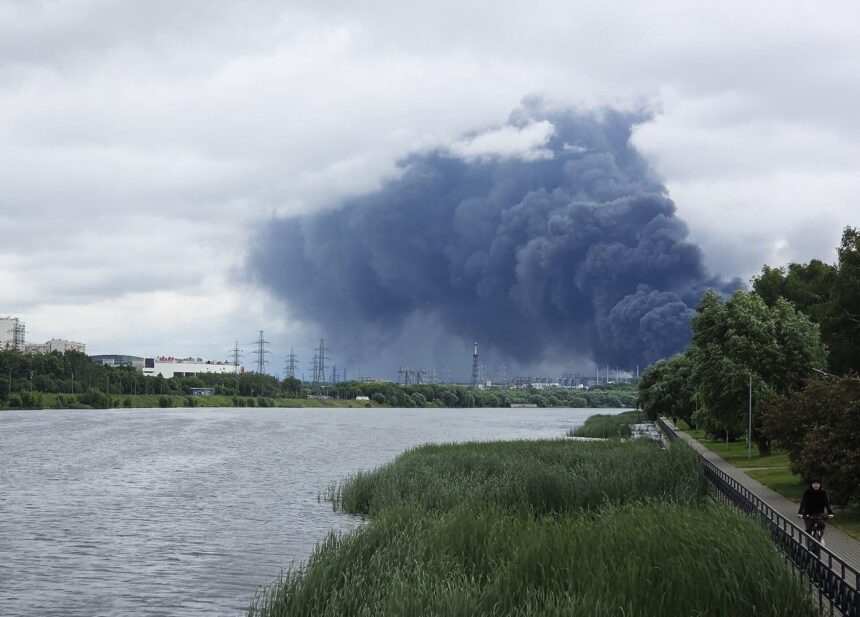
Ukraine’s long-range strike campaign has pushed Russia into its most widespread fuel crisis of the war, disabling as much as 40% of the country’s refining capacity and splitting Russia into rationing zones and stockpiling zones. The pressure now extends beyond refineries to the tankers supplying occupied Crimea, isolating the peninsula’s Russian garrison even as Moscow answers with a deliberate campaign against Ukrainian civilian fuel stations and cities.
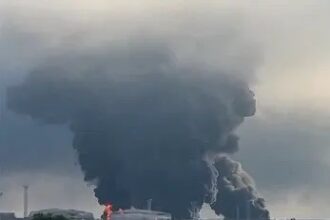
The crisis has been building since 2025, when Ukraine expanded a campaign of drone and missile strikes against Russian oil refineries, terminals and pipelines deep inside Russian territory. Estimates of the damage diverge sharply, and the gap is not just measurement noise. Ukraine’s General Staff put disabled capacity at 42.74% as of early July, while the International Energy Agency cited “more than 20%.” According to UNN, citing the General Staff, the higher Ukrainian figure reflects a deliberate shift in targeting: strikes now concentrate on catalytic cracking units, the technologically complex core of a refinery that produces gasoline and other light fuels, rather than storage tanks alone. Because these units depend on Western-licensed equipment, sanctions leave Russia unable to quickly repair or replace them, meaning capacity taken offline this way tends to stay offline far longer than a simple output snapshot would suggest.
The consequences have outrun the geography of the strikes themselves. By July, Novaya Gazeta Europe counted fuel problems in at least 78 of Russia’s 83 regions, and a separate CNN analysis found more than 50 regions officially reporting supply disruptions, with unofficial reports reaching nearly all of them. The crisis has split the country in two. Where strikes have hit refineries, regions ration what remains: in Petrozavodsk, on the Finnish border, a local photographer queued five hours overnight for 30 liters of gasoline, according to Euromaidan Press. Where strikes haven’t reached, officials are stockpiling pre-emptively: Kamchatka, nine time zones east and far outside drone range, logged a 30-day fuel reserve on July 7 as tankers steamed toward Petropavlovsk-Kamchatsky, the same report found. Even regions with no refineries and no strikes, like Zabaykalsky Krai in eastern Siberia, have declared a state of heightened alert, according to CNN, evidence that the national distribution system itself, not just the struck facilities, is under systemic strain.
The Kremlin has struggled to manage the political optics. In a rare admission, CNBC reported that Putin acknowledged the shortages during a televised interview, saying Russia would import more fuel and expedite refinery repairs to end what he called a “temporary deficit,” insisting the problems were “not critical.” The response has pushed Russia toward import dependency it would not otherwise need: a decree now allows refineries to produce lower-grade Euro-3 gasoline instead of Euro-5, and rail deliveries of fuel from Belarus have quadrupled to roughly 49,000 tons a month, according to Euromaidan Press, while Moscow is separately in talks with Kazakhstan over further shipments of AI-92 gasoline. For an oil and gas power that normally exports fuel, the shift toward importing it domestically marks a real structural change, even if analysts caution against reading it as destabilizing for the Kremlin. The impact is “mostly attritional, cumulative and politically corrosive rather than immediately destabilising,” one Finnish Institute of International Affairs researcher told Al Jazeera.
Crimea has borne the sharpest edge of the campaign. Since a state of emergency was declared on the peninsula in late June, occupation authorities have banned public fuel sales outright, with deliveries reserved for state and operational vehicles. The shortage has since spread from private cars to public transport: UNN reported that in Sevastopol, buses have been left idling for hours in queues at filling stations, disrupting schedules across the city. Ukraine has widened its target set from refineries to the sea lanes that supply the peninsula, and the Taganrog Bay crossing point has become a recurring target. Russian officials themselves have confirmed the pattern: Rostov region Governor Yury Slyusar acknowledged that tankers were hit there on at least two separate nights in the same week, according to United24 Media. Combat footage released by Ukraine’s Unmanned Systems Forces and reviewed by the Kyiv Post shows no visible Russian air defense response during the strikes, underscoring how exposed this supply route has become. Over 72 hours in early July, Ukraine’s forces said they hit 21 vessels in the Sea of Azov in total, including 19 shadow fleet tankers, one cargo ship and a ferry, part of what commander Robert Brovdi called a mounting effort to isolate the Russian-occupied peninsula, according to the Kyiv Independent. A Ukrainian security analyst cited in the same report put the military dimension plainly: the Russian garrison in Crimea is increasingly diverting scarce fuel from the civilian population to itself, meaning shortages that once hit tourists and residents are now being felt by the occupying force as well.
Russia’s response has not been symmetrical. Since spring, United24 Media reported that Russia has destroyed approximately 200 Ukrainian gas stations, including around 50 in June alone. This is not incidental damage: the Telegram channel Rybar, close to Russia’s Defense Ministry, described it as a deliberate, systematic campaign, one it said was “picking up pace” specifically to trigger fuel shortages in Ukrainian front-line cities, according to Meduza. On July 1, Reuters reported that Russia struck five retail fuel stations in Dnipropetrovsk region overnight, killing a woman and wounding three others, one of them pregnant. An adviser to Ukraine’s defense minister, cited by Meduza, made the underlying point explicit: civilian gas stations have no connection to Ukraine’s military fuel supply, meaning the strikes target civilian life directly rather than degrading Ukrainian logistics. Ukraine, by contrast, has not struck Russian retail fuel stations, confining its campaign to industrial and military-linked infrastructure.
The link between the two campaigns is not just circumstantial; Moscow has stated it outright. CBS News reported that Russia’s Defense Ministry described a July 2 strike that killed 31 people in Kyiv, the deadliest attack on the capital this year, as retaliation for Ukraine’s long-range strikes on Russian fuel infrastructure. In other words, Russia has openly tied civilian casualties in Kyiv to Ukraine’s success in degrading its refineries and tankers, rather than to any military target.
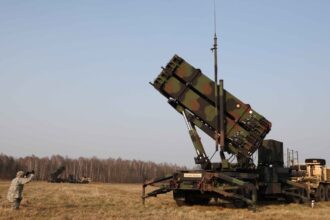
The two campaigns now run on entirely different logics. Ukraine is dismantling the physical and financial infrastructure that sustains Russia’s war, sanctioned tankers, refinery components tied up in sanctions-locked repair cycles, while deliberately sparing Russian civilian retail networks. Russia is answering by hitting the Ukrainian civilian equivalent, gas stations, apartment blocks, and passenger transport, and has said so itself. With Ukraine due to receive Patriot systems within days and $80 billion in pledged allied aid for 2026 following the NATO summit in Ankara, both campaigns look set to intensify before either side has reason to stop.