Over the past ten days, Russia has drawn formal diplomatic protests from three countries with little in common except geography, India, Azerbaijan, and Botswana, plus a fourth incident involving Romania that Bucharest has linked to Moscow’s war. Read together, the four episodes trace back to three distinct features of how Russia is waging this war: missile strikes on Black Sea shipping lanes, a maritime environment beyond Ukraine’s waters where sea mines and drone debris create separate and less attributable hazards, and a foreign recruitment drive built to avoid a politically costly domestic mobilization.
India: A Targeted Strike
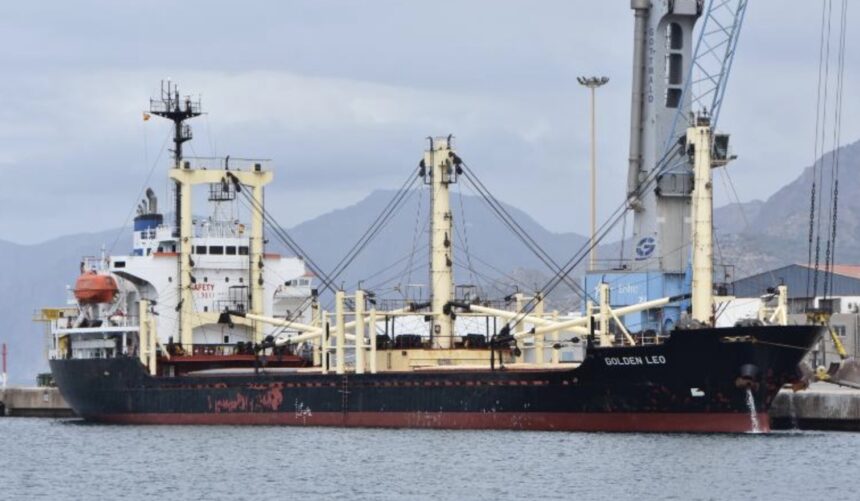
India’s protest followed a clearly attributable, targeted strike. On July 19, a Russian strike using three Kh-59/Kh-69 cruise missiles hit the bulk carrier MV Golden Leo as it left the port of Odesa, within Ukrainian-controlled waters, killing four Indian crew members and critically injuring a fifth. India’s Ministry of External Affairs said the deaths caused by the strike were unacceptable and that targeting commercial shipping “is deplorable and should be avoided,” according to its own statement.
The vessel later sank while adrift near Odesa, and the reported death toll rose to nine, per Kyiv Post. The protest is notable given India’s position: it has stayed formally neutral on the war. It remains one of the largest buyers of Russian oil, with roughly 40 percent of its imports coming from Russia. A strike killing its own citizens was evidently enough to produce a public rebuke, even if it is unlikely to alter India’s broader posture toward Moscow.
Azerbaijan: A Pattern Baku Calls Deliberate
Azerbaijan’s complaint reflects an accumulation of incidents rather than a single shock, and it is Baku, not this analysis, that characterizes the pattern as deliberate. Azerbaijan’s Ministry of Foreign Affairs summoned Russian Ambassador Mikhail Yevdokimov on July 6 after a drone strike hit a SOCAR fuel station in Mykolaiv Oblast the previous evening, and stated that “the continuation of such incidents, despite repeated warnings, indicates that the attacks are being carried out deliberately,” according to its own statement. The ministry noted this followed earlier strikes on SOCAR’s Odesa facilities and on Azerbaijani diplomatic buildings in Kyiv and Kharkiv. Azerbaijan’s president has separately said the country is ready to fully replace Russia in Europe’s oil and gas market, a statement that, if acted on, would matter more for Moscow’s position than the diplomatic note itself.
Botswana: Recruitment, Not Strikes
Botswana’s grievance concerns a different mechanism entirely. Its Ministry of International Relations said on July 18 that a rising number of its citizens are being lured abroad with fraudulent job offers and then coerced into combat for Russia, describing the pattern as escalating “at an alarming rate” and noting it continues to receive “heartbreaking calls” from citizens already on the front line, according to Bloomberg. This reflects how Russia sustains troop numbers without a politically risky general mobilization at home, filling its ranks with contract soldiers, convicts, and foreign recruits instead. Ukraine’s foreign ministry has said more than 2,900 citizens from 36 African countries have fought or are fighting for Russia, and the European Parliament described the recruitment pipeline as human trafficking in March. Botswana joins Kenya, South Africa, and Ghana in publicly raising the issue, though none has yet imposed consequences beyond warning its own citizens.
Romania: An Unconfirmed Link
Romania’s case belongs in a different category and should not be conflated with the India strike. No vessel has been confirmed sunk, and no strike has been confirmed as deliberately targeting NATO-adjacent shipping. Two Ukraine-bound cargo ships were struck or damaged near Romania’s Black Sea coast in July: the LPG carrier Gas Lisbon on July 21, with three crew injured, and the coal carrier Christiana B on the night of July 23–24, according to Reuters.
Romanian President Nicușor Dan said both incidents were “most likely” linked to Russia’s war, but the cause, whether a missile, a sea mine, or drone debris, has not been established, and Russia has denied responsibility or blamed Ukraine in comparable past cases, according to Ukrainska Pravda. This is meaningfully different from the Golden Leo strike, where the missile type, launch, and impact were documented in real time by Ukraine’s air force.
Three Mechanisms, One War
What connects these four episodes is not a single Russian strategy but three separate features of how the war is being fought colliding with countries that have tried to stay outside it: precision strikes in an active war zone that inevitably risk third-country nationals and cargo, an under-attributable maritime environment beyond that war zone that generates diplomatic friction even without confirmed Russian action, and a recruitment system built specifically to draw on foreign nationals rather than Russian conscripts. None of the four governments has moved to rupture relations with Moscow outright, and each retains reasons, economic, strategic, or historical, to manage the relationship carefully. India’s oil purchases continue. Azerbaijan’s energy ties with Russia remain layered and complicated by its own transit interests. Botswana has not disclosed how many citizens are actually in Russian service. What the protests do suggest is that the war is generating diplomatic costs even among governments with no direct stake in the Ukrainian front, and that those costs are becoming harder to absorb quietly as the war enters its fifth year.