President Donald Trump said Friday that the United States has not agreed to allow Ukraine to manufacture Patriot missile interceptors, reopening questions over a production license he publicly promised just three weeks earlier. Even if Washington ultimately approves the plan, however, industrial bottlenecks mean Ukrainian-built interceptors would remain years away from reaching the battlefield.
Speaking during a Cabinet meeting at Camp David, Trump was asked about reports that Ukraine would be permitted to produce Patriot missiles under license. “We haven’t agreed to that,” he replied, adding that discussions were continuing but that Washington needed to be cautious about transferring advanced military technology.
The remarks contrast with Trump’s announcement at the NATO summit in Ankara on July 8, when he told President Volodymyr Zelensky that the United States would license Ukraine to manufacture Patriot interceptors. “We are gonna give a license to you to make Patriots… Make them yourself,” Trump said at the time. He also acknowledged he had not coordinated the proposal beforehand with one of the program’s manufacturers, Lockheed Martin, according to the Kyiv Independent.
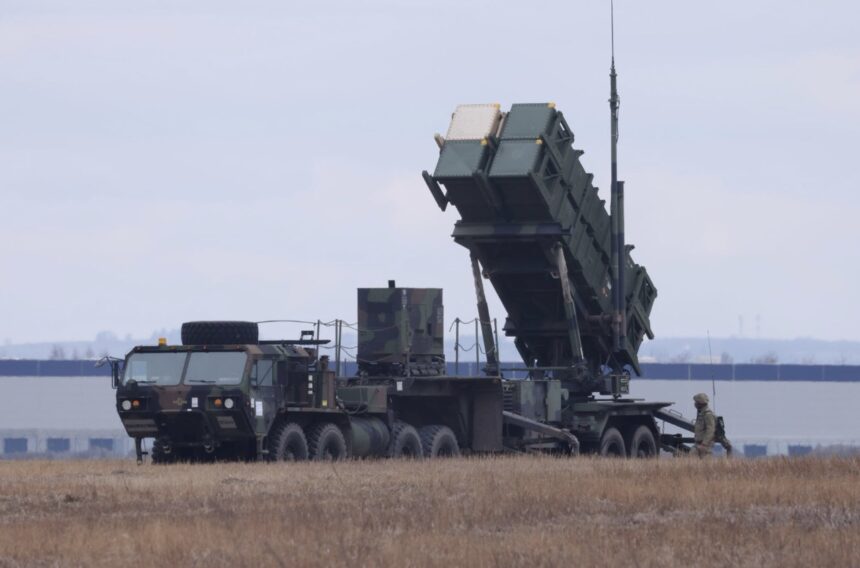
The Patriot program is split between two manufacturers. RTX, formerly Raytheon, serves as the system integrator, producing the radar, launcher, command-and-control architecture and overall battery. Lockheed Martin manufactures the PAC-3 MSE interceptor, the missile designed to destroy incoming ballistic threats.
Even if a production license is finalized, the industrial challenge remains formidable. Defense-industry reporting indicates each PAC-3 MSE interceptor requires roughly two years to manufacture, while its solid rocket motor takes even longer. The motor is supplied solely by L3Harris’s Aerojet Rocketdyne division, while Boeing produces the missile’s radar seeker at a single facility in Huntsville, Alabama. Although the Pentagon has begun expanding both production lines, analysts say meaningful additional capacity will take years to come online.
By late July, Zelensky had reportedly opened separate co-production discussions with both RTX and Lockheed Martin. Even so, defense analysts assess that Ukrainian-produced interceptors remain several years away, regardless of when Washington authorizes licensed manufacturing.
Russia’s increasingly frequent combination of ballistic missiles and drone salvos has exposed the gap between Ukraine’s operational needs and the pace of Western missile production. Trump’s latest remarks affect the political timeline for Patriot co-production, but the larger constraint is industrial. Even with U.S. approval tomorrow, Ukraine would remain dependent on allied interceptor deliveries for years before domestic production could make a meaningful contribution to its air-defense network.