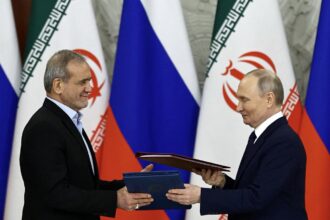
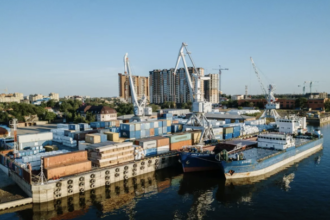
Iran has allowed a number of Iraqi oil tankers to pass through the Strait of Hormuz after repeated requests from Baghdad, providing limited relief to one of the countries most exposed to the disruption of shipping caused by the Iran war. Iran’s state news agency IRNA said securing special passage was among Baghdad’s main requests during Iranian parliament speaker Mohammad Bagher Ghalibaf’s visit to Iraq this week, Reuters reported. The request underscores how heavily Iraq’s main export route now depends on access through a waterway that Iran has effectively closed to normal traffic.
Iraqi President Nizar Amedi said Saturday that Iran had facilitated the passage of vessels carrying Iraqi oil in recent days and that Baghdad had discussed exports through Hormuz with Iranian officials. He said the issue remained complicated. The statement did not specify how many tankers had received passage or how long the arrangement would remain in effect.
The arrangement highlights the leverage Iran has gained over regional economies through its effective closure of one of the world’s most important energy routes. Iraq is particularly vulnerable because most of its crude exports leave southern terminals on the Persian Gulf and must pass through Hormuz. Iraq produced around 4 million barrels of oil per day before the Iran war, according to Reuters, while traffic through the strait remains significantly below pre-war levels.
Baghdad’s effort to secure selective passage also comes as it tries to reduce that dependence. Prime Minister Ali al-Zaidi said Friday that Iraq is working to expand exports through Turkey’s Ceyhan port while pursuing routes to Syria’s Baniyas port and Jordan’s Aqaba. A proposed new pipeline through Syria could take around four years to build and cost at least $15 billion, Reuters reported.
For now, those alternatives cannot replace Iraq’s Gulf terminals, leaving Baghdad dependent on negotiations with Tehran to move some of its most important exports. The special passage granted this week illustrates how disruption at Hormuz is giving Iran leverage over neighboring states even as they accelerate efforts to develop routes that could eventually bypass the strait.