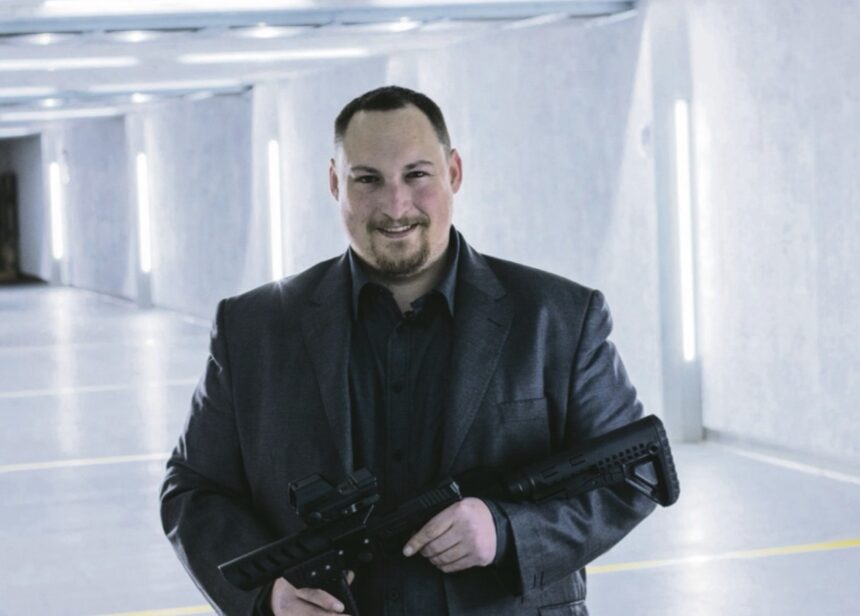
German authorities have disrupted an alleged Russian intelligence plot against Stefan Thumann, founder of Bavarian drone manufacturer Donaustahl, after a foreign intelligence partner warned Berlin in December 2025, according to a Die Zeit investigation. Investigators say two suspects, Ukrainian national Serhii N. and Romanian national Alla S., surveilled Thumann, his residence and Donaustahl’s headquarters between December 2025 and March 2026. They also monitored Thumann’s father in Starnberg, Bavaria, in an apparent effort to locate the executive after he went into hiding.
German police initially detained Serhii N. in Bavaria and seized his mobile phones but released him before completing their forensic analysis. He later fled to Spain, where he was re-arrested under a European arrest warrant. Alla S., whom investigators described as an inexperienced recruit rather than a trained intelligence operative, was arrested in North Rhine-Westphalia. Germany’s Federal Prosecutor has charged both with acting as agents of a foreign intelligence service. The Kremlin and the Russian Embassy in Berlin did not immediately comment on the allegations.
Donaustahl manufactures reconnaissance drones and the MAUS loitering-munition platform, which Germany’s Economy Ministry authorized for export to Ukraine’s Kraken unit in 2024, making the company part of Europe’s defense-industrial supply chain supporting Kyiv. The case echoes a 2024 plot that NATO officials said targeted Rheinmetall CEO Armin Papperger and comes days after German authorities investigated an explosives-laden drone discovered near a Ukrainian Antonov cargo aircraft at Leipzig/Halle Airport, although that incident has not been attributed to any state actor.
Taken together, the two cases suggest Russian intelligence may be relying increasingly on non-Russian intermediaries recruited online to conduct surveillance and other preparatory activities. Such networks offer Moscow greater deniability while complicating the diplomatic expulsions and counterintelligence measures European governments have traditionally used against Russian intelligence officers.
The investigation remains ongoing. Prosecutors have not publicly disclosed the evidence they believe links the suspects to Russian intelligence beyond the espionage charges, and the allegations have yet to be tested in court.