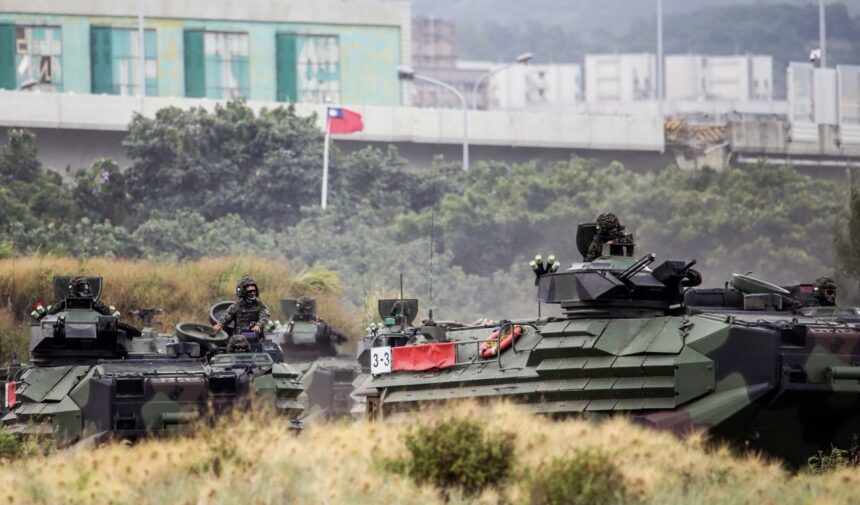
Taiwan’s cabinet will propose a 16% increase in defense spending for 2027, lifting military expenditure above T$1.1 trillion (US$31 billion) for the first time in the island’s history, the official Central News Agency reported Sunday. The budget, which will be formally unveiled on Aug. 20, is expected to keep defense spending above 3% of GDP, maintaining rather than crossing a threshold Taiwan already exceeded in 2026.
Maintaining defense spending above 3% of GDP carries strategic significance beyond deterrence. It strengthens Taipei’s response to repeated U.S. calls for allies and partners to invest more heavily in their own security, even as President Lai Ching-te faces domestic political resistance over rising military expenditure.
Turning a higher topline into usable military capability, however, is far from automatic. Taiwan’s U.S. arms backlog stood at about US$29.7 billion, according to an April assessment citing the Taiwan Security Monitor project at George Mason University. Deliveries have averaged roughly US$4 billion to US$5 billion annually, while major programs continue to face production constraints. An order for M1A2 Abrams tanks placed in 2019 took more than six years to complete, and F-16 fighters ordered the same year remain in flight testing. Higher defense budgets therefore do not automatically translate into faster military modernization. New procurement will compete for the same constrained production lines already servicing years of accumulated orders.
The proposal must also pass Taiwan’s legislature, where the opposition Kuomintang (KMT) and Taiwan People’s Party (TPP) have previously cut defense spending requests. In May, lawmakers approved a special defense budget of NT$780 billion – roughly 40% below Lai’s requested NT$1.25 trillion – removing funding for domestic drone production and air-defense integration. The episode illustrates that even as political consensus has shifted toward higher defense spending, the final size and composition of military budgets remain subject to negotiation.
If approved largely intact, the 2027 budget would reinforce Taiwan’s gradual shift toward treating elevated defense spending as a permanent feature of national policy rather than a temporary response to Chinese military pressure.