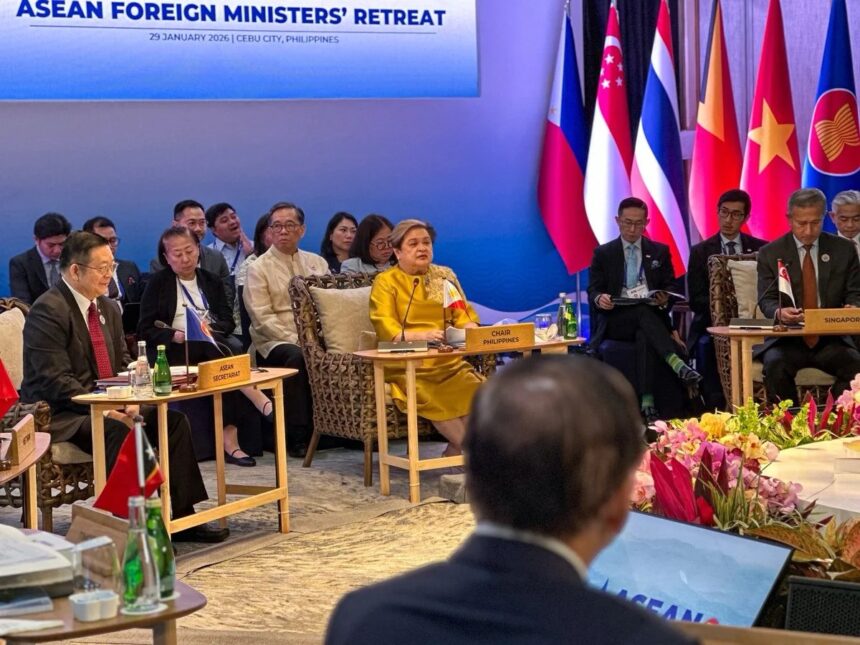
Southeast Asia’s diplomats opened a week of high-level meetings in Manila on Monday under the Philippines’ 2026 ASEAN chairmanship, with the bloc’s foreign ministers set to convene among themselves Tuesday to address the war between the United States and Iran alongside two long-running regional priorities: Myanmar’s civil war and tensions in the South China Sea. Two Southeast Asian diplomats told the Associated Press that ministers plan to issue a joint statement expressing alarm over the conflict and urging Washington and Tehran to return to negotiations. Placing an active Middle Eastern war alongside ASEAN’s own security priorities marks an unusual shift for a bloc whose doctrine of “ASEAN Centrality” has traditionally focused on crises within Southeast Asia.
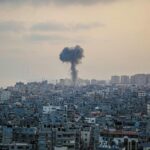
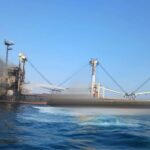
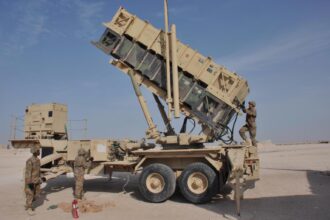
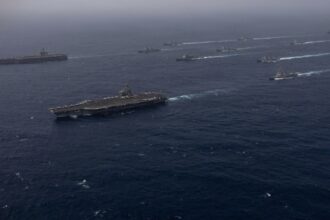
The change reflects growing concern that the conflict’s consequences are no longer confined to the Middle East. U.S. Central Command has continued daily strikes against Iranian military targets, while renewed security incidents involving commercial shipping have kept attention fixed on the Strait of Hormuz, the world’s most important oil transit chokepoint. Although the fighting is taking place thousands of kilometers away, Southeast Asian governments increasingly view disruption in the Gulf as a direct threat to their own economic stability.
Oil prices have remained elevated as uncertainty around the Strait of Hormuz has persisted, while analysts warn that prolonged disruption to Gulf shipping could tighten global crude supplies and further increase freight and insurance costs. For export-oriented Southeast Asian economies that rely heavily on imported energy, those pressures translate quickly into higher transportation costs, inflation and more expensive supply chains rather than remaining a distant geopolitical concern.
The Manila meetings, which run through July 24, bring together senior diplomats from across the Indo-Pacific, including U.S. Secretary of State Marco Rubio, Chinese Foreign Minister Wang Yi and Russian Foreign Minister Sergey Lavrov, while also marking the 50th anniversary of ASEAN’s Treaty of Amity and Cooperation. Washington has said Rubio’s participation is intended to reaffirm the United States’ commitment to a free and open Indo-Pacific, even as attention is increasingly divided between regional security challenges and the war in the Gulf.
The Iran conflict has not displaced ASEAN’s long-standing priorities but instead added another layer to an already crowded agenda. Myanmar’s civil war remains unresolved despite the bloc’s 2021 Five-Point Consensus, and ASEAN continues to exclude the country’s military leadership from its highest-level meetings. Earlier this month, Philippine Foreign Secretary Theresa Lazaro hosted an informal ministerial meeting that included Myanmar’s foreign minister – the first engagement at that level in five years. Ministers are also expected to press China on negotiations over a long-delayed South China Sea code of conduct intended to reduce the risk of confrontation in disputed waters.
ASEAN’s response nevertheless remains cautious. Member states maintain differing relationships with Washington, Tehran and Beijing, limiting the bloc’s ability to move beyond calls for restraint, dialogue and respect for international law. That balancing act has helped preserve diplomatic unity but also underscores ASEAN’s limited capacity to influence crises that increasingly affect its own economic and strategic interests.
For ASEAN, the Iran war has become more than a distant geopolitical crisis. It is increasingly a measure of how vulnerable Southeast Asia’s trade-dependent economies remain to instability far beyond their own region – and how little influence the bloc has over events that can nonetheless reshape its strategic environment.