
Musk Blocks Ukraine’s Starlink Use for Russia Strikes
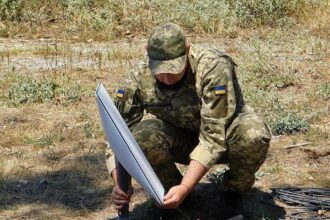
Elon Musk has so far declined to let Ukraine use Starlink to guide strikes on Russian ballistic missile launchers inside Russia, despite ongoing lobbying from Kyiv, The Atlantic reported August 7. SpaceX's geofencing currently permits Ukrainian forces to use Starlink across all internationally recognized Ukrainian territory, including occupied Crimea and other Russian-held oblasts, but blocks it inside Russia's own sovereign territory. The dispute is less a political disagreement than an operational one. Ukraine wants Starlink-guided drones to hunt and destroy mobile Iskander and KN-23 ballistic launchers before they fire — what Fire Point co-founder Denys Shtilerman called shifting from "shooting down arrows" to "hitting the archers." The tactic matters because Ukraine's stock of PAC-3 Patriot interceptors, needed to shoot down missiles already in flight, has been sharply depleted this year and cannot be replenished quickly; Kyiv is offering the deep-strike option partly as a substitute for interceptors Washington cannot supply.…
Russian-Occupied Ukraine Rated World’s Least Free
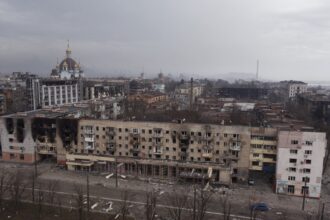
Russian-occupied territories of Ukraine have been rated the lowest-scoring place in Freedom House's Freedom in the World 2026 assessment, receiving a global freedom score of –1 out of 100. The score applies to "Russian-occupied territories of Ukraine" as a unified related-territory entry, not to sovereign, government-controlled Ukraine, which Freedom House rates at 51/100 and classifies as Partly Free. Freedom House says it began assessing Crimea, eastern Donbas and other Russian-occupied areas together in the 2025 edition because conditions across the occupied territories had become similar. The watchdog says Russian occupation authorities have eliminated genuine political competition, suppressed independent media and applied repressive Russian law in territories seized and annexed in violation of international law. The rating also reflects coercive passportization. A 2023 Russian presidential decree treated Ukrainians in occupied areas who refused Russian citizenship as foreign citizens, while a March 2025 decree required Ukrainians without legal status to regularize it…
Gaza Plan Tests Trump’s Board of Peace
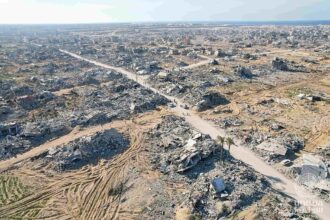
Donald Trump's Board of Peace is facing its first major test in Gaza, where a disarmament-and-withdrawal roadmap is colliding with the reality of continued war and regional escalation. The plan is built around the National Committee for the Administration of Gaza, or NCAG, a Palestinian technocratic body meant to replace Hamas rule, and an International Stabilization Force, or ISF, authorized under UN Security Council Resolution 2803. UN reporting identifies U.S. Maj. Gen. Jasper Jeffers as the ISF's commander. Reuters reported that Uganda's parliament voted on August 6, 2026, to approve possible troop deployment under the U.S.-backed force. The Guardian reported that the Board's first Gaza construction contract, still not finalized, is for a small outpost intended for about 150 Moroccan troops. The July 30 framework ties phased Hamas weapons decommissioning to staged Israeli withdrawals, but Israel has not accepted the roadmap as a straightforward timetable. Prime Minister Benjamin Netanyahu said…
Houthi Attacks Raise Red Sea Escalation Risk
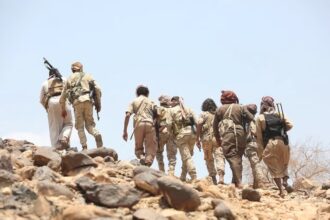
Yemen's Iran-backed Houthi movement escalated attacks on Saudi Arabia and Saudi-backed Yemeni forces this week, its most damaging offensive since a 2022 truce. A Houthi attack on Thursday wounded 11 civilians in Saudi Arabia's Najran province, including a four-year-old child, and Houthi strikes hours earlier on government camps in Marib and Hadramout killed at least 30 troops and wounded at least 50 others, Yemeni officials told the Associated Press, though the Houthis claimed higher, unverified casualties. Reuters reported that the Houthis claimed missile attacks on Saudi oil tankers, though Riyadh has not confirmed the strikes, and that six Saudi-flagged supertankers have rerouted around southern Africa to avoid Bab el-Mandeb. A senior Saudi official told Reuters that intelligence pointed to possible coordinated attacks by Iran-backed forces in Yemen and Iraq under the Islamic Revolutionary Guard Corps (IRGC), an assessment not independently corroborated. The rerouting shows Iran's Houthi allies can impose real…
Türkiye, Saudi Arabia and Pakistan Sign Mecca Defense Pact
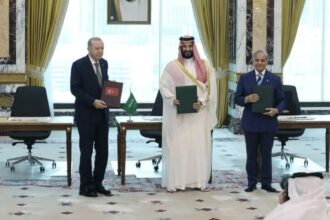
Türkiye, Saudi Arabia and Pakistan signed the Mecca Joint Defense Agreement on Friday at Al-Safa Palace in Mecca, establishing a trilateral security framework among the three countries. The agreement builds on the Strategic Mutual Defence Agreement signed by Saudi Arabia and Pakistan in September 2025, extending that bilateral framework into a trilateral arrangement with Türkiye. What distinguishes the Mecca Defense Pact from previous cooperation is its institutionalization. Although the three countries have maintained extensive bilateral military relationships for years, the new agreement creates a standing political framework linking those partnerships into a single security mechanism, making future cooperation less dependent on ad hoc political decisions. According to Xinhua, the treaty states that an armed attack against any one of the three countries will be regarded as an attack against all three signatories. Leaders emphasized that the agreement is defensive in nature and not directed against any specific country, language likely…
Houthi Maritime Attacks Raise New Shipping Risks
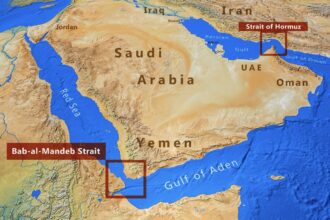
Claimed Houthi attacks on commercial shipping have sharply reduced traffic through the Bab el-Mandeb Strait, highlighting how the threat of attack alone can disrupt one of the world's most important maritime corridors. According to Reuters, only one vessel transited the strait on Wednesday, down from 20 the previous day, after the group claimed attacks on Saudi-linked shipping. The Houthis have framed the campaign as part of a blockade against Saudi Arabia announced in recent weeks, describing it as retaliation for what they allege is a blockade imposed on Yemen. The disruption followed Houthi claims that they had attacked two Saudi oil tankers, one near Yanbu on the Red Sea coast and another in the Gulf of Aden, as part of that campaign. Saudi Arabia has not confirmed the reported attacks, but the claims have heightened concerns among shipowners, insurers and maritime security analysts about operating in the southern Red Sea.…
