Claimed Houthi attacks on commercial shipping have sharply reduced traffic through the Bab el-Mandeb Strait, highlighting how the threat of attack alone can disrupt one of the world’s most important maritime corridors. According to Reuters, only one vessel transited the strait on Wednesday, down from 20 the previous day, after the group claimed attacks on Saudi-linked shipping. The Houthis have framed the campaign as part of a blockade against Saudi Arabia announced in recent weeks, describing it as retaliation for what they allege is a blockade imposed on Yemen.
The disruption followed Houthi claims that they had attacked two Saudi oil tankers, one near Yanbu on the Red Sea coast and another in the Gulf of Aden, as part of that campaign. Saudi Arabia has not confirmed the reported attacks, but the claims have heightened concerns among shipowners, insurers and maritime security analysts about operating in the southern Red Sea. According to Reuters, the immediate reaction from commercial shipping was a dramatic reduction in vessel movements through the Bab el-Mandeb rather than waiting for independent confirmation of every reported strike.
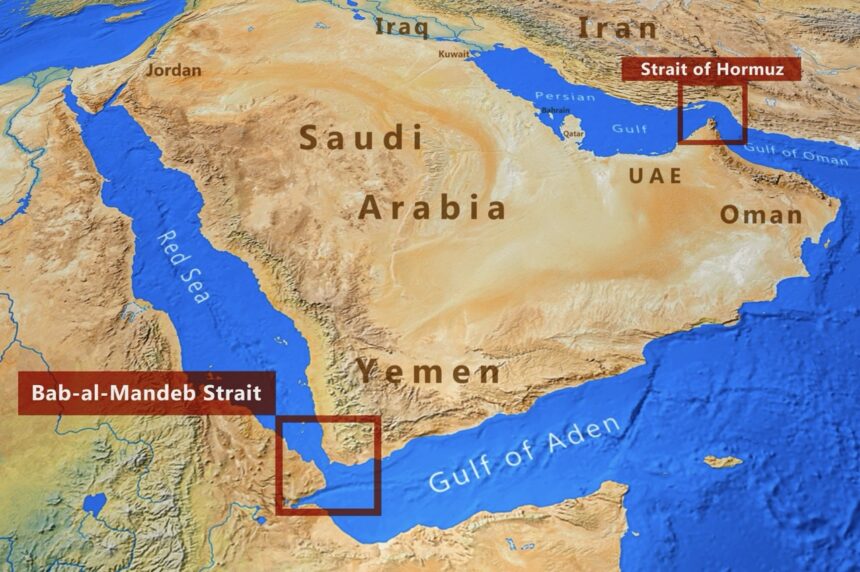
The Bab el-Mandeb connects the Red Sea with the Gulf of Aden and the Indian Ocean, making it an indispensable gateway for vessels using the Suez Canal. Any sustained disruption forces shipping companies to consider longer and more expensive voyages around the Cape of Good Hope, increasing transport costs, insurance premiums and delivery times. The current escalation also coincides with continuing instability around the Strait of Hormuz, increasing the likelihood that shipping companies will reroute vessels or delay transits through both of the Arabian Peninsula’s strategic maritime chokepoints.
The United States has also warned that commercial vessels operating in the Red Sea, Bab el-Mandeb Strait and Gulf of Aden remain at elevated risk from Houthi attacks involving drones, missiles, explosive boats and attempted boardings. A recent U.S. Maritime Administration advisory urged operators to remain vigilant and adopt enhanced security measures while transiting the region, reflecting growing concern that commercial shipping has become a primary target of the conflict.
Although it remains unclear whether the latest Houthi claims will develop into a sustained campaign against commercial shipping, the immediate impact on maritime traffic illustrates a central feature of modern maritime coercion: shipping companies respond to perceived risk rather than confirmed damage. Even limited attacks – or credible threats of attack – can prompt operators to postpone voyages, reroute vessels and increase insurance costs. For armed groups such as the Houthis, disrupting confidence can therefore be almost as effective as sinking ships, allowing relatively modest military capabilities to generate disproportionately large economic effects across global supply chains.