
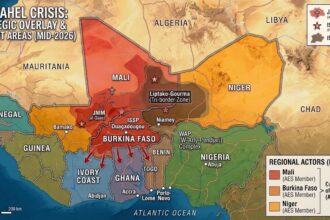
The Sahel in Mid-2026: One Conflict Across Many Fronts
The Sahel's security crisis is no longer defined by separate insurgencies in Mali, Burkina Faso and Niger. Militant groups now operate across a single interconnected theater, exploiting weak state control, a fractured regional bloc and a Russian security partnership too limited to fill the vacuum left by departing international forces. Violence is also reaching the seats of state authority themselves – from the blockade around Bamako to repeated attacks on Niamey's international airport – while steadily pushing south toward the Gulf of Guinea.A Confederation Without a Front LineMali, Burkina Faso and Niger have moved well beyond their 2023 mutual-defense pact, the Charter of Liptako-Gourma. In July 2024, they transformed it into the Confederation of Sahel States (AES) while retaining the French-derived acronym, and completed their withdrawal from ECOWAS in January 2025. The bloc has prioritized military sovereignty and deeper security ties with Russia over Western partnerships. Armed groups routinely operate…
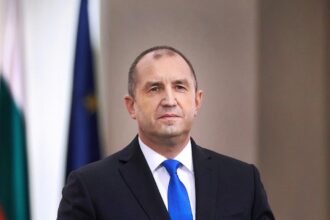
Bulgaria Quits Coalition, Keeps Selling Shells
Bulgaria will no longer be part of the Coalition of the Willing, Prime Minister Rumen Radev said in Paris on July 14, declining Bulgaria's block state-level weapons transfers to Ukraine while its defense industry, among Eastern Europe's largest producers of Soviet-caliber ammunition, keeps selling to Kyiv commercially, according to Euronews. "We have already given enough," Radev said.Radev also distanced Bulgaria from the new European anti-ballistic missile coalition, arguing collective security decisions belong "within the EU, within NATO." That framing carries structural weight beyond rhetoric: EUobserver has argued the EU's unanimity rule lets a single capital hold sanctions packages hostage, and that ad hoc coalitions exist specifically to route around it, a dynamic the outlet says has now shifted from Hungary's Orbán to Radev's Bulgaria.That leverage was on display days earlier. Bulgaria secured the removal of Patriarch Kirill and Lukoil founder Vagit Alekperov from the EU's 21st Russia sanctions package, along…

EU and UK Sanction Russian Hackers Behind Europe Attacks
The European Union and the United Kingdom sanctioned Russian intelligence officers, hackers and private companies on July 13 over a cyberespionage campaign Brussels says has targeted European governments and critical infrastructure since 2010. The EU imposed asset freezes and travel bans on nine individuals and four entities, while Britain sanctioned 24 people and organizations in what officials described as the first coordinated EU-UK package targeting Russian cyber operations.Both governments identified the FSB's 16th Center – Russia's signals intelligence directorate – as the hub of the campaign rather than an informal network of proxy hackers. According to EU officials, the unit has been linked to cyberattacks against government institutions and critical infrastructure across Europe. French Foreign Minister Jean-Noël Barrot said it was also responsible for the December 2025 cyberattack on Poland's energy grid, which could have disrupted electricity supplies for up to 500,000 people, as well as operations targeting railway infrastructure.…
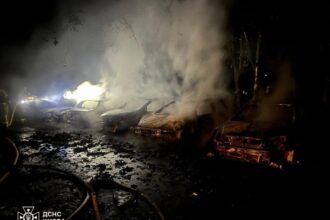
Russia Hits Kyiv Amid Patriot Shortage
Russia struck Kyiv with six to eight ballistic missiles overnight into July 14, hours after Ukraine and nine European countries launched a coalition aimed at countering Moscow's ballistic missile threat, according to Kyiv Independent. The strike began around 00:16 local time, and Kyiv Mayor Vitali Klitschko said air defenses engaged the incoming missiles, per Mezha.Fires broke out at a warehouse in the Holosiivskyi district and among vehicles in the Darnytskyi district, both extinguished by emergency crews, according to UNN. A crater formed at one site, and windows in the main and auxiliary buildings of a boarding school were damaged, per RBC-Ukraine. Debris fell at two other addresses. No deaths or injuries were reported in Kyiv, according to both UNN and RBC-Ukraine.This is the third strike in a week to hit Kyiv before or without an air raid alert, following similar incidents on July 8 and July 11, according to RBC-Ukraine…
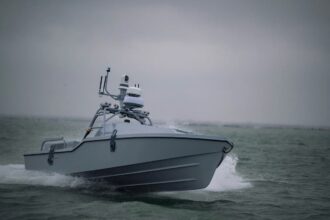
US Restarts War Powers Clock on Iran
July 13 showed how far the terms of the US-Iran war have moved since fighting began in February, on three fronts at once: the legal basis for continuing it, the rhetoric justifying it, and the technology used to wage it.The Trump administration formally notified Congress on July 10 that "military action" against Iran had resumed on July 7, according to a letter obtained by CBS News. The notification opens a new 60-day window before congressional authorization is legally required, per Roll Call. Democrats dispute that the clock can be restarted this way, arguing the war has continued uninterrupted since February 28, according to Roll Call.That same day, the administration reversed itself on tolls. Trump announced a 20 percent charge on cargo transiting the Strait of Hormuz, months after Secretary of State Marco Rubio said he did not care whether such a charge was "called a fee or a toll or…
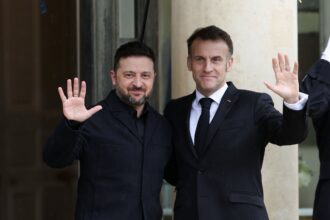
France to Let Ukraine Produce Missiles Under New Defense Deal
France will license Ukraine to produce SCALP long-range cruise missiles, AASM Hammer precision-guided bombs and Aster-30 interceptor missiles, President Emmanuel Macron announced after meeting Ukrainian President Volodymyr Zelenskyy in Paris on July 13. The agreement marks the first time France has authorized production of its own weapons systems on Ukrainian soil rather than supplying finished weapons, implementing a bilateral defense roadmap the two leaders agreed in principle in November 2025.Read together, the announcements reveal a broader strategic shift. The 16 Rafale fighter jets Ukraine has ordered – expected to enter service in 2028–2029 – are designed to employ the same SCALP missiles and AASM bombs that Kyiv will now be licensed to manufacture domestically. Paris is no longer simply transferring weapons; it is enabling Ukraine to build critical parts of the weapons ecosystem itself, linking domestic missile production with the aircraft intended to carry them.That marks a structural change in…
