The Pentagon’s public estimate of the Iran war’s cost captures only part of the financial picture, according to internal Defense Department assessments reported by U.S. media. While officials have publicly put the cost of the campaign at about $30 billion, internal estimates now reportedly place the overall bill between $80 billion and $100 billion.
The discrepancy first emerged in April, when CBS News reported that officials familiar with internal Defense Department assessments believed the war had already cost closer to $50 billion, roughly double the $25 billion figure a Pentagon official had given lawmakers days earlier.
The gap has continued to widen. NBC News reported that the latest internal estimate now stands between $80 billion and $100 billion, while the Pentagon’s public figure remains about $30 billion. Independent tracking by the Iran War Cost Tracker, which follows the Pentagon’s operational accounting methodology, estimated total spending at $113.3 billion by the June 16 ceasefire after 108 days of fighting.
The difference reflects how the costs are calculated. The Pentagon’s public estimate covers direct operational expenses such as deployments, fuel and munitions used during combat. It does not include many longer-term costs associated with the conflict. Acting Pentagon Comptroller Jules Hurst told the House Armed Services Committee in May that the department could not yet estimate the cost of repairing military installations damaged during the war, saying there were still “a lot of unknowns” surrounding reconstruction and military construction requirements.
Those unknowns are substantial. Iranian missile and drone attacks struck U.S. facilities across Kuwait, Bahrain, Jordan and Iraq during the conflict, damaging radar systems, aircraft shelters, warehouses and other military infrastructure. Repairing those facilities, replacing damaged aircraft and naval assets, and replenishing depleted missile stockpiles all fall outside the Pentagon’s publicly cited operational figure.
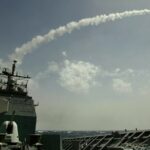
Even if Congress approves the roughly $80 billion supplemental funding request submitted by the Defense Department, restoring military capacity will take considerably longer. A Center for Strategic and International Studies (CSIS) assessment concluded that inventories of Tomahawk cruise missiles and THAAD interceptors could take until around 2030 to recover under current production rates after heavy wartime expenditure. By contrast, JASSM inventories are projected to recover much sooner – around mid-2027 – because large procurement contracts had already expanded production before the war began.
The distinction carries strategic implications beyond budgeting. Replacing sophisticated missile inventories depends not only on congressional funding but also on industrial production capacity, leaving key U.S. long-range strike and missile-defense capabilities under pressure for years after the fighting has ended.