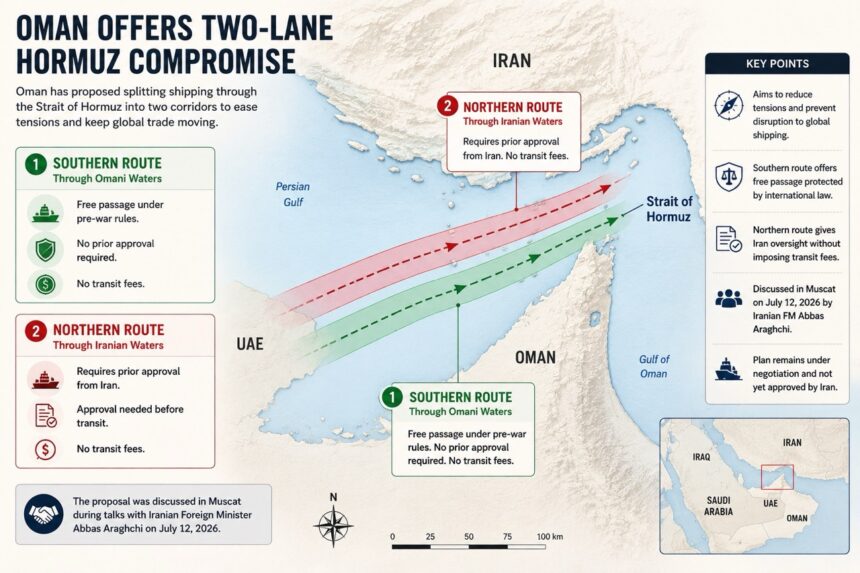
Oman has drafted a plan to split shipping through the Strait of Hormuz into two corridors, an attempt to break the deadlock over one of the world’s most important maritime chokepoints. Under the proposal, reported by CNN, vessels taking a southern route through Omani waters would sail freely under pre-war rules, while those using a northern route through Iranian waters would need Tehran’s approval but pay no fees.
The plan may favour the West more than it first appears. Because the strait’s main shipping lanes run largely through Omani waters, Muscat can open the southern route on its own authority. Channelling commercial fleets there gives shipowners a lane protected by international law — and a way around the transit fees of $1–2 million per vessel that Iran’s new Persian Gulf Strait Authority has tried to impose, without a direct naval fight.
Iranian Foreign Minister Abbas Araghchi brought the plan to Muscat on Saturday, then carried it back to Tehran unapproved. His trip came as the Islamabad Memorandum — the June ceasefire framework between Washington and Tehran — collapsed under fresh U.S. sanctions and strikes on some 140 Iranian military targets. Iran has again declared the strait closed. Washington says traffic still runs.
The paradox is Tehran’s. It needs the Omani channel to keep its economy from being sealed off by naval pressure, yet by insisting on “prior approval” in the northern corridor it is trying to win formal recognition as Hormuz’s gatekeeper — even as its broader military and diplomatic position deteriorates.