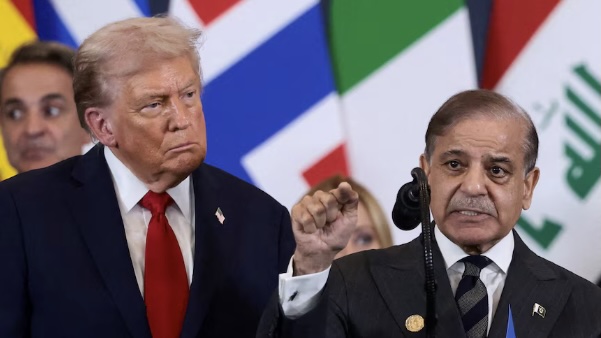
A few years ago Pakistan was slipping out of international view. Relations with the West had deteriorated, domestic politics were consumed by the confrontation surrounding former Prime Minister Imran Khan, and an economy close to default left Islamabad dependent on the International Monetary Fund (IMF) and on emergency support from China and the Gulf. Today Pakistan is useful again.
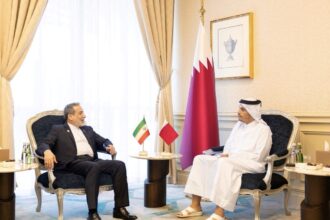
Its most visible success has been mediation between the United States and Iran. Islamabad held its access to Tehran while rebuilding relations with the administration of US President Donald Trump, which made it the principal channel between two governments at war. It hosted negotiations, carried proposals and helped assemble an initial ceasefire framework. The transformation has given Pakistan a standing it has rarely enjoyed since its role in facilitating the US opening to China in the early 1970s. The window is real. The question is whether Islamabad can convert temporary usefulness into durable economic and political power, or merely secure another round of external assistance before attention moves elsewhere.
The Machinery Behind the Turnaround
The channel held because of what Pakistan could draw on: a long border and a functioning if difficult relationship with Iran, military and financial links across the Gulf, an established partnership with China, and renewed access in Washington. The revival runs through four offices at once. Prime Minister Shehbaz Sharif supplies formal legitimacy; Foreign Minister Ishaq Dar runs the negotiations; Finance Minister Muhammad Aurangzeb pursues the economic dividend; and Field Marshal Asim Munir has become the central interlocutor for Trump and for Gulf leaders. Reuters has credited Munir’s direct access to Washington as an important part of the rehabilitation. The speed owes more to that centralisation than to civilian institutional capacity.
Islamabad is already trying to monetise that access. Aurangzeb has requested a $10 billion US exchange-stabilisation facility and proposed a financing framework with the US Export-Import Bank. Washington has welcomed Pakistan’s economic reforms but has not endorsed the requested facility. Economists warn that fresh liquidity may buy time without resolving weaknesses in taxation, energy pricing and state-owned enterprises.
Facing the Gulf
The relationships Pakistan has rebuilt fastest run through the Gulf. Britain and the United States still count, mainly through universities, migration and the professional networks binding Pakistani elites to London and Washington. The Gulf reaches further down. It employs Pakistani workers in numbers no other region matches, and their remittances prop up household incomes and the foreign exchange reserves alike. When Islamabad runs short, it is Riyadh and Abu Dhabi that place deposits in its central bank and supply oil on deferred terms.
Riyadh pledged an additional $3 billion in April, alongside deepening defence cooperation under the mutual defence agreement signed in September 2025. Pakistan and Kuwait are separately discussing expanded defence cooperation that could involve aircraft, drones, air defence and a larger Pakistani military presence, while Islamabad seeks energy cooperation and investment. Those talks remain preliminary, and Pakistani officials say combat deployments are not under consideration. Islamabad has also joined the Board of Peace, the US-led body established under UN Security Council Resolution 2803 to oversee Gaza’s reconstruction and long-term political settlement, though its role there remains undefined.
The commitments cut against the mediation. Pakistan needs Tehran for trade, border stability and its credibility as a broker, yet the two have exchanged strikes over militant sanctuaries in Balochistan, and Reuters reported that Islamabad fears the Saudi pact could draw it into the US-Iran war. The same reporting noted that a Kuwait agreement would raise questions about Pakistan’s role in any future mediation.
Attention Is Not Capacity
Afghanistan is the clearest limit. Pakistan is indispensable to any settlement because of geography, refugees, trade routes and the insurgency waged by Tehreek-e-Taliban Pakistan (TTP). But it has fought the Taliban government and struck inside Afghanistan. The most recent attempt to halt the fighting ran through Chinese mediation, but the confrontation has since resumed. Islamabad may become a guarantor or necessary party. It cannot be an impartial one.
The deeper driver is domestic. Pakistan remains dependent on external financing and IMF programmes while facing extreme heat, floods, drought, water stress and rapid population growth. The World Bank estimated in its 2022 Country Climate and Development Report that climate change alone could cut annual GDP by between 6.5% and 9% by 2050 under optimistic and pessimistic scenarios, as floods and heatwaves reduce yields, destroy infrastructure and sap labour productivity. The IMF’s Resilience and Sustainability Facility treats water management, disaster preparation and financial stability as a single problem. Loans still cannot substitute for a state that delivers electricity, collects taxes and manages scarce water.
Pakistan has regained something valuable: attention. It buys room to diversify beyond dependence on China without abandoning Beijing, and it may bring investment, energy security and climate financing. It does not alter the underlying arithmetic. Every previous cycle of relevance ended with the liquidity spent and the reforms deferred. Without them, geopolitical rent postpones insolvency rather than resolving it.
The role fell to Islamabad because the alternatives had thinned. Washington and Tehran held no direct channel and had not met at that level since 1979; the Gulf capitals were under fire themselves. What remained was a government fighting an insurgency on its western border and unable to make its repayments without outside help – but holding working lines into both capitals. That was enough to put it back at the table with a superpower. The war supplied every element of that qualification. The seat lasts as long as Washington and Tehran decline to speak directly, and no longer than Islamabad’s ability to stand between the Gulf and Iran.