U.S. President Donald Trump said Washington wants to learn from Ukraine’s drone warfare experience after meeting President Volodymyr Zelenskyy at the NATO summit in Ankara. The exchange reflected more than military cooperation. Trump framed Ukraine as a source of practical battlefield innovation, while Zelenskyy used the meeting to reinforce Kyiv’s argument that Ukraine should be viewed as a strategic technology partner rather than simply a recipient of Western military aid.
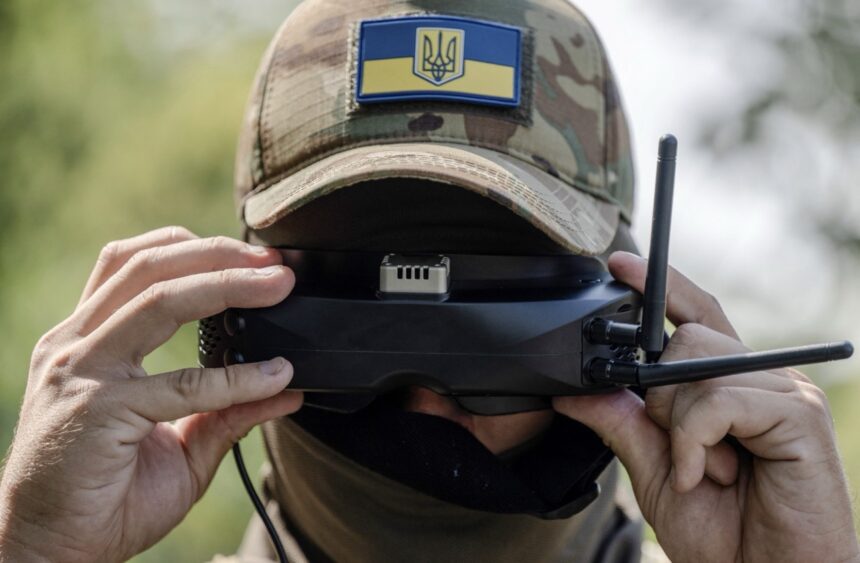
The shift reflects how Russia’s full-scale invasion has transformed Ukraine into one of the world’s fastest-moving centres of military innovation. Ukrainian forces have pioneered the large-scale battlefield use of first-person-view drones, naval drones, long-range strike systems and rapidly evolving electronic warfare under combat conditions that few NATO militaries have experienced.
According to Ukrainian officials and defence-industry representatives, Ukraine has also begun deploying low-cost interceptor drones designed to destroy Iranian-designed Shahed attack drones at a fraction of the cost of traditional surface-to-air missiles. Officials say the systems have helped preserve scarce Patriot interceptors for higher-priority ballistic missile threats, although their reported effectiveness has not been independently verified.
Both Russian and Ukrainian forces have also expanded the use of fibre-optic-guided drones, which transmit control signals through physical cable rather than radio links, reducing their vulnerability to electronic jamming. The rapid spread of these systems has become one of the defining technological developments on the battlefield over the past year.
No formal U.S.-Ukraine programme on drone cooperation was announced following Wednesday’s meeting. Zelenskyy has continued to advocate closer defence-industrial integration with NATO partners, arguing that Ukraine’s wartime experience can strengthen allied military capabilities as well as its own.
Whether Washington’s interest develops into joint procurement, technology partnerships or co-production agreements remains unclear. No implementation framework, funding mechanism or lead agency was announced. Nevertheless, Trump’s remarks suggest an important evolution in how the United States increasingly views Ukraine—not only as a country requiring military assistance, but also as a partner whose battlefield innovations may influence the future development of Western armed forces.