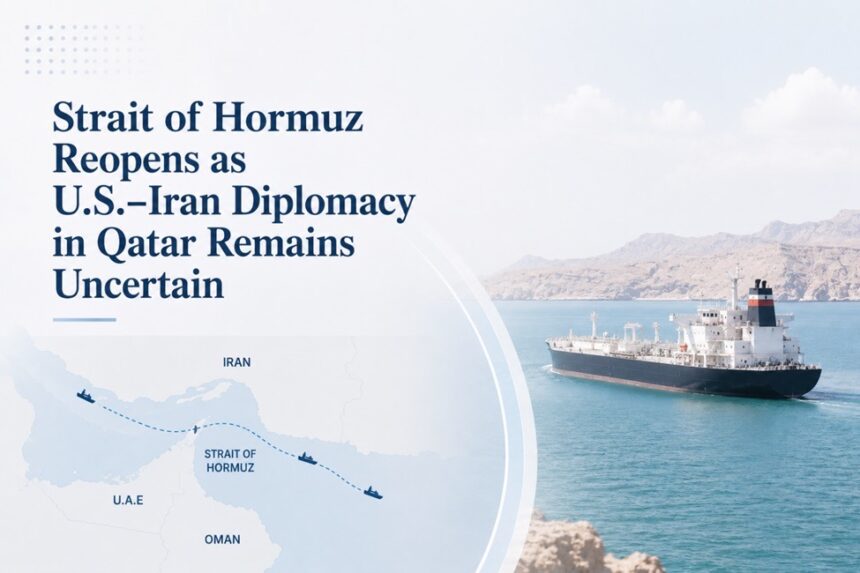
U.S. envoys Jared Kushner and Steve Witkoff arrived in #Doha on 30 June to meet Qatari mediators on U.S.–Iran negotiations, as the Strait of Hormuz began a fragile and partial reopening after months of disruption linked to the crisis.
Qatar’s Foreign Ministry spokesman Majed Al-Ansari said there would be no high-level meeting between Washington and Tehran. The statement contrasted with President Donald Trump’s public claim that Iran had requested talks in Qatar, while Iranian officials also denied that direct negotiations with the United States were planned.
The diplomatic channel remains indirect. #Qatar is acting as mediator, while Doha and #Oman are coordinating on safe passage for vessels through the Strait of Hormuz. Al-Ansari also said #Qatar had not transferred $6 billion in frozen Iranian funds to Tehran.
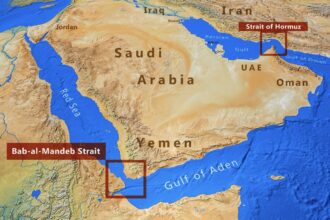
The strait’s reopening remains limited. Reuters reported on 30 June that tanker traffic through Hormuz is recovering, but flows remain below pre-crisis levels and the waterway is still partly navigable and politically contested. Shipowners and charterers are repositioning vessels in anticipation of renewed Gulf exports, but cargo throughput remains constrained by operational limits and security risk.
The reopening eases immediate pressure on energy markets, but it does not restore normal maritime conditions. A 25 June attack on the Singapore-flagged M/V Ever Lovely near #Oman led the International Maritime Organization to pause an evacuation plan for ships trapped in the Gulf, underscoring the continued risk around the waterway.
For now, Hormuz is open only in a limited sense. The next test is whether Qatar-mediated contacts can keep the truce functioning while shipping, insurance and security conditions gradually return toward normal.