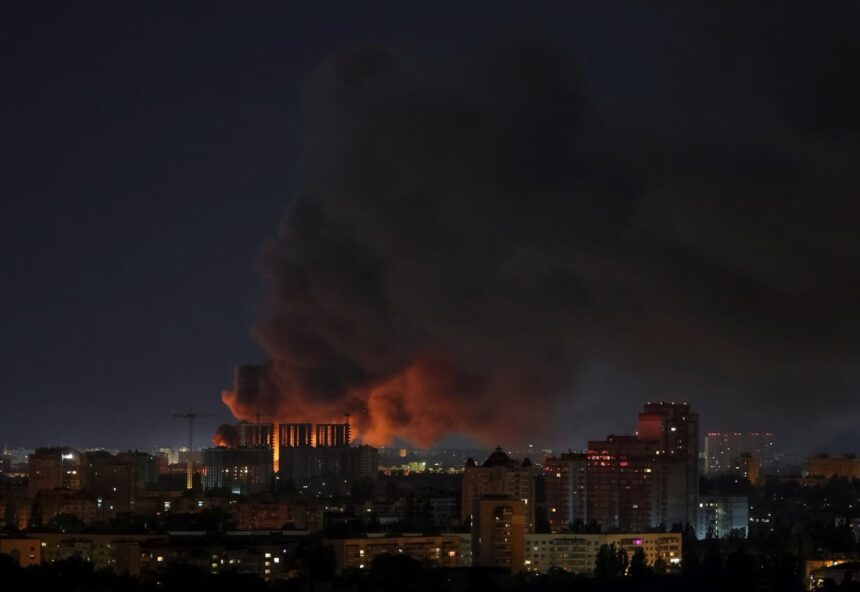
Russia struck Kyiv with ballistic missiles for the third time in less than a week overnight on July 7–8, killing one woman and wounding two as Ukraine again failed to intercept any of the ballistic missiles fired at the capital.
Ukraine’s air force said it downed 139 of 169 drones launched across the country, but none of the five ballistic missiles used in the attack, Reuters reported. Fires broke out in warehouses and non-residential buildings in Kyiv, while Kharkiv also came under missile attack.
The drone figures show that Ukraine can still defeat much of Russia’s mass unmanned barrage. But they also hide the harder problem: ballistic missiles require scarce Patriot-class interceptors, and Kyiv’s stock of those weapons is under acute pressure.
The pattern is becoming more severe. Since the start of July, Russian strikes on Kyiv and the surrounding region have killed 60 people, according to Reuters. Ukrainian air-force data cited by the agency shows only four of 54 ballistic missiles have been intercepted this month.
The attack follows a July 6 strike in which Russia fired 23 ballistic missiles at Kyiv and the surrounding region; Ukraine intercepted none of them. President Volodymyr Zelenskyy has repeatedly urged allies to release more Patriot interceptors, calling the shortage absurd as the NATO summit opened in Ankara.
Russia is forcing Kyiv into a dangerous imbalance. Ukrainian air defences can still absorb much of the drone pressure, but the ballistic missiles are becoming the harder layer of the campaign — faster, more destructive and dependent on scarce Patriot interceptors.