The Trump administration is drifting back toward its original goal of Iranian regime change after months of diplomacy failed to end the war, Financial Times chief foreign affairs commentator Gideon Rachman argued, warning that President Donald Trump’s foreign policy legacy is likely to be defined by a conflict for which Washington currently has no plausible path to victory, according to the Financial Times.
A shrinking definition of success
Rachman noted that the US national security establishment is already scaling back what it considers an acceptable outcome. At last week’s Aspen Security Forum, former Defense Secretary Mark Esper, who served during Trump’s first term, argued that success should be measured by two benchmarks: a return to full, unrestricted maritime traffic through the Strait of Hormuz, and a nuclear agreement with Iran stronger than the 2015 deal negotiated under President Barack Obama, according to the Irish Times. Esper argued airstrikes alone cannot deliver that outcome and called instead for “comprehensive” economic pressure on Tehran.
Condoleezza Rice, appearing alongside Esper on the same panel, went further, opposing any nuclear deal at all and arguing the US should let Iran “sit there and stew in their lousy economy” until its position weakens further, per the same report. In effect, both the Rice and Esper positions describe restoring, or worsening from Iran’s perspective, the pre-war status quo rather than securing any new strategic gain.
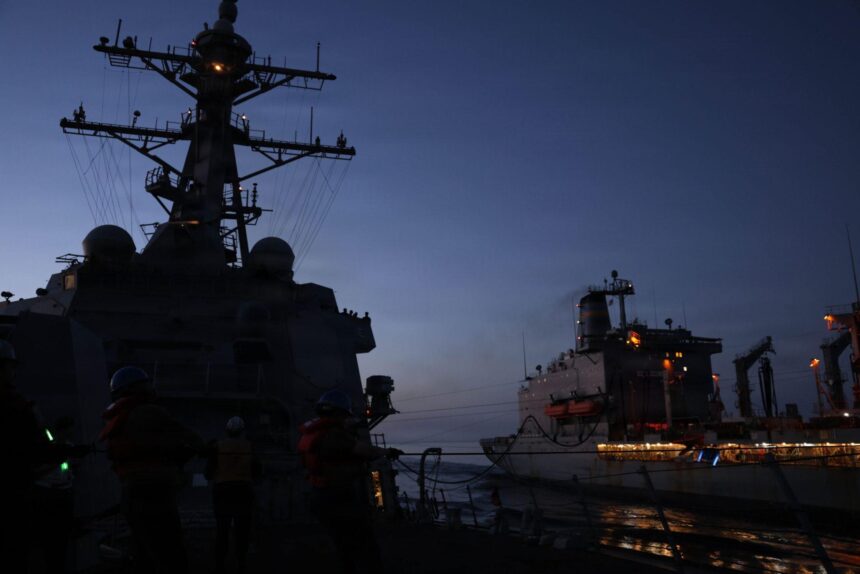
Even that reduced ambition may be out of reach, Rachman argued. Iran is determined to charge tolls on vessels transiting Hormuz, a chokepoint that could generate billions of dollars in revenue and hand Tehran lasting leverage over global energy markets. Washington has said it will never accept such an arrangement, but intensified bombing has not forced the strait open, and there is no appetite within the White House for deploying ground troops to do so by force.
Why Hormuz can’t be bombed open
Retired four-star General Barry McCaffrey has been publicly skeptical that airpower alone can settle the question, laying out his reasoning at length in a televised interview warning the US is “on the edge of a strategic disaster” over the strait. Responding separately in June to Senator Lindsey Graham’s suggestion that the US could simply seize control of Hormuz, McCaffrey wrote that such an operation would in fact be feasible, but only at serious cost: a three-division corps, roughly 150,000 troops, and 90 to 180 days of what he called “serious combat” against an estimated 200,000 Iranian Revolutionary Guard Corps personnel capable of interdicting shipping throughout the wider Persian Gulf, not just the strait itself. McCaffrey’s conclusion, posted on X, was blunt: “THEN WHAT?”
Rachman pointed to a related vulnerability underscoring the difficulty of a purely military solution: Iran has responded to the recent intensification of fighting by striking Saudi Arabia for the first time in months, a reminder that Gulf states remain acutely exposed to attacks on critical infrastructure such as water desalination plants and oil rigs, regardless of what happens directly between Washington and Tehran.
A widening missile threat
The column also raised concern about how the technological balance may shift over time. Iran has already demonstrated the ability to strike a range of targets, including Dubai’s airport, Qatar’s LNG facilities, and US military bases in the region; two US service members were killed in a Jordan attack on Friday. US strategists are increasingly worried that continued development of Iranian drone and missile technology, aided by Russia and China, could soon put more distant and more sensitive targets within reach, including Israel’s Dimona nuclear reactor and the US base at Diego Garcia, which underpins American power projection into the Indo-Pacific. Iran has already fired at both locations earlier in the conflict without success, but Rachman suggested that record may not hold indefinitely as the underlying technology matures.
Regime change re-emerges as “Plan A”
Against this backdrop, Rachman argued, the idea of regime change is creeping back into Washington’s calculus. Toppling the Islamic Republic was the explicit goal when Trump and Israeli Prime Minister Benjamin Netanyahu launched the war on February 28, but hopes that military pressure alone would trigger a successful popular uprising were dashed within weeks. For a period afterward, the administration set that goal aside in favor of a diplomatic push to end the conflict. With that diplomacy now widely seen as having failed, Rachman wrote that elements of the administration are returning to what he called “Plan A.”
The most visible sign of this shift, per the column, is intensified economic pressure: the US has resumed its blockade of Iranian oil exports, and officials reportedly believe they can choke off most of Iran’s oil revenue within months, potentially provoking a serious internal economic crisis. Washington has also reportedly sought out regime insiders willing to cooperate, an effort that at one point included an unsuccessful Israeli attempt to cultivate former Iranian President Mahmoud Ahmadinejad, despite his history of hostile rhetoric toward Israel.
Alongside economic pressure, the idea of fostering internal unrest is also resurfacing. Early in the conflict, Israel pushed for a plan to arm Kurdish opposition groups, a proposal Washington rejected at the time. According to Rachman, it may now be revived “for want of better alternatives,” reflecting a broader acknowledgment within the administration that negotiation alone may be unable to durably constrain Tehran.
Risks beyond Iran
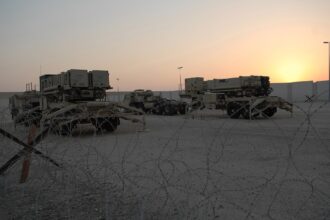
Rachman closed by noting that the war’s costs extend well beyond the immediate conflict, a concern Esper voiced in his own remarks at Aspen. “What are we doing to our readiness and stockpiles? Because my big concern globally is China,” Esper said, according to Benzinga. Rachman cited widespread reporting that the US has already used roughly 30 percent of its Tomahawk cruise missile inventory and half of its Patriot interceptor stock in just the war’s first few weeks, munitions that were partly earmarked for a potential confrontation over Taiwan. Replenishing those stockpiles could take years, Rachman warned, potentially opening a window of strategic opportunity for China even as the Iran conflict remains the more immediate crisis facing Washington.