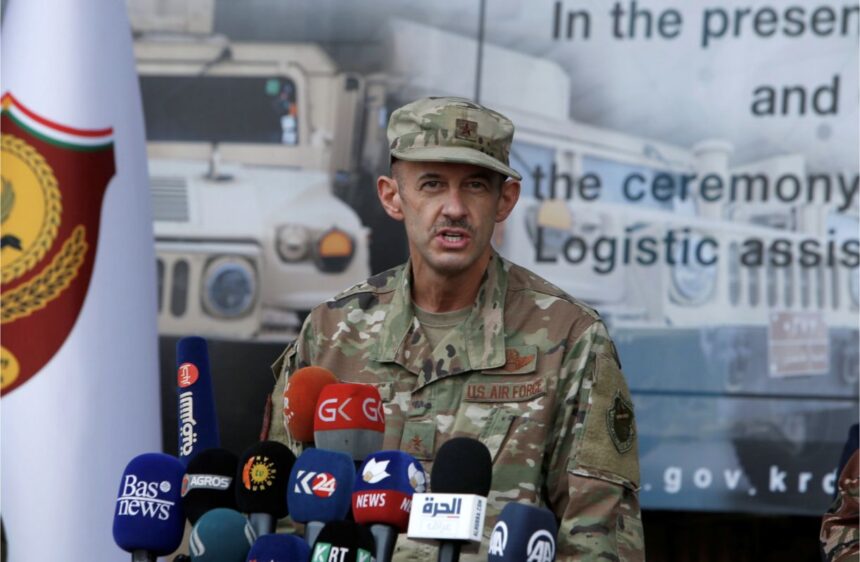
The United States is on track to withdraw its remaining military forces from Iraq by September 30, ending the coalition mission against ISIS and completing a security transition that will leave Iraqi forces fully responsible for counterterrorism operations. The departure concludes the latest phase of a U.S. military presence that began with the 2003 invasion, ended after the withdrawal of combat troops in 2011 and resumed in 2014 at Baghdad’s request following the rise of the Islamic State group. Iraqi Prime Minister Ali al-Zaidi reaffirmed the deadline after meeting U.S. Central Command chief Adm. Brad Cooper in Baghdad on Wednesday, calling it the fixed and final date for ending the coalition’s military mission and completing the departure of its forces. A U.S. official separately confirmed that Washington expects the withdrawal to be completed on schedule, though the Pentagon has not disclosed how many American personnel remain in Iraq or where they will be redeployed, according to the Associated Press.
The withdrawal follows a two-phase transition agreed by Washington and Baghdad. The first phase, completed in September 2025, ended the coalition’s military mission in federal Iraq and closed bases including Ain al-Asad. The second phase, now concluding in the Kurdistan Region, replaces the coalition mission with a narrower bilateral relationship focused on intelligence sharing, military advice and logistics support rather than ending U.S.–Iraq security cooperation altogether, according to The National.
The drawdown is already underway in the Kurdistan Region, where most remaining U.S. forces have been concentrated. Two Iraqi Kurdish officials told the Associated Press that American troops and military equipment began leaving Erbil about three weeks ago, while separate reporting documented the relocation of Patriot air-defense batteries from Harir Air Base and Erbil International Airport in early August. Most U.S. forces had already departed bases elsewhere in Iraq during the previous stage of the transition.
A U.S. official said this week that Iraqi security forces, including the Peshmerga and other forces in the Kurdistan Region, will now lead counterterrorism operations inside Iraq. The transition reflects the significant weakening of ISIS since the group controlled large parts of Iraq and Syria a decade ago, though the organization has not disappeared. Estimates from the International Centre for Counter-Terrorism place the number of active ISIS fighters across Iraq and Syria at roughly 1,500 to 3,000 as of mid-2025, operating through dispersed insurgent cells rather than holding territory.
ISIS remnants remain concentrated in remote terrain, including the Hamrin Mountains and the Anbar and Nineveh deserts, where security forces have struggled to eliminate long-standing safe havens. A regional security monitoring report covering activity through July 2026 identified continued operational and logistical use of these areas by surviving ISIS cells. The reduced U.S. footprint will leave Iraqi forces solely responsible for sustaining pressure on the insurgency without direct American military support on the ground.
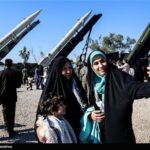
The withdrawal also removes one of the principal arguments used by Iran-backed Iraqi militias to justify maintaining armed formations outside effective government control. Al-Zaidi has set the same September 30 deadline for non-state armed groups to surrender their weapons, saying that from October 1 Iraq should be free of both foreign military forces and weapons outside state authority. That objective is considerably less certain than the U.S. withdrawal itself.
The legal foundations of Iraq’s militia problem predate the current transition. Parliament’s Law No. 40 of 2016 formally incorporated the Popular Mobilization Forces (PMF) into Iraq’s armed forces while placing the umbrella organization under the prime minister’s command. In practice, however, several constituent factions have retained independent command structures and close ties to Iran, leaving Baghdad to finance forces it does not fully control.
Some Iran-backed groups have begun moving toward integration or disarmament. Asaib Ahl al-Haq and the Imam Ali Brigades said in June they would begin transferring weapons and personnel into state-controlled structures, while Shiite cleric Muqtada al-Sadr announced plans to separate his Saraya al-Salam militia from his political movement and integrate it into state institutions. Other factions, however, have rejected calls to disarm, retaining commercial, political and patronage networks that operate independently of Baghdad’s oversight.
That independence is reinforced by revenue streams outside state control. The U.S. Treasury has sanctioned Iraqi officials and militia leaders it says diverted Iraqi oil for the benefit of Iran-aligned factions, including Kataib Sayyid al-Shuhada and Asaib Ahl al-Haq. Researchers at the Foundation for Defense of Democracies estimate that sanctions-evasion and oil-smuggling networks linked to Iran-aligned Iraqi factions may generate roughly $1 billion annually, although the precise scale is difficult to verify. That financial autonomy provides armed groups with additional leverage to resist government efforts to consolidate weapons under state control.
The issue has become increasingly important to Washington. President Donald Trump’s administration has tied deeper defence cooperation with Baghdad to curbing Iran-backed militias, several of which have previously attacked U.S. personnel and facilities. During al-Zaidi’s July visit to Washington, U.S. officials made clear that future decisions on security cooperation would take Iraq’s progress on militia disarmament into account.
For Baghdad, however, confronting the strongest armed factions risks opening another source of domestic instability. Several militias played a decisive role in the campaign against ISIS and retain political influence, government funding and significant constituencies within Iraq’s Shiite political establishment. Attempts to disarm them by force could therefore threaten the very stability the withdrawal is intended to demonstrate.
The September deadline therefore marks less the end of an American military mission than the beginning of a new test for the Iraqi state. Iraqi forces will inherit full responsibility for containing ISIS, while Baghdad must decide whether it can translate the departure of foreign troops into something successive governments have struggled to achieve: a security system in which the state – not politically connected armed factions – holds the exclusive authority to use force.