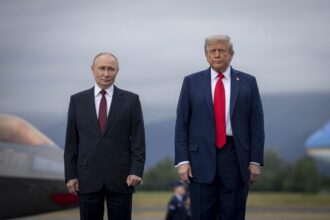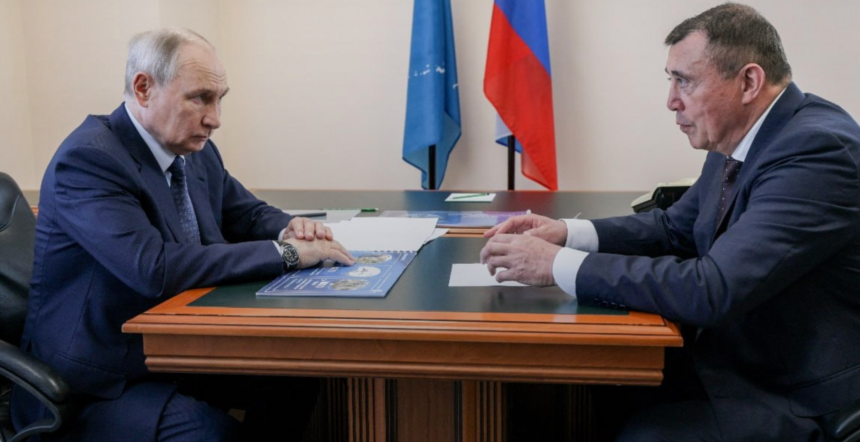
Russian President Vladimir Putin visited Iturup Island, known in Japan as Etorofu, on Wednesday, making his first trip to the disputed southern Kuril Islands and prompting a sharp diplomatic protest from Tokyo.
Japanese Prime Minister Sanae Takaichi condemned the visit in a televised address as “absolutely unacceptable”, saying it “wounds the feelings of the Japanese people” and would make restoring bilateral relations significantly more difficult. Foreign Minister Toshimitsu Motegi reiterated that the islands “are an inherent part of Japan’s territory both historically and under international law,” while Japan’s Foreign Ministry summoned Russian Ambassador Nikolay Nozdrev to lodge a formal diplomatic protest.
Russia responded in sharper terms than a routine diplomatic rebuke. Security Council Deputy Chairman Dmitry Medvedev dismissed Japan’s protest, saying the islands “were, are, and will remain Russian land” and warning that anyone unwilling to accept that reality would face “monstrous consequences”.
The dispute dates to the final days of World War II, when Soviet forces seized Iturup, Kunashir, Shikotan and the Habomai islets following Japan’s surrender. Russia formally suspended peace treaty negotiations with Japan in March 2022 in response to Tokyo’s sanctions over the invasion of Ukraine, building on a 2020 constitutional amendment prohibiting the transfer of Russian territory. Medvedev has since declared the territorial question “closed once and for all” under the constitution, signalling that Moscow no longer considers sovereignty over the islands open to negotiation.
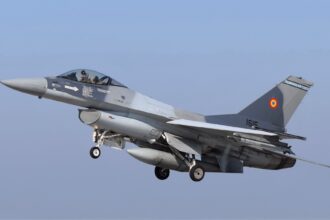
The dispute is not only historical or diplomatic. The southern Kurils occupy a strategically important position between the Sea of Okhotsk and the Pacific Ocean, making them central to Russia’s military posture in the Far East. Moscow has deployed Bastion-P coastal anti-ship missile systems on Iturup and Kunashir, alongside Su-35 fighter aircraft, forming part of an anti-access/area-denial network that helps protect the Sea of Okhotsk, where Russia’s Pacific Fleet ballistic-missile submarines operate from bases on Kamchatka. The area has also seen joint Russian-Chinese naval patrols through the Tsugaru and La Pérouse straits, reflecting broader military coordination around Japan’s northern approaches.
Combined with Medvedev’s rhetoric, Putin’s visit underscores Moscow’s increasingly explicit position that the territorial dispute is no longer open to negotiation. While the trip is unlikely to trigger an immediate military crisis, it reinforces a broader strategic reality: Russia now treats the southern Kurils as permanently integrated territory rather than a bargaining chip in future relations with Japan, leaving any prospect of a post-war peace treaty more distant than at any time in decades.