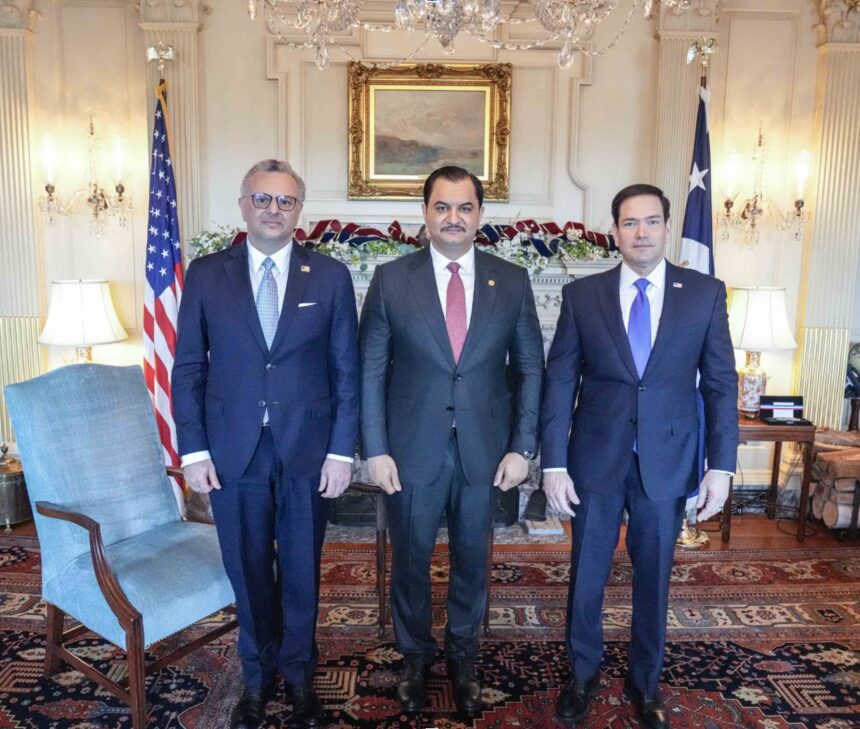
Secretary of State Marco Rubio met Saddam Haftar, deputy commander of the Libyan National Army, at the State Department on June 29, signaling that Washington’s Libya power-sharing push is advancing without a public final agreement.
The State Department said the two discussed ongoing Libyan-led efforts to unify the country’s military, economic, and political institutions and possible avenues for cooperation to advance unity and peace in Libya.
Foreign Policy reported that under the framework being discussed, Saddam Haftar would head Libya’s Presidency Council, which carries the title of commander in chief, while the Dbeibah family would retain the prime minister’s office. The outlet noted that neither family has a history of ceding power once it holds it, and that the Presidency Council post could give Haftar a base to expand into western Libya.
Massad Boulos, Trump’s senior adviser for Arab and African affairs, has denied the deal is simply a family bargain, telling Al-Hadath his goal is “one unified government,” per Al-Monitor.
The Soufan Center has linked the outreach to Haftar to a US effort to counter Russia’s expanding military presence in eastern Libya.
Chevron, Halliburton, and ConocoPhillips have all signed new deals with Libya’s National Oil Corporation over the past year.
The State Department says it still backs the UN roadmap to elections. Critics, including former NSC Libya director Ben Fishman, argue the family-based framework entrenches Libya’s dominant factions instead.
#Libya #Haftar #Rubio #Boulos #Dbeibah #Russia #TrumpAdministration #Oil #UNRoadmap #StateDepartment